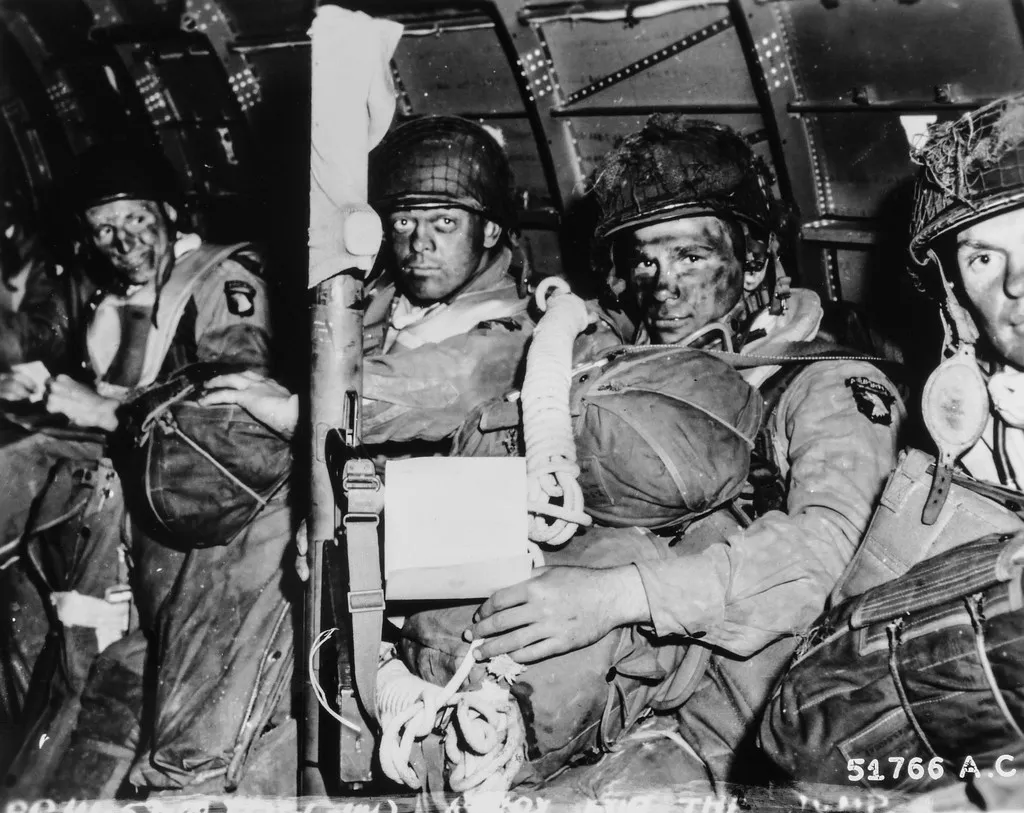
Earl “One Lung” McClung was a scout and sergeant in Easy Company, 2nd Battalion, 506th Parachute Infantry Regiment, the unit made famous by Band of Brothers. Most viewers remember Darrell “Shifty” Powers as the company’s great rifleman. Yet when people called Shifty the best shot in Easy Company, Shifty pointed to another man. He pointed to McClung. To check that, I went back to the men’s own books and to the U.S. Department of Veterans Affairs record, and the story holds up.
Who was Earl “One Lung” McClung?
Earl Ervin “One Lung” McClung (27 April 1923 – 27 November 2013) was a lead scout and staff sergeant in Easy Company of the 101st Airborne during World War II. He was born in Inchelium on the Colville Indian Reservation in northern Washington State, the second of four children of Jess and Irene McClung, and was drafted on 15 February 1943, at nineteen. He volunteered for the paratroopers, trained at Fort Benning, and joined Easy Company as a replacement at Fort Bragg, North Carolina, arriving after the original Toccoa men had already built the company. The Veterans Administration lists his service with the 506th PIR, and his Veterans History Project file sits in the Library of Congress.
His nickname rhymed with his name and stuck for life. The men shortened it further. To them he was simply One Lung.
Why did Shifty Powers say McClung was the best shot in Easy Company?
Shifty Powers said it plainly in his own memoir. When a friend handed him a duffel bag as a “going-away present for the best shot in Easy Company,” Shifty waved it off and named two other men instead.
You’re forgetting Buck Taylor. He’s a much better shot than I ever was. And Earl McClung, that’s for sure, best in the company by far.
Darrell “Shifty” Powers, Shifty’s War
David Kenyon Webster backed it up. Webster, who fought beside McClung and later wrote Parachute Infantry, recorded the third platoon’s verdict in plain words.
His buddies in the third platoon swore that old One Lung had killed more Germans than any man in the Battalion.
David Kenyon Webster, Parachute Infantry
Two of Easy Company’s own writers, one of them the most celebrated marksman of the lot, put McClung at the top.
There is a twist the books love. Shifty also called him “the worst soldier that ever wore the Army’s uniform.” McClung hated drill, polish, and inspection. Put a rifle in his hands and a treeline in front of him, and none of that mattered.
How did the Colville Reservation make McClung a deadly scout?

McClung learned to read terrain and stalk game long before the Army handed him a rifle. He grew up hunting on the Colville Reservation, killed his first deer as a boy, and could drop pheasants on the wing with a .22. His father, Jess, was the finest shot Earl said he ever knew. By the time he reached Europe, tracking was instinct, not training.
Webster described the result better than anyone. He called McClung “the one who could smell Kraut,” a man “more like a hunter than a soldier” who “could flush Germans from the thickest cover.” Some of the men joked he could smell the enemy before he ever saw them. McClung himself put the edge simply: the country boys and the tribal people, he said, had a head start over the city kid when it came to staying alive.
What did McClung do in Easy Company during the war?
McClung was one of the first scouts to jump near Sainte-Mère-Église on D-Day, 6 June 1944, and he came down under fire. By his own account two German soldiers shot at his parachute as he fell, and he killed both after he hit the ground. He fought for three days with scattered paratroopers before linking up with Easy Company at Carentan.
From there he walked point. He became the lead scout, the man who moved out ahead of everyone else, into the places the first bullet usually came from. He took that job through Operation Market Garden in Holland, where Webster says he “astounded and delighted British tankers by chasing Germans among their tanks and shooting them.” He caught shrapnel under the knee there, had it bandaged, and stayed in the line.
Then came Bastogne. McClung remembered the company so low on ammunition that they were down to one round per man for a stretch. He finished the war at Berchtesgaden, where Easy Company occupied the town below Hitler’s Eagle’s Nest and, by his telling, seized seven truckloads of liquor. He carried home two Bronze Stars and a Purple Heart, and his discharge came on 30 November 1945.
Why does Band of Brothers barely show McClung?
The HBO series gave McClung only a small on-screen presence, played by actor Rocky Marshall, while it built Shifty Powers into the company’s legendary shot. That choice shaped what millions of viewers remember. The show is a drama, not a roster, and it had to pick its faces.
This is the gap the books fill. The reality the veterans recorded, in their own words, is that the man Shifty himself ranked as the best shot is the one the screen almost left in the shadows. If you only know Easy Company from the show, you have probably never heard McClung’s name.
What happened to Earl McClung after the war?

McClung came home, married Marjorie Jean Williams, and went to work. He started at the Grand Coulee Dam, carried mail in Denver for seventeen years, served in law enforcement, and retired in 1988 as a game warden for the Colville Tribal Fish and Wildlife department. In 1979 a cougar he was tracking bit him badly enough to need stitches. Peace never made him soft.
War followed the family anyway. His son Larry was killed in Vietnam, and his daughter Tiffy Jean died in a car accident. McClung carried it quietly. He refused the word people kept trying to give him.
I hate it when people call me a hero. The real heroes are those kids who never returned home again.
Earl “One Lung” McClung
He died on 27 November 2013 at ninety. Tom Hanks marked his passing the same week the company lost Babe Heffron: “In honor and memory of Babe Heffron and Earl McClung. Farewell, Brothers.”
Earl McClung in photographs
Five restored photographs trace McClung from the Colville Reservation to Fort Logan National Cemetery. Scroll for the full set.


Earl McClung quick facts
- Full name: Earl Ervin “One Lung” McClung
- Born / died: 27 April 1923, Colville Reservation, Washington – 27 November 2013, Pueblo West, Colorado (age 90)
- Unit: Easy Company, 2nd Battalion, 506th PIR, 101st Airborne Division
- Role: lead scout, staff sergeant
- Awards: two Bronze Stars, Purple Heart
- Reputation: the man Shifty Powers called “best in the company by far”; Webster’s account says his platoon swore he killed more Germans than any man in the battalion
- On screen: played by Rocky Marshall in HBO’s Band of Brothers (2001)
Related Band of Brothers Stories
- Major Dick Winters, the officer who led Easy Company
- Ronald Speirs and the real story behind the run at Foy
- Bill Guarnere, “Wild Bill” of the 506th
Frequently Asked Questions
Who played Earl McClung in Band of Brothers?
Actor Rocky Marshall played Earl McClung in HBO’s Band of Brothers (2001). The role was small, with little screen time, even though the real McClung was Easy Company’s lead scout. That gap between his on-screen presence and his real record is part of why his name stayed obscure.
Who was the best shot in Easy Company?
Shifty Powers named Earl McClung the best shot in Easy Company, ranking him above himself. In his memoir Shifty’s War, Powers said, “Earl McClung, that’s for sure, best in the company by far.” David Webster’s Parachute Infantry backs it up from the third platoon.
Was Earl McClung a real person?
Yes. Earl Ervin McClung (1923 to 2013) was a real staff sergeant and lead scout in Easy Company, 506th PIR, 101st Airborne. His service is documented by the U.S. Department of Veterans Affairs and a Library of Congress Veterans History Project interview, not just the books.
Why was Earl McClung called “One Lung”?
Earl McClung was nicknamed “One Lung” because the words rhymed with McClung, and it stuck for the rest of his life. His fellow paratroopers in Easy Company shortened it further, so to them he was simply One Lung, a name that outlasted the war.
Did Earl McClung win any medals?
Earl McClung earned two Bronze Stars and a Purple Heart for his service with Easy Company in World War II. He was wounded by shrapnel near the knee in Holland and kept fighting. He played down the recognition, saying the real heroes were the men who never came home.
Was Earl McClung Native American?
Yes. Earl McClung was a Native American who grew up on the Colville Indian Reservation in northern Washington State. He hunted from boyhood, which Marcus Brotherton’s A Company of Heroes ties directly to the tracking and stalking skills that made him Easy Company’s lead scout in Europe.
When did Earl McClung die?
Earl McClung died on 27 November 2013 at the age of 90, in Pueblo West, Colorado. Actor Tom Hanks marked his passing the same week Easy Company also lost Babe Heffron, writing, “In honor and memory of Babe Heffron and Earl McClung. Farewell, Brothers.”
Where is Earl McClung buried?
Earl McClung is buried at Fort Logan National Cemetery in Denver, Colorado, in Section R, Site 764. He had carried mail in Denver for seventeen years after the war. His headstone also carries his wife, Marjorie J. McClung, who served as a private first class in the US Army during the Second World War and died on 3 November 2014, less than a year after him.
What was Earl McClung famous for?
McClung was Easy Company’s lead scout and the man Darrell “Shifty” Powers named as the best shot in the company, turning down that title himself. He was also one of the few Native American paratroopers in the 506th, raised on the Colville Indian Reservation in Washington State, where he learned the hunting and tracking that made him a scout.
Sources
- Darrell C. “Shifty” Powers & Marcus Brotherton, Shifty’s War (the “best in the company by far” quote)
- David Kenyon Webster, Parachute Infantry (“smell Kraut,” “more like a hunter than a soldier,” “killed more Germans than any man in the Battalion”)
- Marcus Brotherton, A Company of Heroes and We Who Are Alive and Remain (the men’s first-person accounts)
- abandofbrothers.net, Earl McClung interview (D-Day, Holland, family, “I hate it when people call me a hero”)
- Tribal Tribune, “Paratrooper down: tribal member Earl McClung was a member of Band of Brothers”
- U.S. Department of Veterans Affairs, Veteran of the Day
- Library of Congress Veterans History Project, Earl Ervin McClung Collection
- Find A Grave memorial, Earl Ervin McClung
How we researched this article
This profile was built from the Band of Brothers books and primary records cited above. Every quote is reproduced verbatim from those sources, and each claim is tied to a named book or archive. We drafted with AI assistance, then reviewed and fact-checked the piece by hand before publishing. Where the books and the HBO series disagree, we follow the books. Spot an error? Reach us through the channels on our About page and we will correct it.
Correction, October 25, 2026: An earlier version of this article said Easy Company took the Eagle’s Nest. Which unit reached it first is disputed.