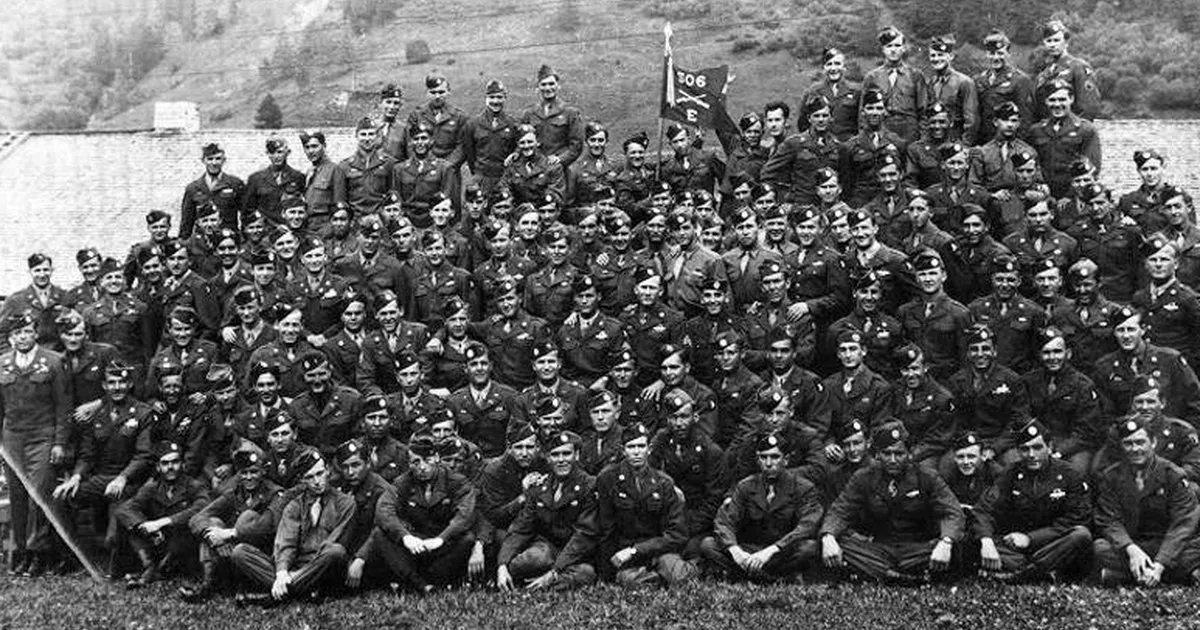
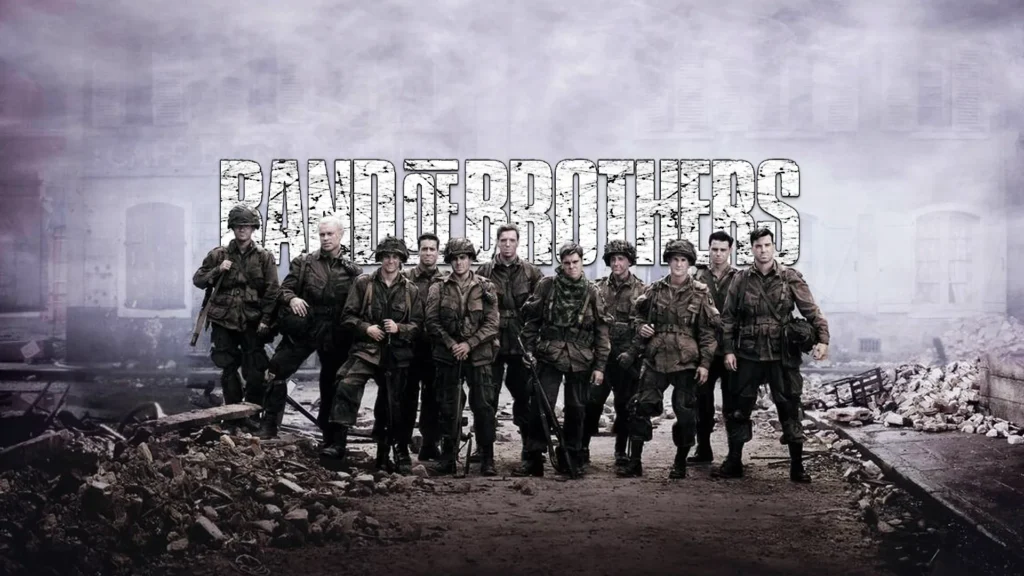
HBO’s Band of Brothers changed how America remembers the Second World War. Ten episodes, 140 men, one parachute infantry company. Easy Company of the 506th Parachute Infantry Regiment, 101st Airborne Division. Stephen Ambrose’s 1992 book and the 2001 miniseries turned ordinary soldiers into household names. But the show compressed timelines, merged characters, and dramatized moments that happened differently in real life. This is the complete guide to what Band of Brothers got right, what it got wrong, and the full true story behind every episode and every man.
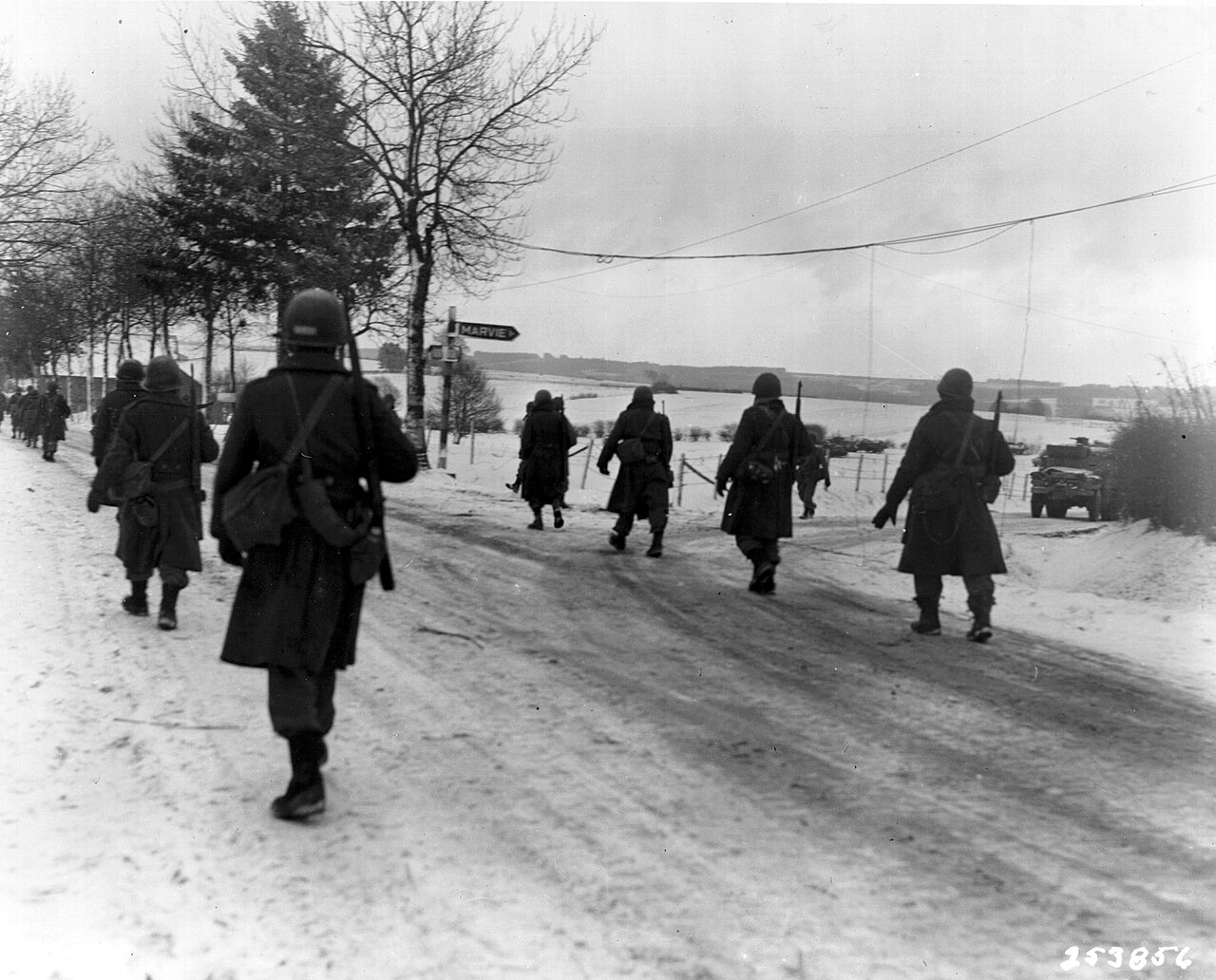
Before this page existed, you had to piece together the truth from scattered memoirs, Wikipedia entries, and fan wikis. CineMilitary’s mission is to fact-check every scene against primary sources, veteran memoirs, unit records, National Archives documents, and publish the comparison in one place. This hub links to every deep-dive we have published, organized by episode and by soldier.
The production itself was a landmark. Executive-produced by Steven Spielberg and Tom Hanks as the follow-up to Saving Private Ryan, Band of Brothers premiered on September 9, 2001, cost roughly $125 million (the most expensive television production of its time), and was filmed largely on a purpose-built set at Hatfield Aerodrome in England. It won the 2002 Emmys for Outstanding Miniseries and for directing, among others, plus the Golden Globe for Best Miniseries. Ten episodes run about 705 minutes in all. Of the roughly 140 men who first formed Easy Company at Toccoa, around 49 were killed across the war, a casualty rate that ran well past 100 percent once replacements are counted.
The Real Easy Company: Who Were These Men?
Meet every man: Explore the Easy Company Roster, ranks, roles, wartime fates, and photos of the 506th PIR paratroopers behind Band of Brothers.
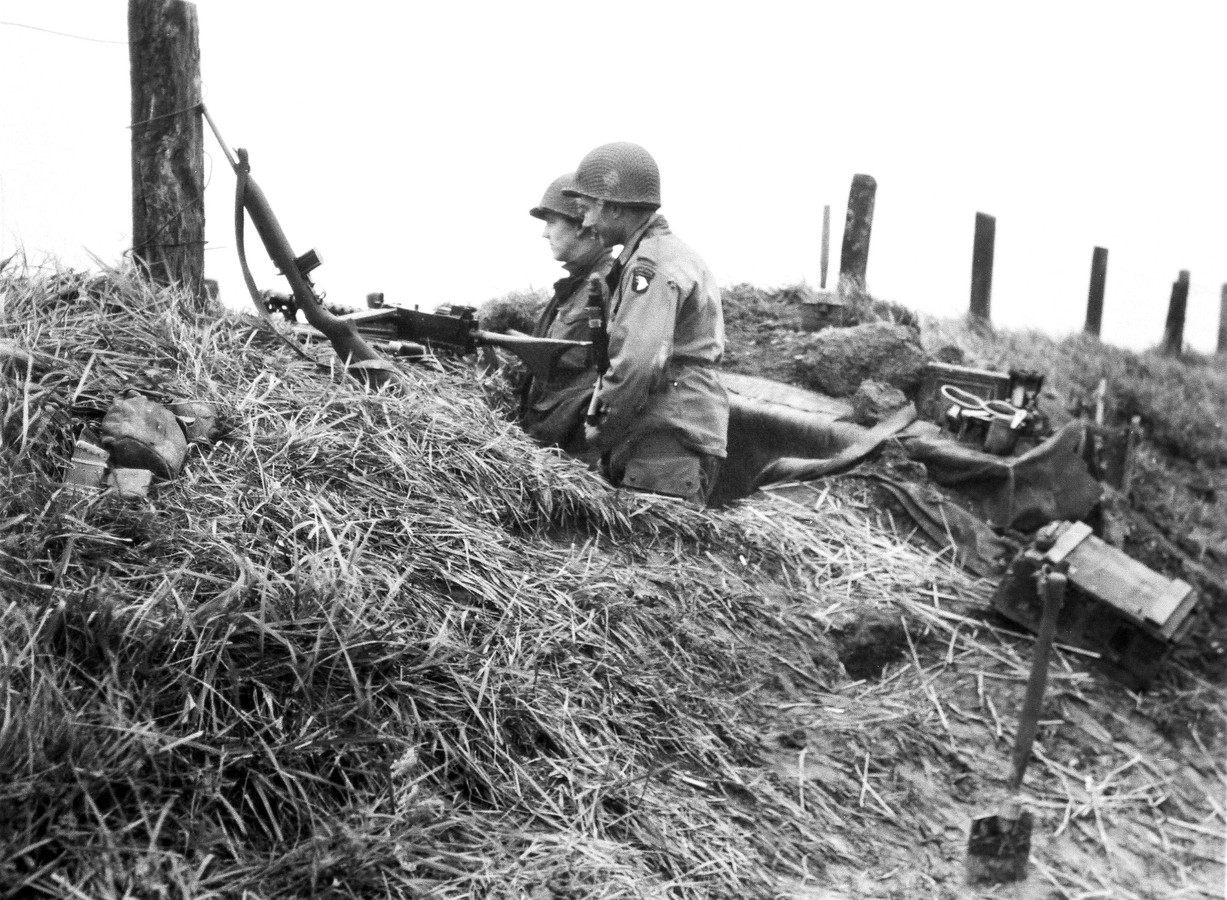
Easy Company was formed at Camp Toccoa, Georgia in July 1942. The men were volunteers for the newly formed parachute infantry, an untested concept in the U.S. Army. Their first commanding officer, Captain Herbert Sobel, trained them so brutally that they hated him. Colonel Robert Sink later said Sobel “made Easy Company” by building the toughest unit in the regiment before being quietly removed for his failures in the field. Read the full Herbert Sobel story.
By D-Day (June 6, 1944), the company jumped into Normandy under Lieutenant Dick Winters. From there, they fought through the Carentan causeway, Operation Market Garden in Holland, the siege of Bastogne in Belgium, the Ardennes breakout, and the capture of Hitler’s mountain retreat at Berchtesgaden. In late April 1945 they also came upon Kaufering IV, a Dachau subcamp the 12th Armored Division had reached a day earlier. It became one of the most devastating moments in the series.
The 506th PIR was one of three parachute infantry regiments in the 101st Airborne, alongside the 501st and 502nd and the 327th Glider Infantry Regiment. Easy Company was one of nine rifle companies in the 506th. That this specific company became a household name, while its sisters in Dog, Fox, and Item companies remain largely unknown, is purely an artifact of Ambrose’s book having access to Major Winters and Sergeant Carwood Lipton, both articulate, meticulous, and willing to talk. Had Ambrose interviewed Fox Company instead, Band of Brothers would be about different men. The accuracy of the story is therefore also the accuracy of a memory, shaped by which veterans survived, remembered, and spoke.
The Actors and the Real Soldiers
One of the most-asked questions about the miniseries is: who played whom, and what happened to the real man? The cast went through a 10-day “boot camp” run by Dale Dye (the same Marine veteran who drilled the cast of Saving Private Ryan). Most of the actors met their real-life counterparts. Several formed lifelong friendships. Below is the short version. For every actor paired with the real soldier, their ranks and fates, and where the cast is now, see our full Band of Brothers cast and real soldiers breakdown. Full individual bios are linked where we have published them.
| Actor | Character | Real soldier’s fate |
|---|---|---|
| Damian Lewis | Major Dick Winters | Retired Major. Penn Dutch farmer. Died January 2, 2011, age 92. |
| Ron Livingston | Captain Lewis Nixon | Survived two bad marriages, alcoholism, and a postwar industry career. Died 1995. |
| Matthew Settle | Captain Ronald Speirs | Career Army. Served in Korea and Berlin. Died April 11, 2007, age 86. |
| Donnie Wahlberg | 1st Sgt. Carwood Lipton | Glass-industry executive. Died December 16, 2001, about three months after the premiere. |
| Scott Grimes | Sgt. Donald Malarkey | Oregon businessman. Wrote Easy Company Soldier in 2008. Died September 30, 2017. |
| Frank John Hughes | Sgt. Bill Guarnere | Lost his right leg at Bastogne. Philadelphia, raised two sons. Died March 8, 2014. |
| Neal McDonough | Lt. Buck Compton | Los Angeles prosecutor. Won a murder conviction against Sirhan Sirhan. Died February 25, 2012. |
| Shane Taylor | T-5 Eugene “Doc” Roe | Louisiana construction worker. Quiet about the war until Ambrose found him. Died December 30, 1998. |
| Eion Bailey | Pvt. David Webster | Harvard graduate, freelance writer. Lost at sea off California in 1961, age 39. His body was never recovered. |
| David Schwimmer | Capt. Herbert Sobel | Attempted suicide in 1970, lived another 17 years blind and partly incapacitated, died 1987 in a VA facility. |
Band of Brothers Episode Guide: The True Story Behind Each
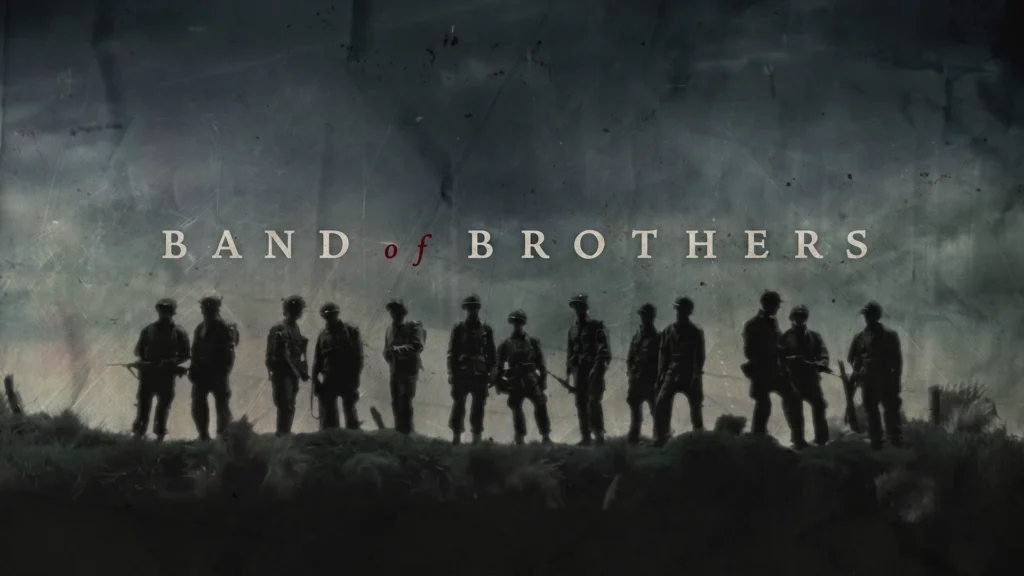
HBO structured the miniseries into 10 episodes spanning basic training to V-E Day. Below is the episode-by-episode breakdown with links to our deep-dive coverage where available.
Episode 1. Currahee (Basic Training)
Camp Toccoa, 1942. Captain Herbert Sobel drives Easy Company up and down Currahee Mountain (three miles up, three miles down, in under 50 minutes). The spaghetti run becomes infamous. The NCOs begin to question whether Sobel can lead them in combat. The episode ends with the mutiny of the sergeants, a real event Ambrose documented in detail; Colonel Sink’s decision to reassign Sobel rather than court-martial the NCOs may have saved the regiment.
Episode 2. Day of Days (D-Day)
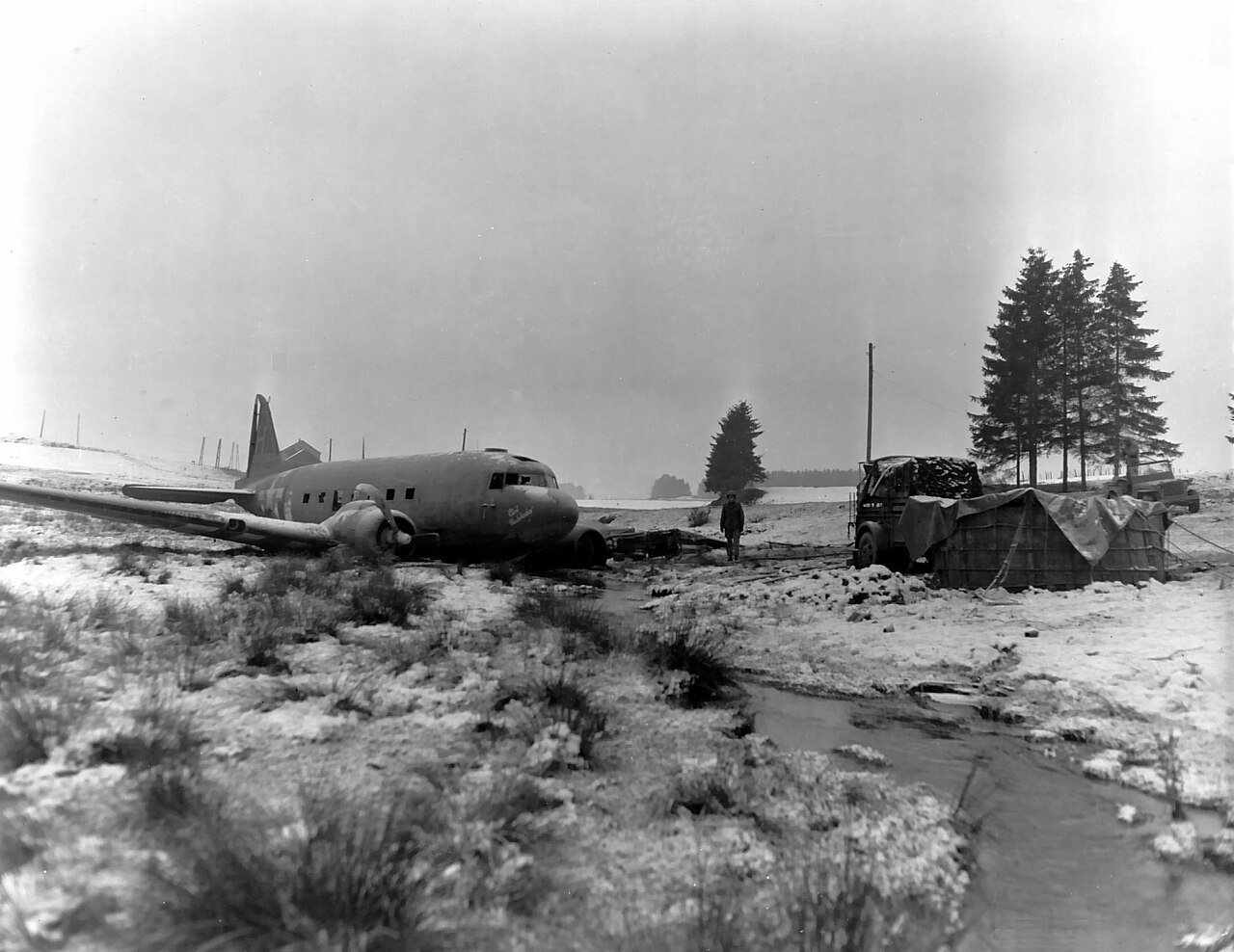
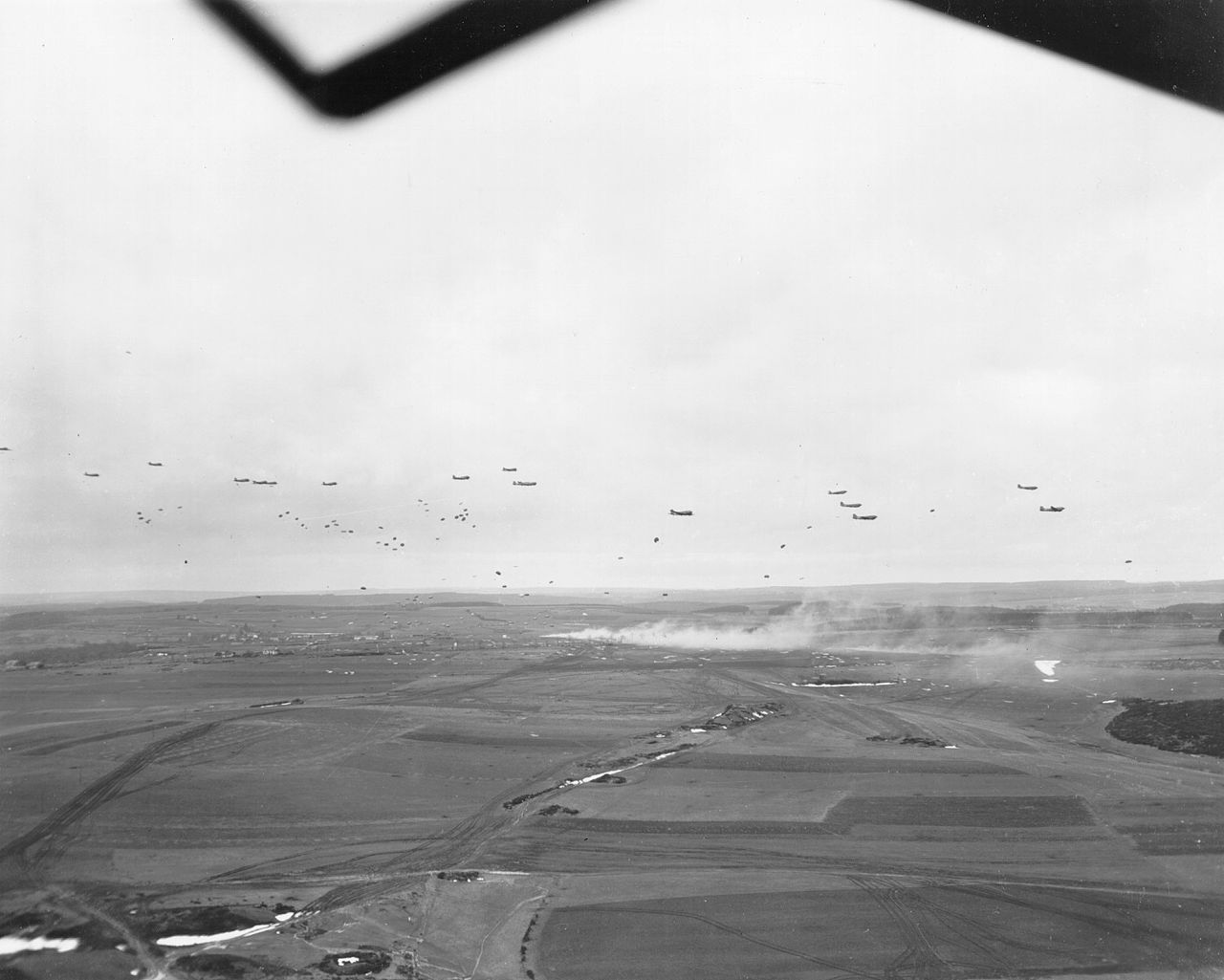
Easy Company jumps into Normandy on June 6, 1944. Lieutenant Thomas Meehan’s C-47 is shot down over the peninsula, killing the company commander and most of the headquarters element. Winters assumes command. His assault on the German 105mm battery at Brécourt Manor, about a dozen men against a dug-in position, became a textbook small-unit action and is still taught at West Point. Winters received the Distinguished Service Cross for it. He was recommended for the Medal of Honor, a recommendation that was reduced because only one MoH per division was permitted for Normandy. The C-47s that carried the company that night wore hastily painted black-and-white invasion stripes, applied across the Allied air fleet in the final days before D-Day.
Episode 3. Carentan
Private Albert Blithe freezes in combat, a scene rendered almost verbatim from Ambrose. Easy Company takes the Carentan crossroads against German paratrooper resistance in what Winters later called “the fiercest fighting of the whole war for us.” The episode’s final shot (Blithe shot in the neck by a sniper) is dramatically altered. The real Albert Blithe recovered, rejoined the airborne, served in Korea, reached Master Sergeant, and died in 1967, from a perforated ulcer rather than any war wound, not in 1948 as the show’s title card still states.
Episode 4. Replacements (Operation Market Garden)
Easy Company drops into Holland and liberates the city of Eindhoven, but the scene HBO shows is not quite what happened. The full Eindhoven liberation true story covers what Winters really saw, what the show changed, and the collaborator humiliation HBO softened. Market Garden itself was a strategic failure; Easy Company’s part in it was brief, violent, and overshadowed by the British disaster at Arnhem.
Episode 5. Crossroads
Winters leads the attack at the dike crossroads in Holland on October 5, 1944 – 20 men against two SS companies, roughly 200 troops. He later called it the defining action of his war, the moment he understood what he was capable of and what combat demanded. He is promoted to battalion executive officer shortly after, pulled away from Easy Company for the rest of the war. The episode is unusual in that it is framed as a flashback Winters narrates while writing his after-action report; that structural choice is pure HBO.
Episode 6. Bastogne
The Battle of the Bulge. Easy Company holds a line in the woods outside Bastogne in sub-zero cold, surrounded, nearly out of ammunition, facing the 26th Volksgrenadier Division and the 2nd Panzer. Eugene Roe, the combat medic, carries the episode. Roe’s real diary is quiet, almost clinical; HBO added the invented friendship with Renée, the Belgian nurse, to give the audience an emotional anchor. Renée was a real person who worked in the Bastogne civilian aid station, but she and Roe did not, based on surviving letters, have the relationship the show portrays.
Episode 7. The Breaking Point
The attack on Foy, January 13, 1945. Lieutenant Norman Dike freezes during the assault. Captain Ronald Speirs is sent in, takes over, runs through the German lines to the I Company positions, and runs back, an act so audacious the Germans held their fire because they could not believe it. Buck Compton is pulled off the line after Bill Guarnere and Joe Toye are both maimed in the same barrage; each lost a leg, and both survived. Carwood Lipton’s quiet, steady leadership holds the company together. Lipton received a battlefield commission for it.
Episode 8. The Last Patrol
Hagenau, France. A night patrol across the Moder River becomes a question mark over the meaning of the war. Replacement Lieutenant Hank Jones gets his combat experience. David Webster, the Harvard writer who rejoined the company after being wounded, narrates through his memoir Parachute Infantry. The patrol itself achieves little; the second, canceled patrol, where Winters orders the men to report a successful mission they did not actually run, is one of the few times in the show he commits what is arguably a minor war crime (fabricating an after-action report). The real Winters confirmed in interviews that yes, he did it, and that he would do it again.
Episode 9. Why We Fight
Easy Company stumbles onto the Kaufering subcamp, a Dachau outpost, near Landsberg, Germany, in April 1945. The moment defines why Band of Brothers became more than a war story. The true story of Kaufering, Episode 9, and why Winters’s reaction became the most powerful moment in the entire miniseries. The subcamp Easy Company found was Kaufering IV, also known as Hurlach; the men who survived it had been marched there from other Dachau outposts days before liberation.
Episode 10. Points
Berchtesgaden and the capture of Hitler’s mountain retreat at Berchtesgaden. Easy Company waits for the Pacific rotation that never comes; Japan surrenders before they ship. Winters’s quiet decision to leave the Army is covered in full on CineMilitary. The epilogue narration tells you what happened to each surviving member, read by Tom Hanks with deliberate understatement. The last line, read by the real Dick Winters, comes from a letter by Sgt. Mike Ranney: asked by his grandson whether he was a hero, Ranney answered, “No, but I served in a company of heroes.” It sums up the miniseries’s thesis in one sentence.
Four Battles That Define the Miniseries
If you only remember four names from Band of Brothers, these are the ones. Each is covered in depth in our battle analysis silo (pillar forthcoming). Here is the short version of why each matters.
Brécourt Manor (June 6, 1944)
About a dozen paratroopers, later reinforced, against a four-gun battery of German 105s dug in behind a hedgerow. Winters flanked each gun in turn, silenced the battery, captured a map that revealed the entire German artillery layout on that sector of the Cotentin. It is the U.S. Army’s textbook example of small-unit fire and maneuver. West Point cadets still study the engagement. See our full Brécourt Manor assault breakdown.
The Crossroads (October 5, 1944)
The dike attack in Holland. 20 paratroopers against two SS companies. Winters charged over the dike, ordered fixed bayonets, and drove the SS back into Germany. The action took fewer than 20 minutes. Winters later wrote that everything he understood about his own courage was settled in those minutes. He never fired his rifle in combat after that day.
Bastogne (December 19, 1944 – January 17, 1945)
Easy Company dug in at the Bois Jacques outside Foy, holding the northeast shoulder of the Bastogne perimeter through the coldest Ardennes winter in living memory. They were surrounded. They were short on ammunition, food, and winter clothing. General McAuliffe’s “NUTS!” reply to a German surrender demand became the war’s most-quoted line, but the men holding the line never heard about it until weeks later. The reason the siege is remembered as heroic is that it was, by any honest accounting, an inch from collapse.
The Eagle’s Nest (May 5, 1945)
Winters’s 2nd Battalion entered Berchtesgaden at 12:30 on May 5, after a day stalled behind the French 2nd Armored Division at a blown bridge. Other Allied units, including the U.S. 3rd Infantry Division, also claim to have reached the town and the Kehlsteinhaus first, and that question is still argued. The men drank from Hitler’s wine cellar that night. For most of the company, it was the last serious operation of the war. The photograph of Winters on the balcony of the Berghof has become one of the most recognized U.S. Army images of the European theater.
Dick Winters’ Leadership: What the Miniseries Got Right
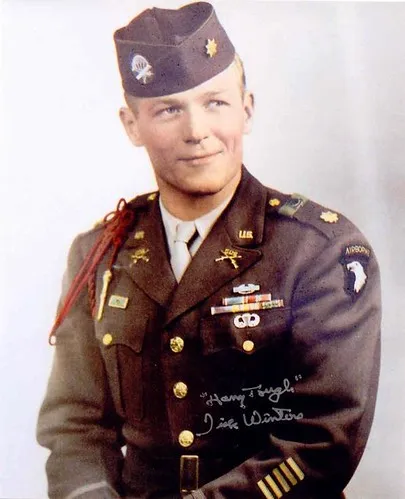
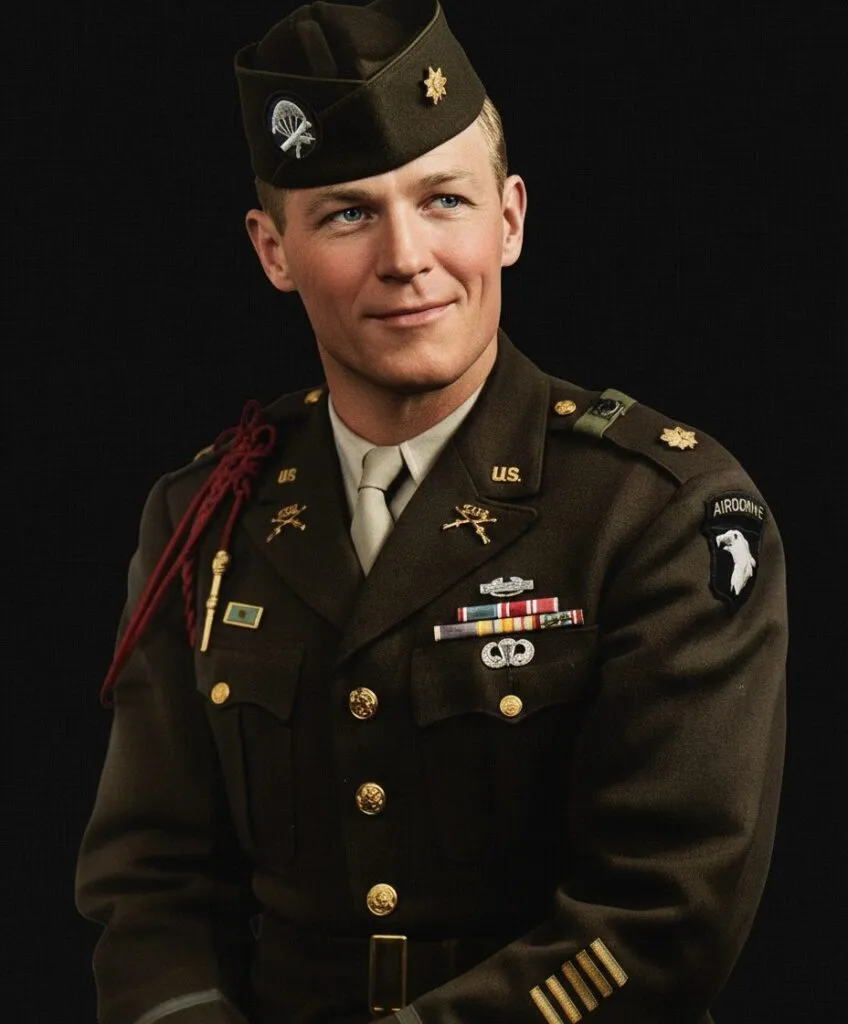
Damian Lewis’s performance as Dick Winters became the emotional center of the miniseries. Three things the show got right, verified against Winters’s memoir and the letters he wrote to his friend DeEtta Almon from 1942 to 1945:
- He led from the front without performing bravery. At Brécourt, at the Crossroads, at the dike, he moved with the lead element. He never ordered men to do what he would not do himself.
- He drank almost nothing and kept his counsel. The scene where he refuses wine in Episode 5 is from life. His sobriety was noted by every officer who served with him and every veteran Ambrose interviewed.
- He promoted aggressively based on performance, not seniority. Carwood Lipton’s battlefield commission is the best-known example; Winters pushed for it over objections.
- D-Day Paratroopers: Why the T-5 Jump Was a Nightmare
For the complete Winters biography, from the Pennsylvania farm boy to the Currahee mountain runs to his 60 years of peace as a Hershey company executive and a gentleman farmer, see the full Dick Winters biography.
Ronald Speirs: Myth vs Record
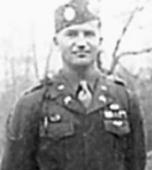
Captain Ronald Speirs is the most mythologized character in the series. Did he shoot 20 German prisoners on D-Day? Did he kill one of his own sergeants for refusing to obey an order? HBO includes both stories as rumors, with the men in the company trading them as legends, which is how they circulated in Easy Company in 1944. The current consensus, based on declassified unit records and interviews Ambrose conducted for the book, is that the 20-prisoner story is unsupported by any surviving witness statement; the shot sergeant never existed. The real Speirs was aggressive, quiet, and fast; the legend was a product of the company’s need to explain why a man who seemed fearless in battle did not need explanation.
The full Ronald Speirs true story covers his post-war career, including his command of Spandau Prison in Berlin during the Rudolf Hess years, a command that required daily contact with the last surviving senior Nazi prisoner.
What HBO Changed: Five Liberties the Show Took
Band of Brothers is one of the most accurate war miniseries ever produced, but it is still television. Here are five specific places the show bent the record. None of them are fatal to the show’s credibility. All of them are worth knowing.
- Albert Blithe did not die in 1948. He recovered, served in Korea, reached Master Sergeant, and died in 1967 of a perforated ulcer, unrelated to any war wound. The error traces to Ambrose’s 1992 book; later printings corrected the date, but the miniseries never re-cut the title card.
- The mutiny of the NCOs was less dramatic than shown. The actual letter was signed by six sergeants, not all of them, and was delivered to Colonel Sink by Sergeant Mike Ranney, not Harry Welsh.
- Eugene Roe and Renée. They met at the Bastogne civilian aid station. They did not have the relationship HBO implied. Roe spoke of her once to Ambrose, in passing.
- The Bastogne supply scene. Easy Company was resupplied by air drop on December 26, 1944. HBO compressed the timeline so that the drop appears to arrive weeks into the siege; in reality it came relatively early.
- The last patrol fabrication. The scene where Winters orders a fake after-action report is real, but Winters clarified in a 2004 interview that his actual order was more casual (“Tell them we went out. Tell them nothing happened. We’re done with patrols.”) than the formal deception the show depicts.
The Book Behind the Show: Ambrose’s Sources and Later Disputes
Stephen Ambrose’s Band of Brothers: E Company, 506th Regiment, 101st Airborne from Normandy to Hitler’s Eagle’s Nest was published in 1992. Ambrose had spent the previous five years interviewing surviving Easy Company veterans, including more than 100 hours with Winters alone. The book leans heavily on Winters’s memoir manuscript (later published in 2006 as Beyond Band of Brothers) and on the Currahee Scrapbook, a company history compiled by sergeants during the war.
Ambrose’s reputation suffered late in his career when plagiarism was found in three of his other books (The Wild Blue, Citizen Soldiers, Crazy Horse and Custer). Band of Brothers has been spot-checked more thoroughly than almost any popular history of the war, and no significant plagiarism has been found in it, the reason historians believe is that the book relied on direct interviews and primary documents, not on secondary sources that could be silently copied. That does not mean every sentence is perfectly accurate; Ambrose’s ear for a good story sometimes sharpened the edges of events. But the spine of the book, the sequence of operations, the fates of the men, the character portraits, holds up.
The miniseries adapted the book with one major addition: the real veterans appear on camera in the opening of each episode, speaking in their own words. Those interviews were conducted by the production team between 1999 and 2001. Several of the men were in their late 70s or 80s; Bradford Freeman, the last surviving member of Easy Company, died July 3, 2022, at age 97. After his death, there is no one left alive who fought in the company. Everything we know about them now is what they said before they died, and what their families chose to share after.
Easy Company Soldiers. Their Real Lives After the War
Band of Brothers ends with a title card for every major character. What it could not show was what the decades after the war did to these men. CineMilitary covers each soldier in depth, the ones who found peace, the ones who did not, and the quiet tragedy of the last survivors.
Captain Herbert Sobel. Easy Company’s first commander. Attempted suicide in 1970. Died blind, malnourished, and alone in a VA facility in 1987. No one came to his funeral.
Major Dick Winters. The lead character. Told Tom Hanks “I can shun you” over the script’s profanity during filming. Died January 2, 2011, age 92. See the full Dick Winters biography.
Captain Ronald Speirs. Career Army. Served in Korea and Berlin. Ran Spandau Prison during Rudolf Hess’s imprisonment. Died April 11, 2007, age 86. See the full Ronald Speirs story.
Sergeant Bill Guarnere. Lost his right leg at Bastogne trying to pull Joe Toye to cover. Raised five children in Philadelphia, kept in touch with Babe Heffron (his childhood friend, also Easy Company) for the rest of his life. Died March 8, 2014, age 90. The two of them jointly wrote a memoir called Brothers in Battle in 2007.
Private David Kenyon Webster. Harvard graduate, freelance writer, shark researcher. Sailed into the Pacific off California in 1961 and never came back. His body was never found. He left behind a wife and three children and the manuscript that became Parachute Infantry, published posthumously in 1994.
Sergeant Donald Malarkey. Oregon businessman, cinephile, reluctant public speaker. Wrote his memoir Easy Company Soldier at 87. Died September 30, 2017, age 96. At his funeral, a bagpiper played “Amazing Grace,” the same tune he requested when he landed in Normandy and realized he had survived the drop.
We have also published full deep-dives on Lewis Nixon, Buck Compton, Bill Guarnere, Joe Toye, Albert Blithe, Shifty Powers, and Bill Kiehn. Eugene Roe, Carwood Lipton, and the last survivor Bradford Freeman will each receive dedicated coverage in the Band of Brothers silo.
Is Band of Brothers Historically Accurate?
Band of Brothers is one of the most accurate war miniseries ever produced. The source material (Stephen Ambrose’s 1992 book) was built on hundreds of hours of interviews with surviving Easy Company veterans. The costumes, weapons, tactics, and locations were reconstructed meticulously on a 12-acre backlot in Hertfordshire, England. The uniforms were correct to the patch. The M1 Garands were real, modified for blanks. The drop sequences show C-47 Skytrains, the transport the 101st jumped from in June 1944.
But it is still television. HBO compressed events, merged secondary characters into composites, and altered dramatic moments. The five examples above cover the most-discussed liberties the show took. None of them break the essential truth of the story. The men existed. Easy Company was formed at Camp Toccoa. They fought at Brécourt, Carentan, the Crossroads, Bastogne, Foy, Hagenau, and Berchtesgaden. Most of them lived to retire. Some of them did not. That is the story the miniseries tells, and it tells it with fewer liberties than almost any comparable adaptation of recent history.
How CineMilitary Researches Every Article
Every article on this site is cross-checked against at least three primary or authoritative sources: veteran memoirs, National Archives unit records, official regimental histories, academic biographies, or direct interviews where available. We cite our sources inline where the claim is specific. We note where sources disagree. We mark speculation as speculation. When HBO and the primary record diverge, we name the divergence and explain why we judge one account more credible than the other.
Where an image is used, it is either sourced from Wikimedia Commons (public domain or creative commons), the National Archives, or enhanced from a public-domain original using AI restoration. We do not fabricate quotes. We do not invent scenes. Where a veteran’s words appear in quotation marks, those words are attributable to a published interview, memoir, or letter.
Frequently Asked Questions
Was every man in Band of Brothers real?
Yes. Every named soldier in the miniseries was a real member of Easy Company, 506th PIR, 101st Airborne. A small number of minor characters were composites (usually a combination of two or three replacements whose individual stories were too thin to dramatize on their own), but every character with a name and a speaking role corresponds to a specific, documented man.
Who was the last surviving member of Easy Company?
Bradford Freeman, a mortarman who joined Easy Company as a replacement in 1944 and fought through Bastogne, Hagenau, and Berchtesgaden. He died July 3, 2022, at age 97. With his death, no member of the original Easy Company remains alive. See our full account of the last Easy Company survivors.
How accurate is the Brécourt Manor assault?
The action is shown with high fidelity. The number of men, the sequence of the flanking maneuver, Winters’s order to charge the first gun, the map captured from the German position: all documented. The one significant compression is that the assault actually took closer to three hours than the 45 minutes the episode implies. HBO tightened the timeline for dramatic pacing.
Did Ronald Speirs really shoot 20 German prisoners?
Probably not. The story circulated in the company as a rumor, which is how the miniseries treats it. No surviving witness statement confirms it. Speirs himself, when asked directly in a 1990 interview, said “I don’t remember doing that” and then declined to comment further. The legend outlasted the fact.
Where can I watch Band of Brothers?
The miniseries is available on HBO Max (now Max). A physical Blu-ray boxed set, released in 2008 and remastered in 2020, is also available. All 10 episodes run approximately 705 minutes total.
What should I read next?
Start with Dick Winters’s own memoir, Beyond Band of Brothers (2006), written with Colonel Cole C. Kingseed. Then read David Kenyon Webster’s Parachute Infantry, posthumously published, which covers the same ground from an enlisted man’s point of view. For the source material, read Stephen Ambrose’s Band of Brothers (1992). For the companion miniseries, HBO’s The Pacific (2010) covers the 1st Marine Division, and Masters of the Air (2024) follows the 100th Bomb Group, completing the Spielberg-Hanks WWII trilogy.
This guide is updated as new deep-dive articles are published by the CineMilitary editorial team.
Correction, October 25, 2026: An earlier version of this guide said Don Malarkey landed at Utah Beach (he parachuted in), misattributed the “company of heroes” line, said Easy Company liberated Kaufering (the 12th Armored Division reached it a day earlier), and named the B-17 as the drop aircraft (the 101st jumped from C-47s). It also overstated the Brécourt force, said Easy Company beat the French to Berchtesgaden, and gave an unconfirmed Emmy count.