Most soldiers who lose a leg in combat lose it running for cover. Bill Guarnere lost his running the other way. On a frozen morning outside Bastogne, with German shells walking across an open field, he went back into the fire to drag a wounded friend to safety. The shrapnel that took his right leg was the price of that decision, and he never once said it was the wrong call.
To the men of Easy Company he was “Wild Bill,” the South Philadelphia kid who fought like he had nothing to lose. The truth was the opposite. He had everything to lose, and he kept going back anyway.
Who was Bill Guarnere?
Staff Sergeant William J. “Wild Bill” Guarnere was an original member of Easy Company, 506th Parachute Infantry Regiment, 101st Airborne Division. He was born on April 28, 1923, in South Philadelphia, the youngest of ten children in an Italian American family. He jumped into Normandy on D-Day at the age of 21, fought through Holland, held the line at Bastogne, and came home one of the most decorated enlisted men in the company, with a Silver Star, two Bronze Stars, and two Purple Hearts.
He was also one of the most quoted. Guarnere never softened the war for anyone, and after 2001 he became one of the most recognizable faces of the real Easy Company, the gravel-voiced veteran who told the story straight.
Why was he called Wild Bill?
The nickname came from how he fought, and how he fought came from a letter. Shortly before the Normandy jump, Guarnere learned that his older brother Henry had been killed in the Italian campaign, serving as a medic with the 1st Armored Division near Monte Cassino. He carried that grief into combat, and it came out as fury aimed at the enemy. Guarnere never dressed up what that anger did on the ground: “I killed every German I could,” he said of those first days in France. “That’s why they called me Wild Bill.”
The discovery was almost cruel in its timing. In the marshaling area before D-Day, Guarnere picked up a jump jacket he thought was his own. It belonged to his friend Johnny Martin, and tucked inside was a letter from Martin’s wife that read, “Don’t tell Bill Guarnere, but his brother Henry was killed in Cassino.” That was how he learned of it, days before he jumped into occupied France. As he wrote in his memoir, Brothers in Battle, Best of Friends, it felt like the floor fell out from under him.
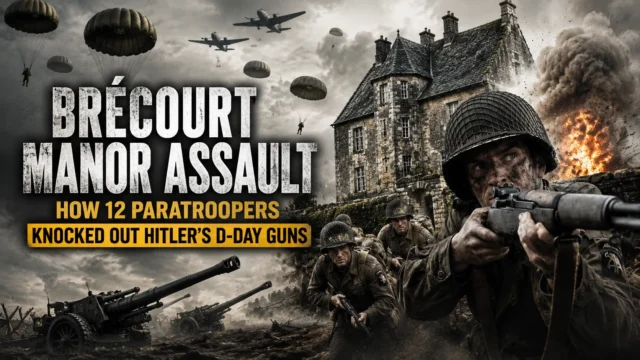
It showed on his first day of the war. On June 6, 1944, Guarnere was one of the small group of paratroopers Lieutenant Dick Winters led against a battery of German 105mm guns at Brécourt Manor, guns that were shelling Utah Beach. Winters put Guarnere in charge of 2nd Platoon for the assault. Roughly a dozen Americans took on a far larger German force and knocked the guns out, an action still taught at West Point as a model of a small-unit attack. Guarnere’s aggression that morning was exactly what the fight needed, and it was also what worried Winters, who saw a man taking risks that went past brave.
That tension followed him. In Holland that October, chasing speed as usual, he stole a motorcycle from a local and gunned it across an open field in full view of the Germans. A sniper shot him off it, through the right leg, the same leg he would lose three months later, and the wound sent him to a hospital in England. He simply walked out. He tried to reach an airfield, then the coast, hoping to catch a boat back across the Channel to his outfit, until an officer caught him and the Army court-martialed him. He was unmoved. “I’ll just go AWOL again tomorrow, and you’ll have to court-martial me again,” he told them. “I want to go back to my outfit.” They cut his cast off, and he made his own way back to Easy Company for Bastogne, unwilling to sit out the fight while his friends were in it. The court-martial cost him his sergeant’s stripes; he went back to the line a private and earned the rank back before the war ended, finishing as a staff sergeant.
How did Bill Guarnere lose his leg?
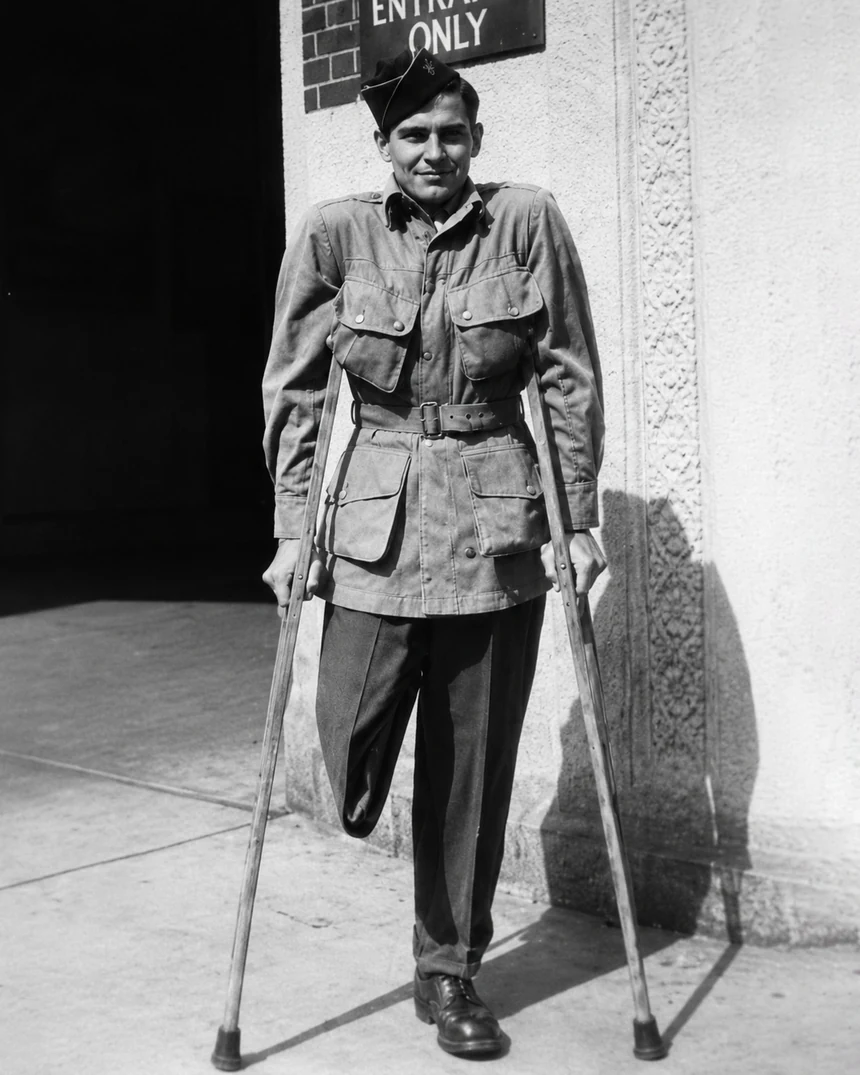
Bill Guarnere lost his right leg on January 3, 1945, in the snow near Foy, Belgium, during the Battle of the Bulge. Easy Company was dug in along the tree line outside the town when a heavy German artillery barrage came down on their positions. One of the first men hit was Sergeant Joe Toye, Guarnere’s close friend, who was thrown into the open and badly wounded.
Guarnere went out after him. He reached Toye in the middle of the barrage and was trying to pull him back to the trees when another shell landed beside them. The blast caught Guarnere in the right leg. Both men survived, and both lost a leg. They had jumped into Normandy together, and they left the war within minutes and a few feet of each other.
It is the moment that defines him, and it is worth being precise about why. He did not lose his leg in a charge or a famous victory. He lost it doing the least cinematic thing a soldier can do, crawling toward a friend who could not move, knowing the shells were still coming. For Guarnere, that was not a hard choice. Toye would have done the same for him.
What happened to Bill Guarnere after the war?
The amputation ended his war but not his place in Easy Company. For the rest of his life Guarnere was the man who held the veterans together, organizing reunions and keeping track of who was where long before anyone outside the company knew their names.
He came home to South Philadelphia, where he and his wife Frances raised two sons. The missing leg never slowed him down. One of his sons, Gene, later enlisted during the Vietnam era and served with the 101st Airborne Division, the same division his father had jumped with into Normandy.
When the HBO series arrived in 2001, that role grew. Guarnere and his lifelong friend Edward “Babe” Heffron, another South Philadelphia paratrooper, became two of the most public voices of the real Easy Company. In 2007 the pair told their own version of events in a memoir, Brothers in Battle, Best of Friends, written with Robyn Post. The book did what Guarnere always did in person: it kept the focus on the men, not the movie.
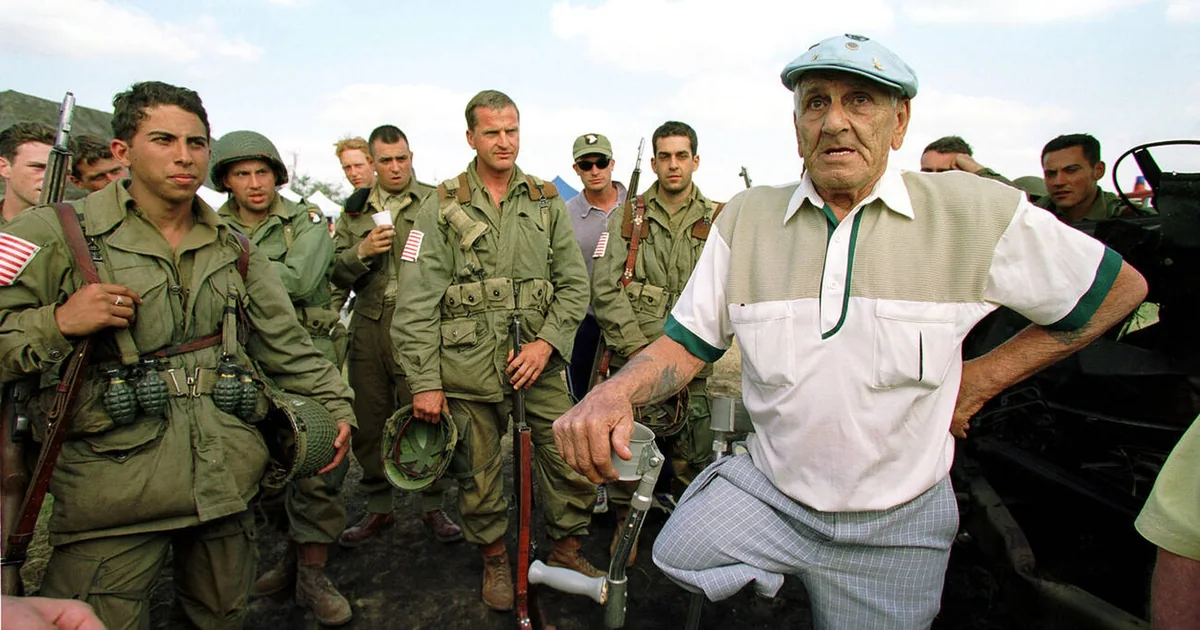
Bill Guarnere died on March 8, 2014, at Thomas Jefferson University Hospital in Philadelphia, of a ruptured aortic aneurysm, at the age of 90. He is buried at Saints Peter and Paul Cemetery in Springfield, Pennsylvania, just outside the city; his Find a Grave memorial records the site. He had outlived most of the company he helped lead, and he spent his last decades making sure the rest of us would remember them.
Bill Guarnere and Babe Heffron
If Easy Company had a most famous friendship, it was Bill Guarnere and Edward “Babe” Heffron. Both were South Philadelphia boys, and after the war Heffron found Guarnere back in the old neighborhood, shooting dice on a street corner. From then on they were, in Guarnere’s words, “almost inseparable for sixty years,” on the phone nearly every day and together for breakfast or lunch most weeks.
That bond carried into the public eye after 2001. The two appeared together at reunions, book signings, and screenings, and in 2007 they put their shared history on the page in Brothers in Battle, Best of Friends. Heffron died in December 2013, a few months before Guarnere, closing out the better part of seventy years as brothers in everything but blood.
Their friendship is now cast in bronze. South Philadelphia honored both men with statues in Pennsport, near Herron Playground. Heffron’s was unveiled in 2015 and holds his ashes in a bronze heart; Guarnere’s joined it in 2019, the two friends standing across from each other on South 2nd Street. Sculptor Terry Jones designed the memorial, which is dedicated to the neighborhood’s veterans.
Who played Bill Guarnere in Band of Brothers?
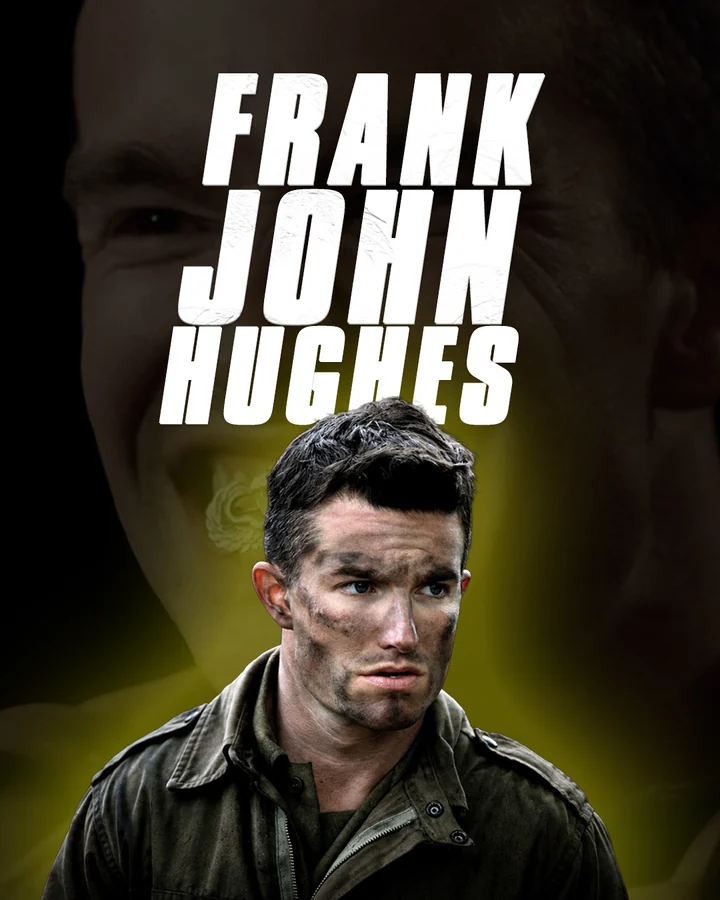
Frank John Hughes played Bill Guarnere in HBO’s Band of Brothers. Hughes dropped weight to play the lean young paratrooper of 1944, and his performance made “Wild Bill” one of the most recognizable men in the series. The two became close off screen. The real Guarnere turned up alongside Hughes at reunions and screenings for years, proud of how the actor had carried his name.
The measure of the man
It is easy to turn a soldier like Guarnere into a caricature, the tough guy who loved a fight. He was tougher than that, and more complicated. He went to war angry over a brother he had lost, fought hard enough to scare the officer leading him, and then gave his leg trying to save a friend. After the war he could have walked away from all of it. Instead he spent fifty years answering letters, shaking hands, and refusing to let Easy Company be forgotten.
That is the part the nickname misses. “Wild Bill” was real. So was the man who kept going back.
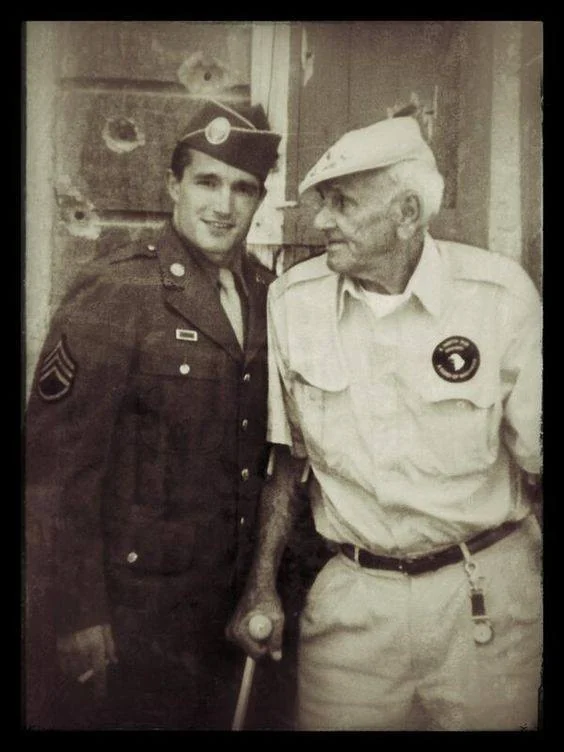
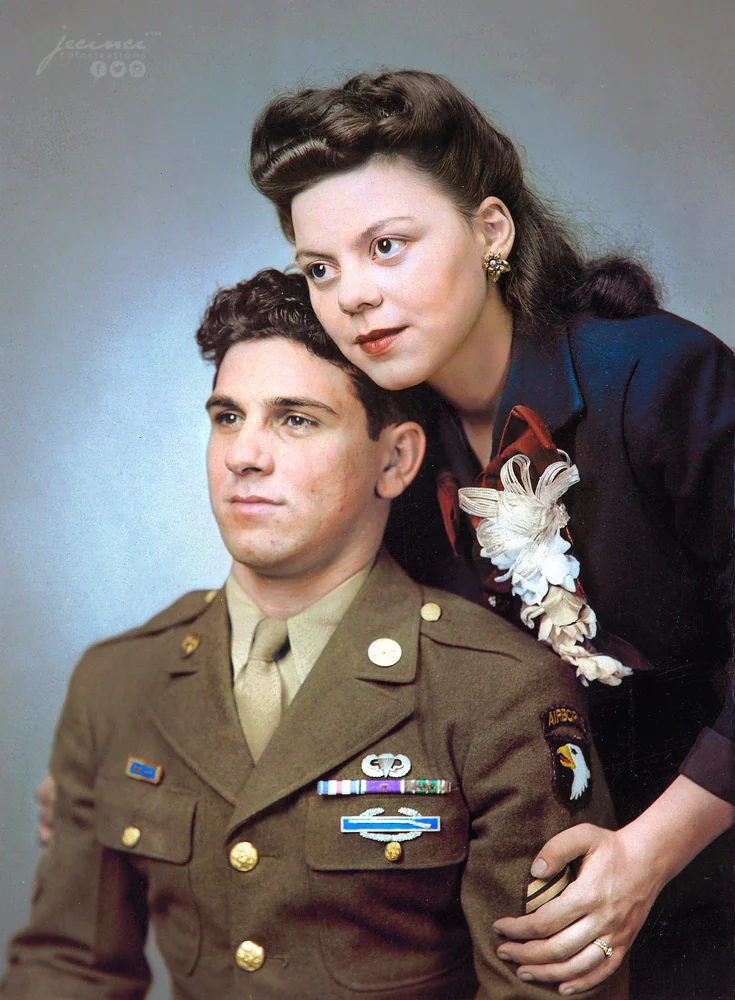
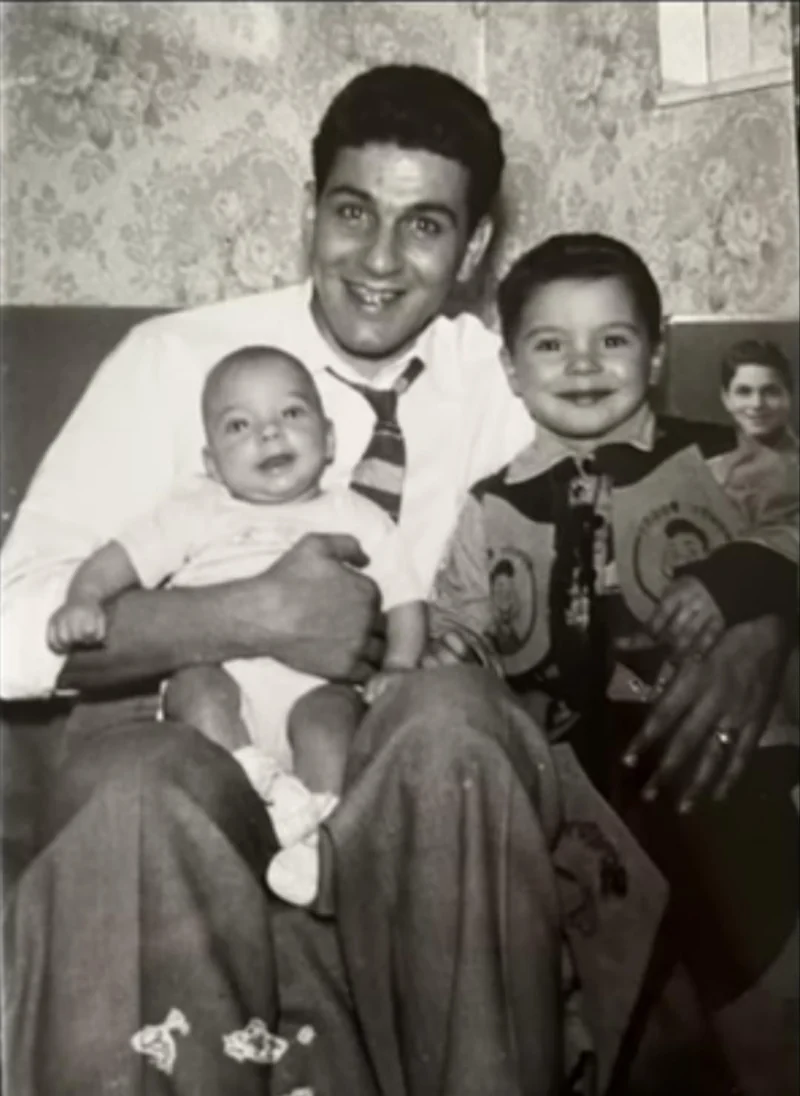
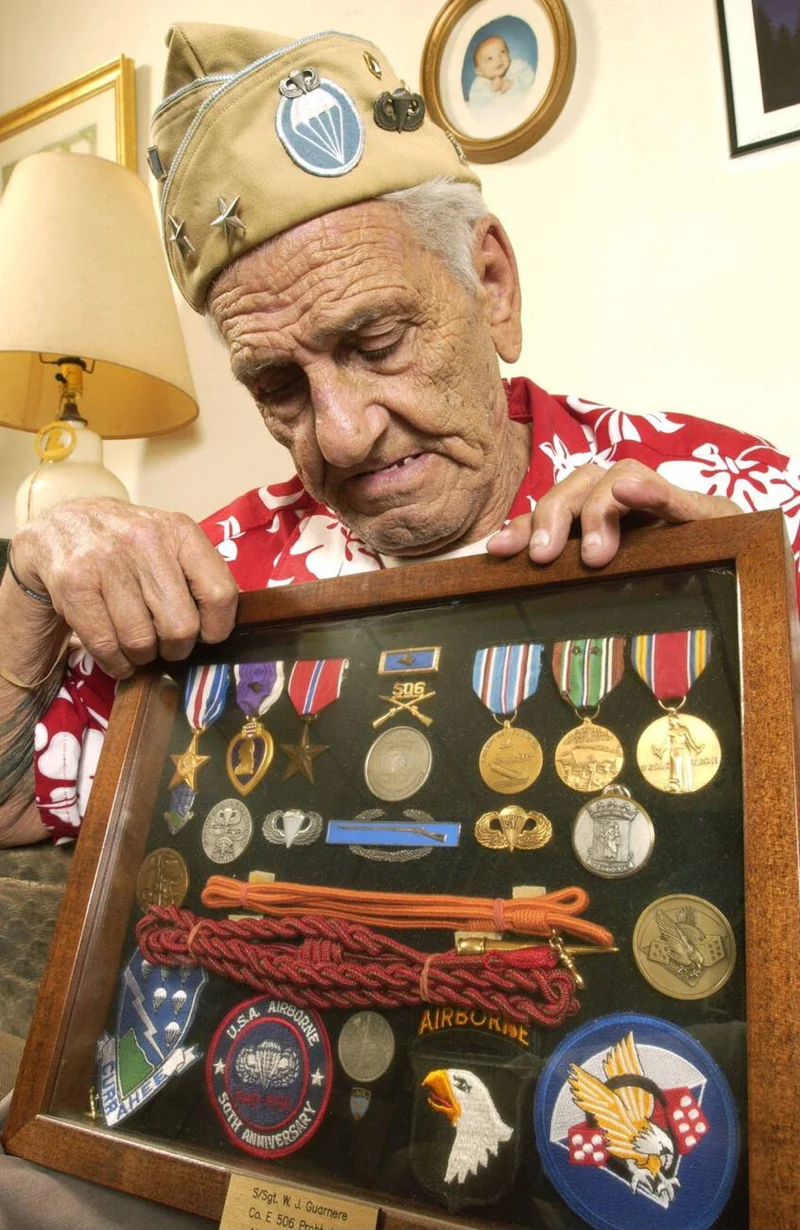
Bill Guarnere in photos
Related Easy Company stories
- Dick Winters, the officer who led the Brécourt Manor assault
- Joe Toye: four Purple Hearts and the leg he lost at Bastogne
- The Brécourt Manor assault, Guarnere’s first day of the war
- Bill Kiehn, the Toccoa original who also went AWOL to rejoin Easy Company
Sources
- Stephen E. Ambrose, Band of Brothers: E Company, 506th Regiment, 101st Airborne from Normandy to Hitler’s Eagle’s Nest (Simon & Schuster, 1992).
- William Guarnere and Edward Heffron, with Robyn Post, Brothers in Battle, Best of Friends (Berkley Caliber, 2007).
- “William Guarnere,” Wikipedia, and the Eisenhower Foundation soldier profile, for service record and decorations.
- “Band of Brothers WWII Veteran ‘Wild Bill’ Guarnere Dies at 90,” Time / Associated Press, March 8, 2014.
- “Life and Legacy of Wild Bill,” War History Online.
- “William Joseph ‘Wild Bill’ Guarnere Sr. (1923-2014),” Find a Grave memorial no. 126101706, for burial at Saints Peter and Paul Cemetery, Springfield, PA.
- “Sculpture of veteran William ‘Wild Bill’ Guarnere unveiled on 2nd Street,” South Philly Review (2019), for the Pennsport memorial statues.
Frequently asked questions
How did Bill Guarnere lose his leg?
Guarnere lost his right leg on January 3, 1945, near Foy, Belgium, during the Battle of the Bulge. When a German artillery barrage wounded his friend Joe Toye and left him in the open, Guarnere ran out to pull him back and was hit by another shell. Both men lost a leg.
Why was Bill Guarnere called “Wild Bill”?
The nickname came from his aggressive style in combat, which Easy Company traced partly to the death of his older brother Henry in Italy. Guarnere learned of it around the time of the Normandy jump and carried that anger into the fight, starting with the Brécourt Manor assault on D-Day.
What medals did Bill Guarnere receive?
Guarnere was awarded the Silver Star, two Bronze Stars, and two Purple Hearts for his service with Easy Company, 506th PIR. He finished the war as a staff sergeant.
Did Bill Guarnere and Joe Toye both lose a leg?
Yes. During the same artillery barrage near Foy on January 3, 1945, Joe Toye was wounded and lost a leg, and Guarnere lost his right leg trying to drag Toye to safety. The two had jumped into Normandy together on D-Day.
When did Bill Guarnere die?
Bill Guarnere died on March 8, 2014, at age 90, of a ruptured aortic aneurysm at Thomas Jefferson University Hospital in Philadelphia. He spent his postwar life organizing Easy Company reunions and, in 2007, co-wrote the memoir Brothers in Battle, Best of Friends with Babe Heffron.
Who played Bill Guarnere in Band of Brothers?
Frank John Hughes played William “Wild Bill” Guarnere in the 2001 HBO miniseries Band of Brothers. Hughes lost weight to play the young paratrooper and became friends with the real Guarnere, who often appeared with him at veterans’ events.
Were Bill Guarnere and Babe Heffron friends?
Yes. Bill Guarnere and Edward “Babe” Heffron, both from South Philadelphia, became inseparable after the war and stayed close for about sixty years, speaking on the phone almost daily. In 2007 they told their shared story in the memoir Brothers in Battle, Best of Friends.
Was Bill Guarnere court-martialed?
Yes. After a wound in Holland put him in a hospital in England, Guarnere went AWOL to rejoin Easy Company, was caught trying to cross the Channel, and was court-martialed. He told the Army he would just go AWOL again, and he made it back to his unit in time for Bastogne.
Did Bill Guarnere write a book?
Yes. In 2007 Guarnere and Babe Heffron published Brothers in Battle, Best of Friends, a joint memoir of their time in Easy Company and their lifelong friendship, written with Robyn Post. It is one of the most personal first-hand accounts from the men of Band of Brothers.
Was Bill Guarnere a real person?
Yes. “Wild Bill” Guarnere was a real staff sergeant in Easy Company, 506th PIR, 101st Airborne Division, not a character created for television. He fought from Normandy to Bastogne, lost his right leg in the Battle of the Bulge, and lived until 2014.
Is Bill Guarnere still alive?
No. Bill Guarnere died on March 8, 2014, in Philadelphia, at the age of 90. He was one of the last surviving members of Easy Company’s original Toccoa group.
Where is Bill Guarnere buried?
Guarnere is buried at Saints Peter and Paul Cemetery in Springfield, Pennsylvania, in the Philadelphia area; his Find a Grave memorial records the site. A bronze statue of him also stands in his old Pennsport neighborhood in South Philadelphia.
Is there a statue of Bill Guarnere?
Yes. A bronze statue of “Wild Bill” Guarnere was unveiled in 2019 in Pennsport, South Philadelphia, facing a 2015 statue of his best friend Babe Heffron near Herron Playground. Sculptor Terry Jones created the memorial to honor the neighborhood’s veterans.
Did Bill Guarnere have children?
Yes. Guarnere and his wife Frances raised two sons in South Philadelphia. One of them, Gene, later served with the 101st Airborne Division during the Vietnam era, following his father into the same unit.