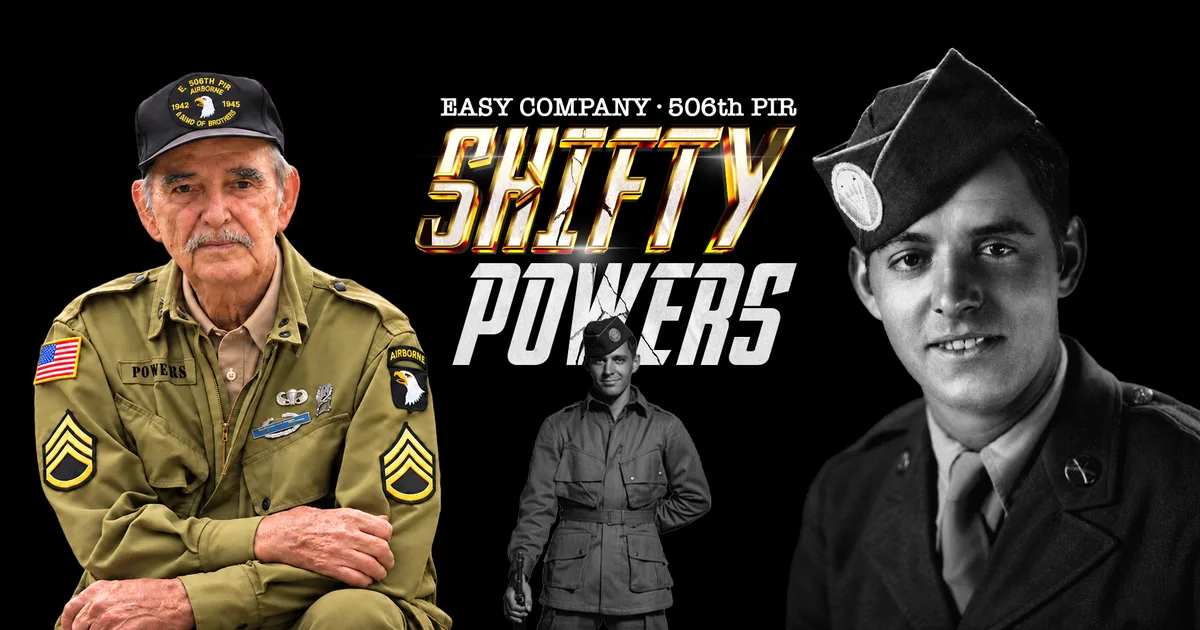
He survived Normandy without a scratch. He walked out of Bastogne with all ten fingers and both boots. Two years of combat, some of the worst the war could offer, and the enemy never touched him.
Then his own side handed him a ticket home. That ticket nearly killed him.
The scene plays out in the final episode of Band of Brothers. A name gets pulled from a helmet, a lottery winner is announced, and the quietest man in Easy Company, Darrell “Shifty” Powers, gets to go home early. It looks like a gift. It was closer to a curse.
The Ticket Home That Should Have Been a Reward
Darrell “Shifty” Powers was Easy Company’s finest sharpshooter, and that skill is exactly why he was still overseas in the summer of 1945 when most of his friends were already sailing home. The U.S. Army sent men back by a points system. Combat time earned points. Medals earned points. A Purple Heart, awarded for wounds, earned points too.
Shifty had almost none of the wound points. He had fought through every major campaign in Western Europe and never once been hit. Being that good, and that lucky, left him short of the total he needed to rotate home.
So the company ran a lottery. One man from each unit would get an early furlough, drawn at random from names in a helmet. According to Stephen Ambrose’s account in Band of Brothers, the other men of Easy quietly pulled their own names out so that Shifty’s was almost the only one left. They rigged it in his favor. They wanted the man who had watched over them from a distance to be the one who got to leave.
He won. And that is where the story stops being a feel-good ending.
The Best Shot in Easy Company
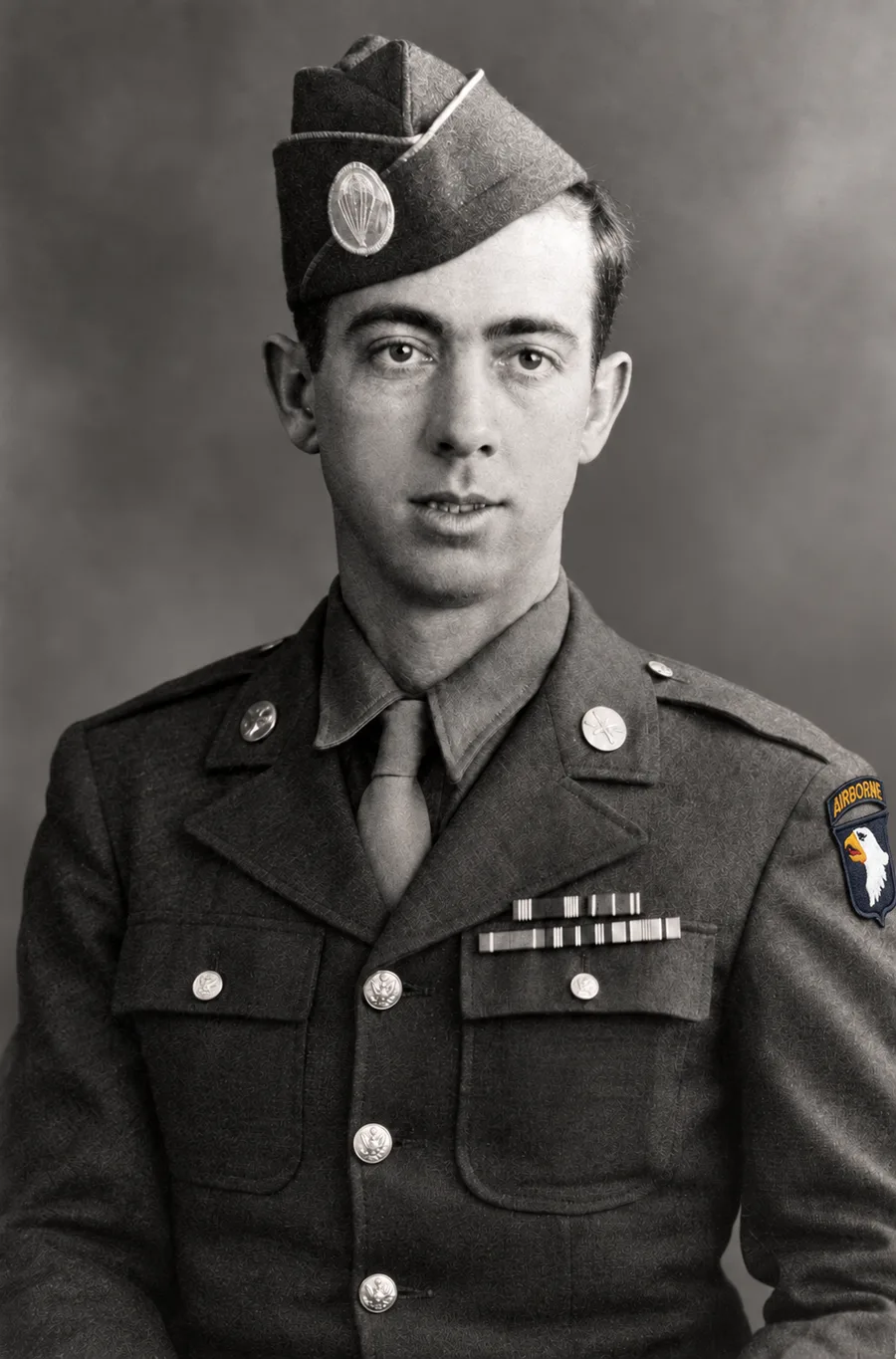
To understand why his friends loved him enough to give up their own tickets, you have to understand what Shifty Powers did with a rifle.
He was born Darrell Cecil Powers on March 13, 1923, in Clinchco, a small coal town tucked into the mountains of Dickenson County, Virginia. His father taught him to shoot as a boy. They hunted squirrel on the family’s mountain land, and the lesson was simple. Ammunition cost money, so every shot had to count. A miss meant no meat and a wasted round.
“Well that’s pretty good shooting, son. You shot ’em both through the eyes.” It was the best compliment he’d ever given me, and I never felt prouder.
Shifty Powers, remembering his father after an early squirrel hunt (Marcus Brotherton, Shifty’s War)
That upbringing turned into a level of marksmanship the Army rarely sees. In Easy Company he shot the tightest groups of any man, and he read wind, distance, and terrain the way other men read a map. He carried the M1 Garand and preferred it his whole life. “I always liked the M1 Garand best,” he said years later.
One detail surprises almost everyone. The nickname “Shifty” had nothing to do with shooting or sneaking. He earned it in high school for his fast footwork on the basketball court. The name followed him into the paratroopers and, eventually, onto television screens around the world.
Before the war he trained as a machinist in Norfolk and worked at the Norfolk Naval Shipyard. He enlisted on August 14, 1942, in Richmond, Virginia, and volunteered for the airborne. He was among the original Toccoa men, the recruits who ran up Currahee Mountain under Captain Herbert Sobel and formed the core of Easy Company.
What set him apart on the range was not just accuracy but calm. Men who trained beside him talked about how still he became before a shot, how he seemed to slow down while everyone else sped up. That stillness came from the mountains, from years of waiting on game that would bolt at the first careless sound.
He was an excellent shot, as well as an excellent friend. He had the best ears of any man in the company, so he would often lead our patrols. Shifty Powers was a great man, one of the kindest people I’ve ever known. I’ve never heard him say anything bad about anyone.
Earl “One Lung” McClung, fellow Easy Company marksman (Marcus Brotherton, Shifty’s War)
Shifty was no self-promoter. He rarely spoke of what he did. But two moments during the fighting show why the men around him trusted his eyes more than their own.
From Currahee to the Hedgerows
Easy Company jumped into Normandy in the dark hours of June 6, 1944. The drop scattered paratroopers across the Cotentin Peninsula, and men spent hours finding each other in the hedgerows and flooded fields. Shifty came through the chaos of D-Day and moved into the brutal close fighting around Carentan, where the 506th helped link the American beachheads.
The hedgerow country of Normandy was a sniper’s nightmare and a marksman’s proving ground. Fields were boxed in by thick earthen banks and tangled brush, and a defender could hide a rifle or a machine gun a few dozen yards away and stay invisible. It was terrain that rewarded exactly what Shifty had, the patience to watch a hedge until something gave itself away.
In September 1944 he jumped again, this time into the Netherlands for Operation Market Garden, the failed Allied gamble to seize a string of Dutch river bridges. Then came the winter that defined Easy Company. In December the Germans launched their last great offensive in the Ardennes, and the 101st Airborne, led by officers like Dick Winters, was rushed to hold the crossroads town of Bastogne.
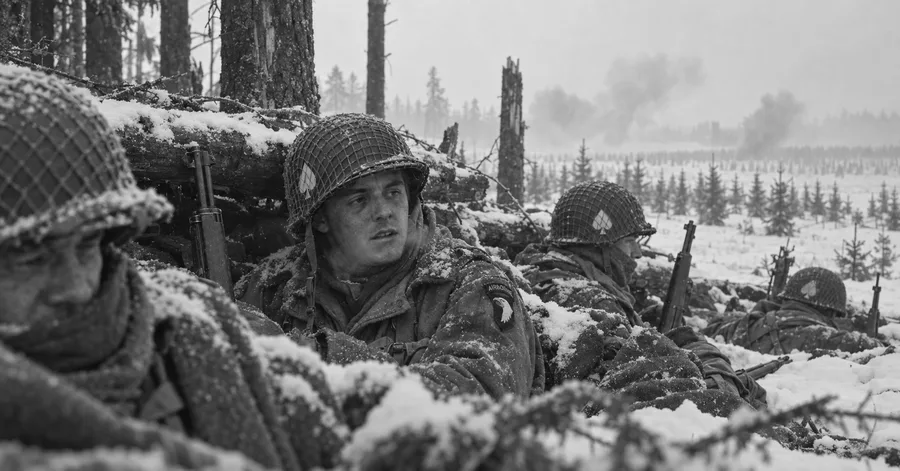
The men dug in among the frozen pines with too little ammunition, too little food, and no winter clothing worth the name. Artillery shredded the treetops and sent splinters of wood and steel raining into the foxholes. It was here, in the worst conditions of his war, that Shifty Powers gave the two performances that his friends never forgot.
The Detail Most People Missed
The first happened in the frozen woods outside Bastogne in late December 1944. Easy Company was dug in against the German line, staring at the same treeline day after day.
Shifty noticed something no one else had. A tree in the distance was not where it had been the day before. To a hunter raised in the Virginia mountains, a tree that moves is not a tree. He reported it. When the position was studied, the “tree” turned out to be a camouflaged German gun that had been rolled into the line overnight. Carwood Lipton called for artillery, and the threat was cleared before it could open fire. The enemy weapon sat nearly a mile away, and Shifty had caught it with his naked eye.
The second moment came weeks later, on January 13, 1945, during the attack toward Foy. A German sniper had Easy Company pinned, and no one could find him.
Carwood Lipton remembered it clearly. “Then Shifty yelled, ‘I see ‘im.’ And there was a rifle shot. We weren’t pinned down any more.” Powers had spotted the sniper firing from the corner of a brick building, a target other men had scanned for and missed. He put a round on him and the guns went quiet.
These were not lucky flukes. They were the product of a lifetime of watching, waiting, and shooting straight. It is the reason Shifty Powers is remembered alongside Earl “One Lung” McClung, another Easy Company marksman Shifty himself rated among the best shots in the outfit. In a company full of brave men, these two were the ones you wanted behind a rifle.
He carried that skill through D-Day, through the hedgerows near Carentan, through Operation Market Garden in the Netherlands, and through the siege of Bastogne. And in all of it, the enemy never landed a blow. Which is what makes what happened next so hard to accept.
The Crash That Nearly Ended Everything
In June 1945, with his lottery ticket in hand, Shifty climbed into a truck headed for the airfield. Home was finally close.
On the road, a truck driven by a drunk soldier from another regiment slammed into his vehicle head-on. Shifty was thrown from the truck. His wrist broke when it hit the road. His pelvis smashed against the pavement. His head struck the ground and he suffered a concussion.
A soldier riding near him was killed. By several accounts the man was heading home to be married. The war had spared them both, and a drunk driver did in seconds what the German army had failed to do in two years.
Shifty spent close to a year in hospitals recovering. His friends reached home long before he did. The man who had earned his ticket the hard way, and had it handed to him out of love, paid for it with a shattered body.
The irony was not lost on anyone who knew him. The safest place Shifty Powers had been in years turned out to be the front line.
It also says something about the points system itself. The Army’s math rewarded suffering. A wound moved you up the list, so the men most likely to go home first were the ones who had been hurt. A soldier who was skilled enough to stay untouched could find himself stuck overseas precisely because he was good at surviving. Shifty was punished, in a sense, for being too effective to bleed.
The Quiet Life After the War
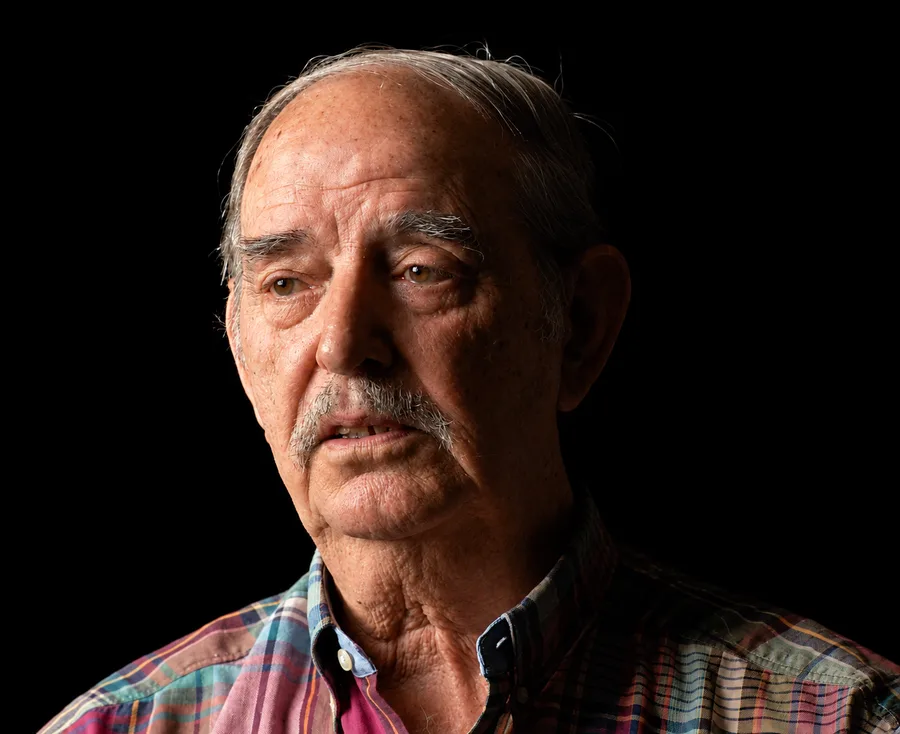
Shifty healed, went home to Virginia, and did what quiet men do. He went back to work.
He put in a short stretch in California, then returned to the mountains and took a job as a machinist with the Clinchfield Coal Corporation, where he stayed for more than twenty years. He married a woman named Dorothy and stayed married to her for around sixty years. He did not tell war stories. For decades most of his neighbors had no idea that the soft-spoken man down the road had been among the deadliest rifle shots in the 101st Airborne.
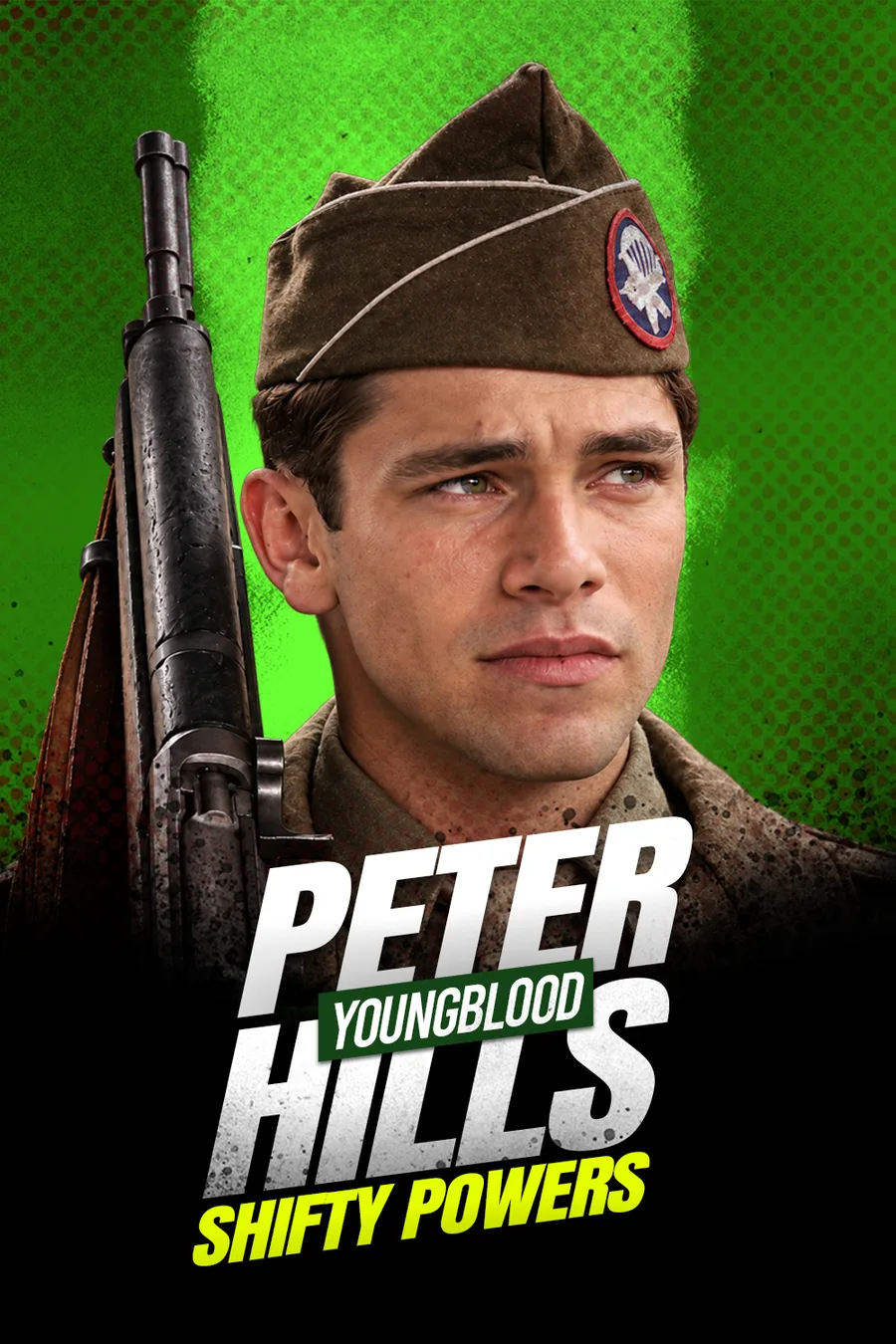
That changed in 2001, when HBO aired Band of Brothers and actor Peter Youngblood Hills played him on screen. Late in life, Shifty Powers became something he never sought to be. He became famous.
Letters arrived from strangers. Fans wanted to shake his hand. He handled it the same way he handled everything, with a shrug and a modest smile, always insisting the real heroes were the men who did not come home. His fellow veterans, including Bill “Wild Bill” Guarnere, spoke of him with a plain kind of reverence.
The recognition reached him gently and late. He attended reunions, signed books, and answered questions from people two and three generations younger, many of whom had discovered the war through a television screen. By then he was one of a dwindling handful of Easy Company men still living. He never traded on it. When admirers called him a hero, he turned the word around and pointed it at the friends buried in Europe.
That humility is part of why his story landed so hard with viewers. In a series full of larger-than-life figures, Shifty was the still one, the man who did the most damage and made the least noise. Audiences who met dozens of Easy Company soldiers on screen often remembered him best.
Darrell “Shifty” Powers died on June 17, 2009, at the age of 86, after a battle with lung cancer. He is buried in the Virginia mountains where his father first put a rifle in his hands.
The Medals He Never Talked About
For a man who said so little about the war, Staff Sergeant Darrell “Shifty” Powers came home with plenty to say it for him. He just never showed it.
His decorations include the Bronze Star, the Combat Infantryman Badge, and the Parachutist Badge with two combat jump stars for the night jumps into Normandy and Holland. He also wore the Presidential Unit Citation, the European-African-Middle Eastern Campaign Medal with three service stars and an arrowhead for the D-Day assault, and the French Croix de Guerre with palm.
- Bronze Star Medal
- Combat Infantryman Badge
- Parachutist Badge with two combat jump stars
- Presidential Unit Citation
- European-African-Middle Eastern Campaign Medal (three stars and arrowhead)
- French Croix de Guerre with palm
Notice what is missing. There is no Purple Heart. Across D-Day, Market Garden, and Bastogne, the best shot in Easy Company was never wounded by the enemy, so he never earned the medal given for being hit. The only thing that ever broke his body was a truck on the road home.
Where Shifty Powers Is Buried
Darrell “Shifty” Powers rests at Temple Hill Memorial Park in Castlewood, Russell County, Virginia, not far from the mountains where his father first handed him a rifle. His grave has become a quiet stop for the people who found him through the series and wanted to say thank you in person. You can see his memorial and headstone on his Find a Grave page.
The Tribute That Went Around the World
A few weeks after Shifty died, a short tribute titled “We Salute You, Shifty” began moving from inbox to inbox. It was written by an admirer named Mark Pfeifer on July 7, 2009, and it asked readers to notice the quiet men of that generation, the ones who came home, went back to work, and never asked to be thanked. Like most things that go viral, it slipped loose from its author: it was passed around the world for years and widely, wrongly, credited to test pilot Chuck Yeager and to war correspondent Joseph L. Galloway, until Snopes traced it back to Pfeifer. The mix-up almost proves Shifty’s own point. The salute mattered more than the name attached to it.
A Reputation Built on Silence
What stays with people about Shifty Powers is not a body count. He would have hated to be remembered that way. What stays is the restraint. A man who could shoot better than almost anyone alive, and who spent his life talking about it less than anyone.
His story sits at an uncomfortable angle to the way we tell war stories. We want the skilled soldier to be rewarded and the good man to come home clean. Shifty was skilled and good, and his reward was a lottery ticket that put him in a hospital bed for a year while a stranger’s bad choice killed the man beside him.
So here is the question worth sitting with. Was the lottery a gift from men who loved him, or the cruelest trick the war ever played on him? His friends meant it as a kindness. The road turned it into something else. What would you call it?
Related Band of Brothers Stories
- Earl “One Lung” McClung: the shot Shifty Powers called the best in Easy Company
- Bill Guarnere: The True Story of Easy Company’s “Wild Bill”
- Joe Toye: The True Story of Easy Company’s Toughest Sergeant
- Band of Brothers: The Real Easy Company Behind the Series
Frequently Asked Questions
Was Shifty Powers really the best shot in Easy Company?
Yes. Darrell “Shifty” Powers was widely regarded as Easy Company’s finest sharpshooter. He grew up hunting in the Virginia mountains, shot the tightest groups in the unit, and famously spotted a camouflaged German gun near Bastogne and killed a hidden sniper near Foy in January 1945.
What happened to Shifty Powers after he won the lottery?
On the way to the airfield in June 1945, his truck was hit head-on by a drunk driver from another regiment. Shifty suffered a broken wrist, a smashed pelvis, and a concussion, and a soldier riding near him was killed. He spent nearly a year recovering in hospitals.
Why did Shifty Powers have to win a lottery to go home?
The Army sent soldiers home on a points system that rewarded wounds with Purple Heart points. Shifty had fought through every campaign but was never wounded, so he lacked the points to rotate home. His fellow soldiers rigged a furlough lottery in his favor by removing their own names.
How did Shifty Powers get his nickname?
He earned the nickname “Shifty” in high school for his quick, shifty moves on the basketball court, not for anything to do with shooting or stealth. The name stayed with him through his Army service and his later fame.
When did Shifty Powers die?
Darrell “Shifty” Powers died on June 17, 2009, at age 86, after a battle with lung cancer. He was portrayed by Peter Youngblood Hills in the 2001 HBO miniseries Band of Brothers, which brought him worldwide recognition late in his life.
What medals did Shifty Powers receive?
Darrell “Shifty” Powers earned the Bronze Star, the Combat Infantryman Badge, and the Parachutist Badge with two combat jump stars, along with the Presidential Unit Citation, the European-African-Middle Eastern Campaign Medal with three stars and an arrowhead, and the French Croix de Guerre with palm. He never received a Purple Heart because he was never wounded in combat.
Where is Shifty Powers buried?
He is buried at Temple Hill Memorial Park in Castlewood, Russell County, Virginia. He died on June 17, 2009, at age 86.
Who played Shifty Powers in Band of Brothers?
Actor Peter Youngblood Hills played Darrell “Shifty” Powers in the 2001 HBO miniseries Band of Brothers. Though Shifty had no episode centered on him, his quiet competence made him one of the most beloved figures in the series.
Why did the Army send Shifty Powers home early?
Because he was never wounded, Shifty lacked the points needed to rotate home under the Army’s system, so Easy Company held a lottery and rigged it in his favor by removing their own names. On the way to the airfield a drunk driver hit his truck, and the ticket home nearly killed him.
Sources
- Stephen E. Ambrose, Band of Brothers: E Company, 506th Regiment, 101st Airborne (Simon & Schuster).
- Marcus Brotherton, Shifty’s War: The Authorized Biography of Sergeant Darrell “Shifty” Powers (Berkley Caliber).
- Find a Grave: SSGT Darrell Cecil “Shifty” Powers.
- Wikipedia: Darrell Powers.
- The National WWII Museum, on the 101st Airborne and the wartime points system.