Dick Winters almost quit Band of Brothers. He believed the early scripts were loaded with gratuitous profanity, and he thought it undermined everything the series should have been about. His message to the producers was blunt: fix it, or I walk.
When HBO’s Band of Brothers premiered in 2001, critics called it a masterpiece almost immediately. Produced by Tom Hanks and Steven Spielberg, the miniseries gave audiences something television hadn’t done before. A raw look at Easy Company of the 506th Parachute Infantry Regiment, from Georgia training camps to the end of the war. And the guy holding it all together was Major Richard “Dick” Winters, the officer whose steady hand guided the unit from the hedgerows of Normandy to Hitler’s Eagle’s Nest.
But what most viewers never knew was how close the entire project came to losing its most important voice. Behind the scenes, though, things nearly blew up. Winters had a real problem with what the writers were doing. Winters found the early scripts morally offensive. And he wasn’t the kind of man who complained quietly.
He gave Tom Hanks an ultimatum. Fix the scripts, or lose me entirely.
Who Was Dick Winters and Why His Approval Mattered
To get why that carried so much weight, you need to understand what Winters meant to these guys. By the time HBO started adapting Stephen Ambrose’s 1992 book, Winters wasn’t just a retired officer. He was the patriarch. The man every surviving veteran still looked up to.
Winters’ Role in Easy Company
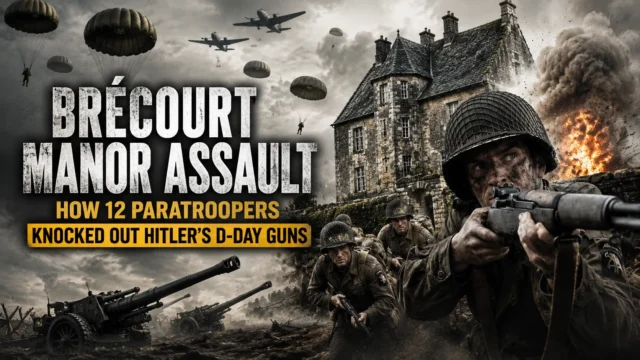
Winters led Easy Company during the Normandy invasion, personally led the assault on Brécourt Manor, one of the most studied small-unit actions in military history. He rose to command the entire 2nd Battalion before the war ended. He led from the front every time. Kept a professional distance from his men that, weirdly, made them respect him more.
As Ambrose himself noted, nearly every man in Easy Company said the same thing when asked: Winters was the best combat leader they ever served under. That kind of consensus doesn’t happen by accident.
His Influence on the Production
The producers knew that if they got Winters wrong, nothing else would matter. He was how the audience was going to experience the war. Winters had handed over his wartime diaries, personal letters, battalion reports. That raw material is what made the book possible. Pull Winters out of the equation, and you lose the most authentic connection to what actually happened with the 506th.
Why HBO Needed His Cooperation
But it went deeper than getting facts right. The production team, Hanks especially, along with writer Erik Jendresen, relied on Winters to verify details and, just as importantly, to convince the other veterans to participate. Winters had a plaque above his front door that read “Stephen Ambrose Slept Here.” That’s how closely he’d worked with the historian.
If Winters had publicly walked away? The other surviving members of Easy Company would have followed. The show’s entire claim to authenticity would have collapsed overnight.
The Profanity Controversy in the Original Script
So what was the actual problem? Language. The early drafts were packed with profanity.
What Early Drafts Included
The writing team was going for a gritty, Saving Private Ryan-style tone. F-bombs were scattered throughout the scripts, in the dialogue of officers and enlisted men alike, in casual conversations and under fire. The writers assumed this was realistic. Soldiers swear. That’s just what they do.
Why Winters Objected
Winters grew up in Lancaster County, Pennsylvania. He was a Lutheran, but the Mennonite and Amish culture surrounding him shaped his values in ways that stuck for life. He didn’t drink. Didn’t smoke. And he absolutely did not swear.
When he read those scripts, he was appalled. The language wasn’t just excessive, it was wrong, he felt. Historically wrong. But the bigger issue was practical. Winters saw this series as an educational opportunity. He wanted families to watch it together. He wanted it shown in schools. A script dripping with the F-word would make that impossible. Why would you destroy the teaching value of something this important, he argued, just to sound tough?
Historical Reality of WWII Language
Winters didn’t deny that soldiers cursed. Of course they did. But he pushed back hard on the idea that every other sentence needed a profanity in it. His biography Biggest Brother confirms that while Easy Company men certainly knew how to swear, they didn’t use that kind of language with the frequency the scripts suggested. Winters believed the writers were projecting modern military speech onto men from a different era, creating a false version of how the Greatest Generation actually talked.
The Phone Call With Tom Hanks
Things came to a head with a phone call. Not a meeting. Not an email. A direct conversation between a retired Army Major and the most powerful producer in Hollywood.
How the Disagreement Escalated
Winters had already put his concerns in writing, a stern letter to Tom Hanks explaining that he didn’t want children watching the series to think profanity equaled bravery. The production team pushed back, arguing the language was essential for realism. Neither side budged. So Hanks picked up the phone.
“I Can Shun You” Explained
The call lasted about thirty minutes. Hanks made his case for the creative decisions. Winters listened. Then he said something Hanks didn’t expect.
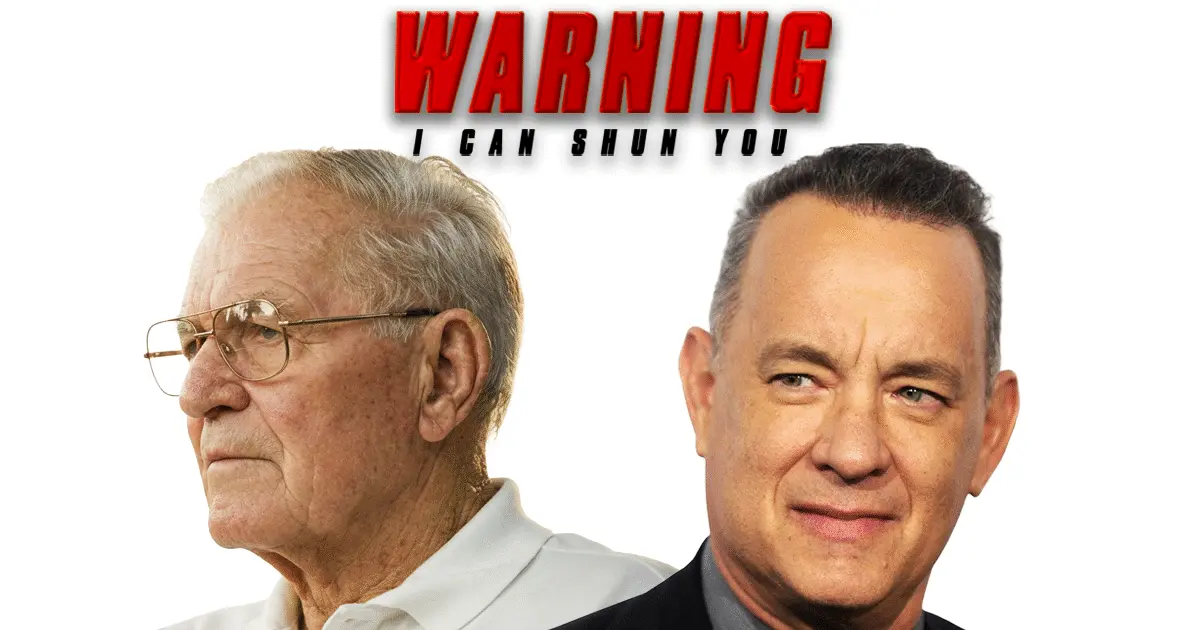
“I can shun you.”
Cultural Context Behind the Statement
If you’re not from Lancaster County, that might sound like an odd thing to say. It’s not. In the Mennonite and Amish communities Winters grew up around, shunning is the nuclear option. No lawsuits. No public scenes. They just cut you off completely. You stop existing in their world.
Winters was telling Hanks: I will walk away from this project, and I will take the rest of Easy Company with me. You’ll have a show about men who want nothing to do with it.
What Changes Were Made
Hanks got the message. A week later, he called Winters back. The scripts would be revised.
Reduction of Strong Language
The writing team went through every script and pulled back the profanity. The final series isn’t sanitized, soldiers still swear, and some scenes still carry rough language. But the carpet-bombing of F-words in the early drafts was significantly toned down. Strong language became situational rather than constant.
How Winters’ Character Was Adjusted
The biggest change was to Winters himself. Damian Lewis, who played him, never utters a strong swear word in the entire ten-part series. Not once. The harshest thing Lewis says is “damn.”
Even in scenes of extreme frustration, liberating the concentration camp, dealing with incompetent replacement officers, the character maintains the discipline of the real man. That mattered enormously to Winters. He refused to have his likeness associated with behavior he’d spent his entire life avoiding.
The Scene Winters Could Not Remove
Winters won the profanity battle. But he didn’t win every fight.
Episode 9 Context
In Episode 9, “Why We Fight,” there’s a scene with Private John Janovec, played by a young Tom Hardy in one of his earliest roles, in bed with a German woman. It’s brief but explicit enough to make the point: American soldiers and German civilians formed relationships during the occupation.
Why Winters Objected
Winters called the scene “gratuitous” and “out of place.” His reasoning was consistent with the profanity argument. A family watching together would be embarrassed, and it undercut the gravity of the episode, which deals primarily with the discovery of the Kaufering concentration camp. Why risk losing your audience for a few seconds of screen time?
Why Producers Kept It
This time, Hanks held firm. Fraternization between GIs and German women was historical fact, well documented. Cutting it would have meant sanitizing the occupation period in a way the producers felt was dishonest. Unlike the profanity issue, which was about frequency and tone, this was a question of whether to acknowledge something that actually happened. The scene stayed.
Did Dick Winters Ultimately Approve the Series?
After all that conflict, did Winters actually end up liking the finished product?
Public Statements After Release
Mostly, yes. He wasn’t fully satisfied, he said he wished it had been “more authentic” in certain areas. But he understood the realities of filmmaking.
After the premiere, he told Hanks, “I was hoping for an 80% solution.”
Hanks replied, “Look, Major, this is Hollywood. We’d be hailed as geniuses if we get this 12% right. We’re going to shoot for 17%. And if we succeed, you need to be satisfied.”
Winters considered that for a moment. “Fair enough.”
Relationship With Tom Hanks Afterward
The script fight didn’t ruin their relationship. If anything, it may have deepened their mutual respect. Hanks stayed in touch with Winters until the Major’s death in 2011. And Winters came to appreciate what the series accomplished, particularly HBO’s educational outreach programs in schools, which was exactly what he’d wanted all along.
What This Incident Reveals About His Leadership
The fact that Winters was willing to blow up the biggest TV project in history over a matter of principle tells you everything about who he was. In 1944, he protected his men from the enemy. In 2001, he fought to protect their legacy.
Think about what he was actually doing. He told Tom Hanks, one of the most powerful figures in entertainment, that he would walk away from a project that would immortalize his own story. Because the language wasn’t right. Because it might embarrass a kid watching with his grandparents.
That’s not stubbornness. That’s the same moral courage he showed at Brécourt Manor, just aimed at a different target. Winters saw his rank as responsibility, full stop. He carried that weight his whole life. Even when the battlefield was a conference call with Hollywood.
Related Band of Brothers Stories
- Ronald Speirs: What Band of Brothers Didn’t Tell You
- Major Dick Winters: Complete Biography
- D-Day Paratroopers: Why the T-5 Jump Was a Nightmare
Frequently Asked Questions
1. Did the real Dick Winters ever swear? No. Every historical account confirms it. Winters avoided profanity his entire life, along with alcohol and tobacco. It wasn’t an act, it was just who he was.
2. Was Dick Winters a Quaker or Mennonite? Neither. The show hints at this, but Winters was actually Lutheran. He grew up in Lancaster County, though, surrounded by Mennonite and Amish communities, and their values clearly shaped him.
3. Did Tom Hanks apologize to Dick Winters? Not exactly an apology, but Hanks did call Winters back and agreed to make the script changes. He essentially conceded to Winters’ demands to keep the Major involved in the project.
4. What scene did Dick Winters hate in Band of Brothers? The sex scene in Episode 9 (“Why We Fight”) with Private Janovec and a German woman. Winters thought it was gratuitous and undercut the episode’s focus on the concentration camp discovery.
5. Did Dick Winters like Damian Lewis’s portrayal? He did, ultimately. He initially thought Lewis wasn’t forceful enough in the early scenes, but he came around. He was especially glad that Lewis never swore on screen, honoring the real Winters’ character.