Key Takeaway
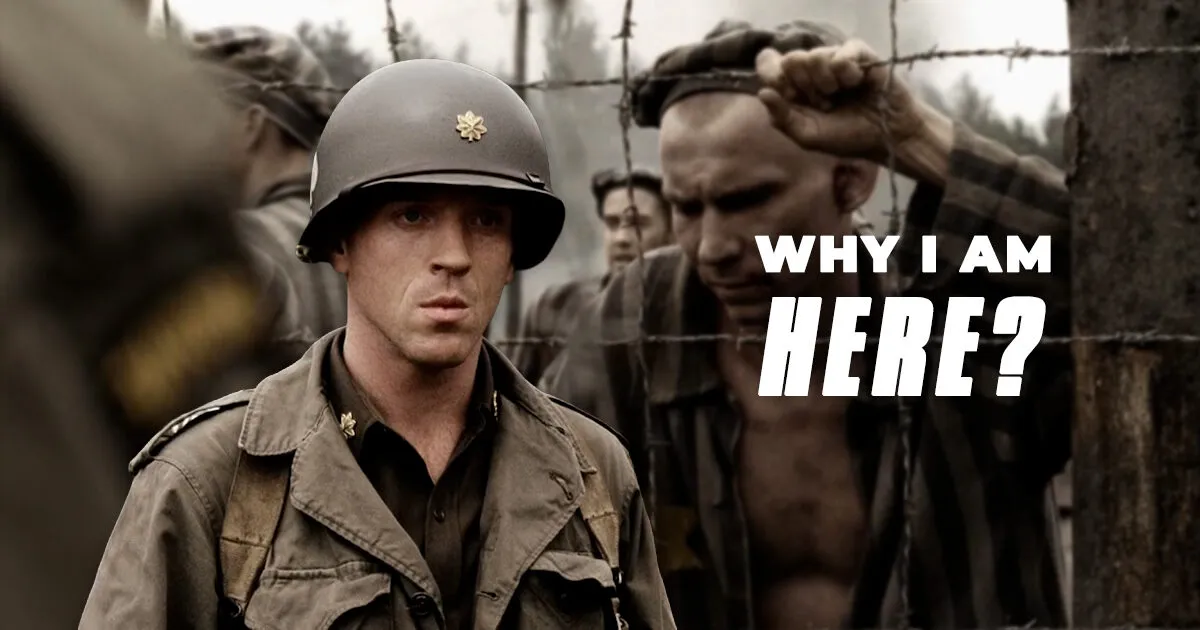
The Band of Brothers concentration camp episode changed how most people think about “Why We Fight.” But here’s something the show doesn’t tell you. Easy Company didn’t actually discover the camp. The 12th Armored Division got there first, on April 27, 1945. A patrol from Easy Company showed up the next day. The producers compressed the timeline and gave Easy Company credit for the discovery because, honestly, it made for better television. Still, what the show absolutely nails is the emotional gut punch. Dick Winters wrote in his memoir that standing at that fence gave him something eleven months of combat never could. A reason. “Now I know why I am here,” he wrote. And he meant every word of it.
What Band of Brothers Shows vs. What Actually Happened
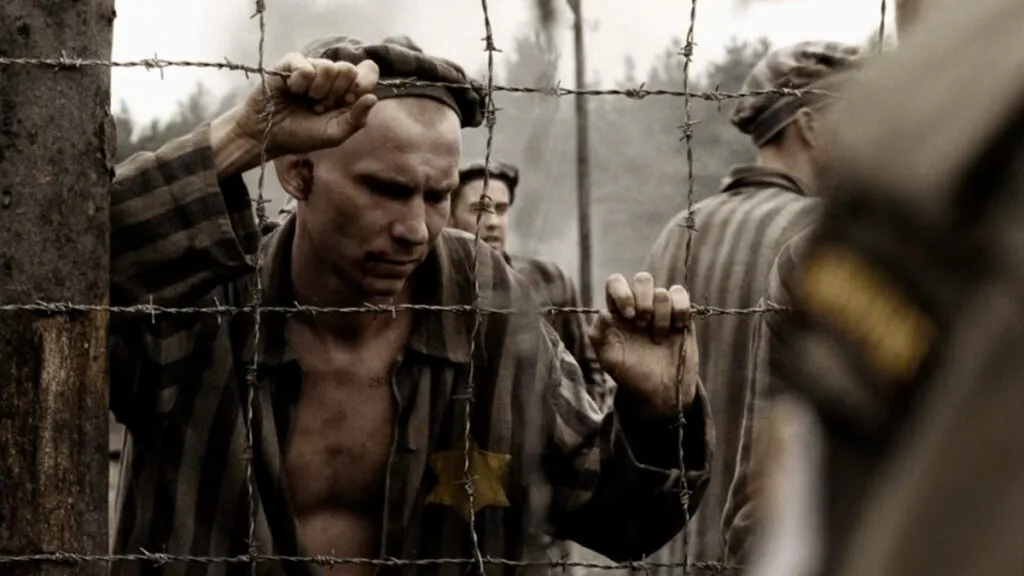
If you’ve seen Episode 9, you remember the scene. Easy Company is pushing through Bavaria when they stumble onto something nobody was ready for. Emaciated prisoners. Striped uniforms hanging off skeletal frames. Bodies stacked like firewood. The whole thing is filmed to make you think Easy Company found the camp first.
They didn’t.
The real camp was Kaufering IV, tucked into the Bavarian countryside near Landsberg am Lech. It was one of eleven subcamps in a network tied to the Dachau system. The whole complex existed for one purpose: slave labor. Prisoners were building underground bunkers where Messerschmitt planned to manufacture the Me 262 jet fighter. The Nazis thought that plane could win the war. Thousands of people died building factories that never produced a single aircraft.
On April 27, 1945, the 12th Armored Division rolled up to Kaufering IV. They made the initial discovery. The next day, elements of the 101st Airborne arrived, including a small patrol from Easy Company under Frank Perconte. The show’s creators decided to collapse those two days into one, putting Easy Company front and center. You can argue about whether that was the right call. What you can’t argue is that the real story didn’t need embellishing.
What the Soldiers Found at Kaufering IV
Nothing in their training covered this. Nothing in combat prepared them for it either.
Kaufering IV, at Hurlach, was the complex’s Krankenlager, its “sick camp,” where the SS concentrated prisoners too ill to work. A typhus epidemic had spread so far that even the camp’s SS doctor and guards refused to go inside. That is why the dying were gathered here, and why what the Americans found was so much worse than a labor camp.
Kaufering IV had held over 3,600 prisoners at its peak. But by the time American troops arrived, the SS had already started evacuating. Anyone who could still walk got forced onto death marches heading toward Dachau. The ones who fell behind were shot on the road or beaten until they stopped moving.
The prisoners who couldn’t march at all? They were locked inside the barracks. And then the SS lit the buildings on fire.
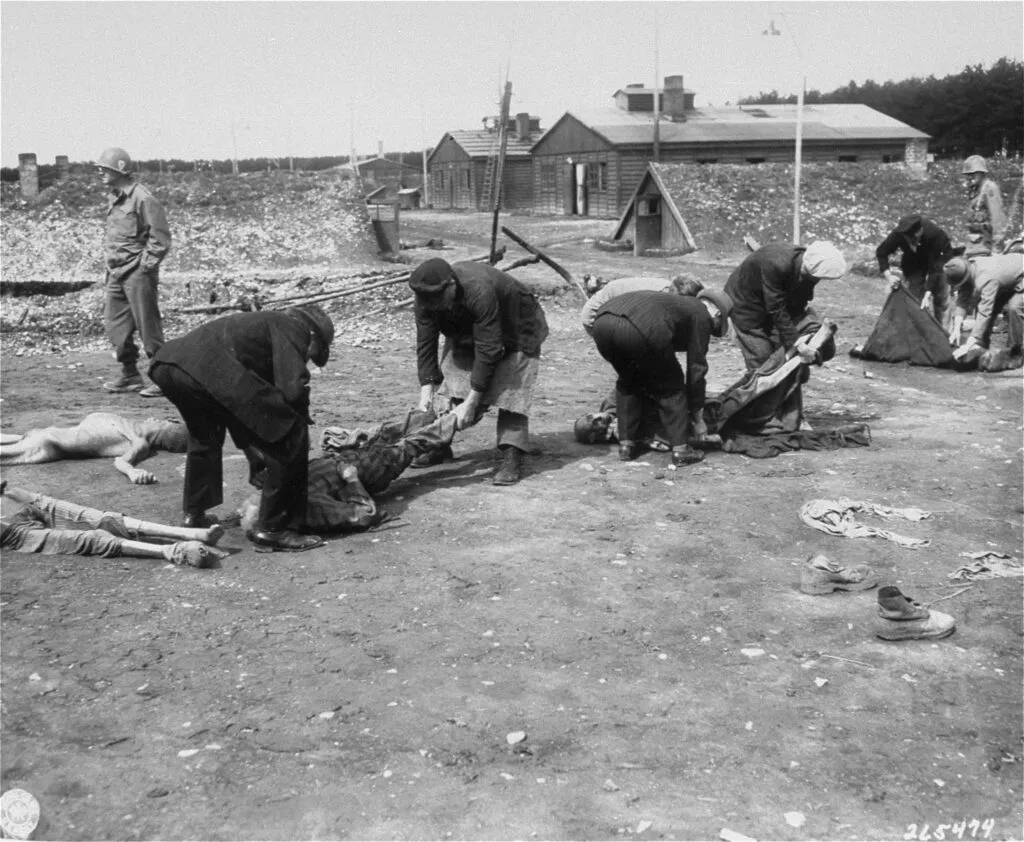
Around 500 bodies were found at the camp. Typhus had killed some. Dysentery got others. Starvation took its share. And some had burned alive inside those barracks, because the retreating guards figured it was easier to destroy the evidence than explain it.
The Band of Brothers Concentration Camp: What Winters Actually Said
Winters had been fighting since Normandy. Eleven months of it. And in all that time, he’d never been able to put into words exactly why he was doing it. Duty, sure. His men, obviously. But some bigger reason? That came later.
It came at a chain-link fence in Bavaria.
In Chapter 12 of Beyond Band of Brothers, Winters described the camp as something that “defied description.” He wrote that no exaggeration could capture it. But the detail that stuck with him, the one he kept coming back to for decades, wasn’t about the dead. It was the living. The survivors who were so broken they couldn’t even meet his eyes.
“The memory of starved, dazed men who dropped their eyes and heads when we looked at them through the chain-link fence, in the same manner that a beaten, mistreated dog would cringe.”
Think about that. Men so thoroughly destroyed that being rescued didn’t register. They flinched from kindness the way you’d flinch from a fist. That image followed Winters for the rest of his life.
But something clicked at that fence too. All the exhaustion, the doubt, the friends he’d buried along the way. It all crystallized into one thought:
“Now I know why I am here. For the first time I understand what this war is all about.”
That quote comes straight from the memoir. The show uses it in Episode 9, and for once, the writers didn’t need to punch it up. The real words hit harder than anything Hollywood could cook up.
How Easy Company Reacted
Not everyone reacted the same way. A few guys went completely quiet. Others cried. Some just stood there with their mouths hanging open, like their brains had short-circuited.
Babe Heffron remembered it clearly. “All we could do was look at each other with our mouths open. We couldn’t believe what we were seeing. It was bad. Hundreds of prisoners in black-and-white striped uniforms. They were like skeletons. They could barely stand.”
Eddie Stein had it worst. Stein was Jewish, and when he saw the piles of dead, he broke down completely. Through his tears, he managed three words: “They’re my people.”
Then there was David Kenyon Webster. Webster was the Harvard guy, the writer, the one who’d spent most of the war questioning whether any of it made sense. He turned to another soldier that day and said something that surprised even himself: “I’m glad I fought these people, Chris. I didn’t believe in the war till I got to Germany and saw what they were up to with their lagers and their concentration camps.”
Coming from Webster, that was seismic. This was a man who’d built an identity around being the skeptic. Kaufering took that away from him. It took the question away from all of them, really. After that fence, nobody in Easy Company wondered why they were fighting anymore.
What Band of Brothers Got Right in Episode 9
The show fudged the timeline, sure. But a surprising amount of Episode 9 holds up against the historical record:
- Nobody told the soldiers about the camps. This is accurate. American troops received zero briefing about concentration camps. The shock you see on screen was real. Command made a deliberate choice to keep frontline soldiers in the dark.
- The survivors were locked back inside the camp. Sounds heartless, and it was. But there was no field hospital, no food supply, nothing set up to handle thousands of critically ill people. Letting them wander off would have killed them faster than keeping them contained.
- Local Germans were forced to bury the dead. The Army marched townspeople out to the camps, made them look at what had happened, and handed them shovels. This wasn’t revenge. It was a deliberate policy to make sure nobody could later claim they didn’t know.
- The SS torched the barracks on the way out. Before retreating, guards acting on the order of the camp’s SS doctor, Dr. Max Blancke, set fire to buildings with prisoners still locked inside. They weren’t trying to cover their tracks discreetly. They were burning the evidence.
What the Show Changed
- Easy Company wasn’t first on scene. The 12th Armored Division arrived April 27. Easy Company’s patrol came the next day.
- The Perconte scene was invented. In the show, Perconte sprints back to tell Winters what he’s found. Good drama. Not documented anywhere.
- Days became hours. Events that played out over several days got squeezed into one episode. That’s television.
- Eleven subcamps became one. The Kaufering complex was massive. The show simplified it down to a single camp for the sake of storytelling. Understandable, but it hides how large the operation really was.
The Kaufering Complex: What Most People Don’t Know
Here’s what the show doesn’t cover at all. Kaufering wasn’t some isolated camp in the woods. It was an industrial operation.
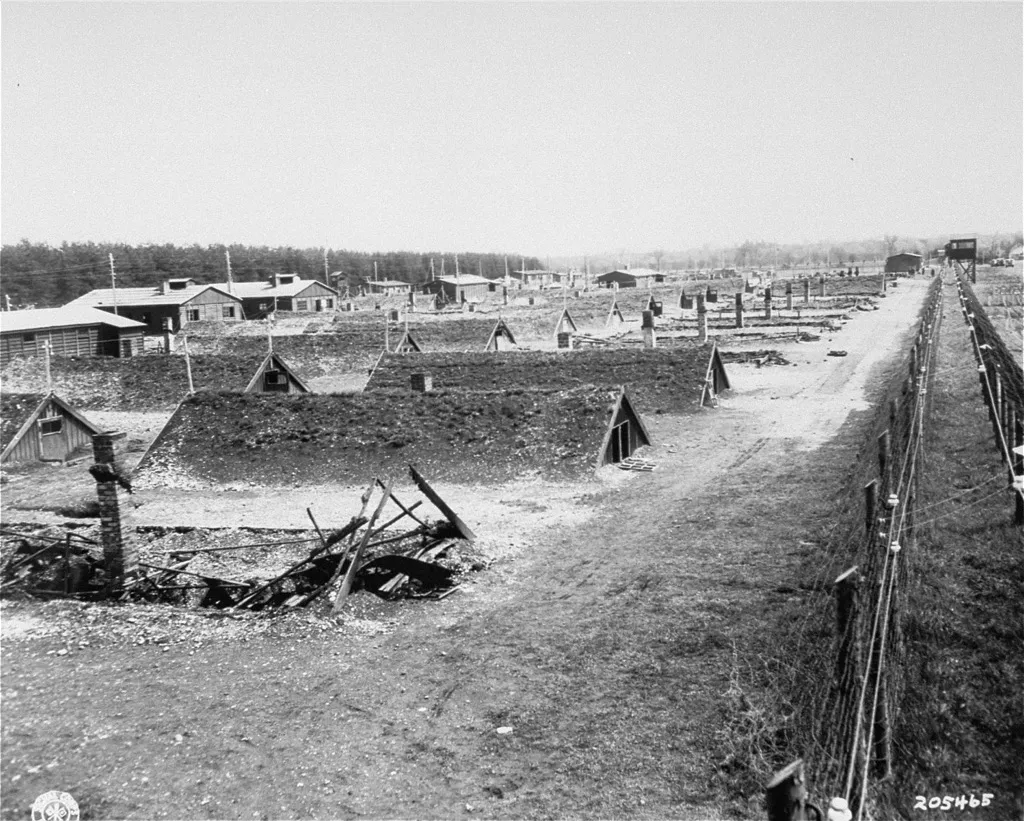
Eleven subcamps, spread across the Bavarian countryside around Landsberg am Lech. All operational between June 1944 and April 1945. The entire network fed into the Dachau system, and it existed for a single project codenamed Ringeltaube. The goal? Build bomb-proof underground factories where Messerschmitt could churn out Me 262 jet fighters. The Nazis were convinced this aircraft would flip the war. They weren’t wrong about the plane. They were wrong about everything else.
Not a single one of those underground bunkers was finished before the Americans showed up. Every prisoner who died building them, died for nothing. Literally nothing.
Who were the prisoners? Almost all were Jews. Roughly 30,000 people passed through the Kaufering subcamps over ten months, the majority of them Hungarian, along with about 8,000 brought from the Kovno Ghetto in Lithuania and others from Theresienstadt, Lodz, and Auschwitz. Among them were around 4,200 women and 850 children. About half of the 30,000 did not survive. One who did was the Viennese psychiatrist Viktor Frankl, held at Kaufering III for five months, who later drew on what he endured to write Man’s Search for Meaning.
The conditions were nightmarish even by concentration camp standards. Prisoners lived in earth huts, basically holes dug into the ground with wooden frames and turf thrown over the top. Cold. Damp. Crawling with lice. Typhus tore through the population. The food was barely enough to keep someone alive, and the medical care was nonexistent.
When the Americans finally reached the camps in late April 1945, roughly 14,500 prisoners had already died across the Kaufering complex. The survivors who were still breathing had been starved down to skin and bone, many weighing barely more than a child. Starvation, typhus, and dysentery had done in months what no battlefield ever could.
Why American Soldiers Had No Idea
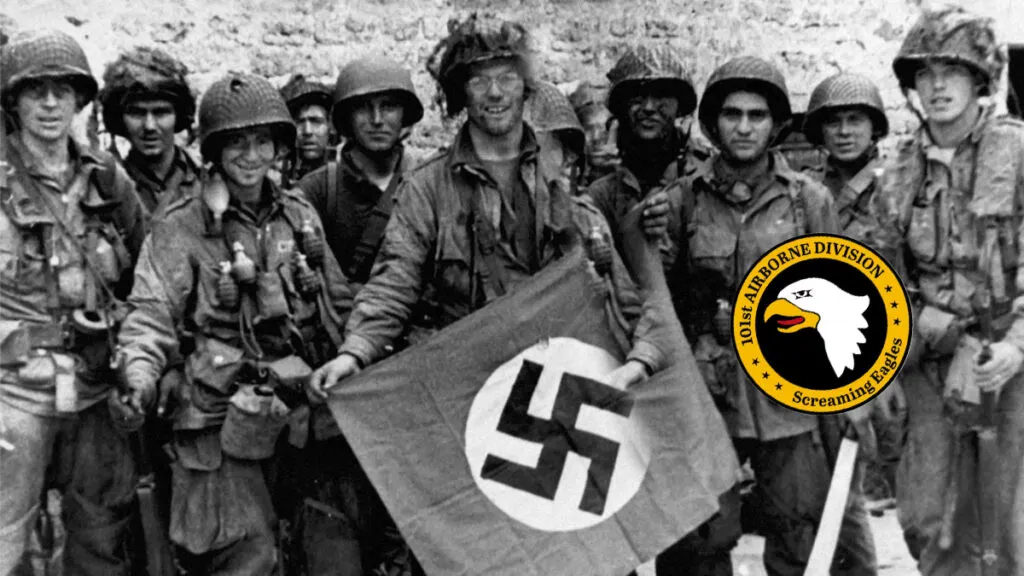
This part still trips people up. How did the soldiers not know? The camps had been running for years. Intelligence agencies had reports. Reconnaissance planes had photographs. How did the guys on the ground walk in completely blind?
Because command decided they didn’t need to know. It was a calculated decision. Generals figured that soldiers focused on taking the next hill and staying alive shouldn’t also be processing the moral horror of the Holocaust. Whether that was the right call is something historians still argue about. But the effect was undeniable. When the 101st Airborne walked through those gates at Kaufering, the shock was total. Raw. Unfiltered.
These were guys who’d parachuted into Normandy. Who’d held the line at Bastogne in freezing cold with no winter gear. They thought they’d already seen the worst humanity had to offer. They were wrong. And you can see it on their faces in Episode 9. The actors aren’t performing surprise. They’re recreating a real emotional collapse that happened at camps all across Germany in the spring of 1945.
Why This Episode Matters
Episode 9 carries a 9.5 rating on IMDb. Highest of the entire series. And it earns it without a single firefight.
There’s no combat in this episode. No heroic charges or last-second rescues. Just men standing at a fence, looking at something they can’t un-see. The title says it all. “Why We Fight.” After nine episodes of mud and blood and frozen foxholes, here’s your answer. All the suffering, all the sacrifice, all the friends who didn’t make it home. This is why.
Kaufering IV was the answer.
Yes, the show puts Easy Company at the center of a discovery they didn’t actually make. That’s a fair criticism. But the emotional core is documented six ways from Sunday. Winters wrote about it. Heffron wrote about it. Webster wrote about it. Stein lived it. They all describe the same thing: a moment when the war stopped being something you endured and became something you understood.
Band of Brothers didn’t make that up. It just put a camera on it.
Sources
- Winters, Dick. Beyond Band of Brothers: The War Memoirs of Major Dick Winters. Chapter 12 (“Victory”).
- Ambrose, Stephen E. Band of Brothers: E Company, 506th Regiment, 101st Airborne.
- Heffron, Edward “Babe” with Guarnere, Bill. Brothers in Battle, Best of Friends.
- Webster, David Kenyon. Parachute Infantry: An American Paratrooper’s Memoir.
- Sayer, Ian. Hang Tough: The WWII Letters and Memoir of a Paratrooper. Chapter 6.
- United States Holocaust Memorial Museum. “Kaufering.”
Related Band of Brothers Stories
- Why Dick Winters Almost Quit Band of Brothers Over Script Changes
- Ronald Speirs: What Band of Brothers Didn’t Tell You
- David Kenyon Webster: The Band of Brothers Mystery
Frequently Asked Questions
Did Easy Company really discover a Band of Brothers concentration camp?
Not exactly. The 12th Armored Division got to Kaufering IV first, on April 27, 1945. Easy Company’s patrol under Frank Perconte showed up the following day. The show rewrites this so Easy Company makes the discovery, which works dramatically but isn’t what happened.
What was the Band of Brothers concentration camp called?
Kaufering IV. It was one of eleven subcamps in the Kaufering network near Landsberg am Lech in Bavaria, all connected to the Dachau system. The prisoners there were building underground factories for Messerschmitt jet fighter production.
What did Dick Winters say about the concentration camp?
In Beyond Band of Brothers (Chapter 12), Winters wrote: “Now I know why I am here. For the first time I understand what this war is all about.” He also described the survivors as “starved, dazed men” who couldn’t even look him in the eye, comparing them to a beaten dog that cringes from contact.
Which episode of Band of Brothers shows the concentration camp?
Episode 9, called “Why We Fight.” It’s the highest-rated episode in the entire series at 9.5 on IMDb, and it’s the only episode with virtually no combat.
Were German civilians really forced to bury concentration camp victims?
Yes, and it was policy. The U.S. Army marched local townspeople out to the camps, forced them to look at the conditions, and made them dig graves. The goal was to make denial impossible. Band of Brothers depicts this accurately.