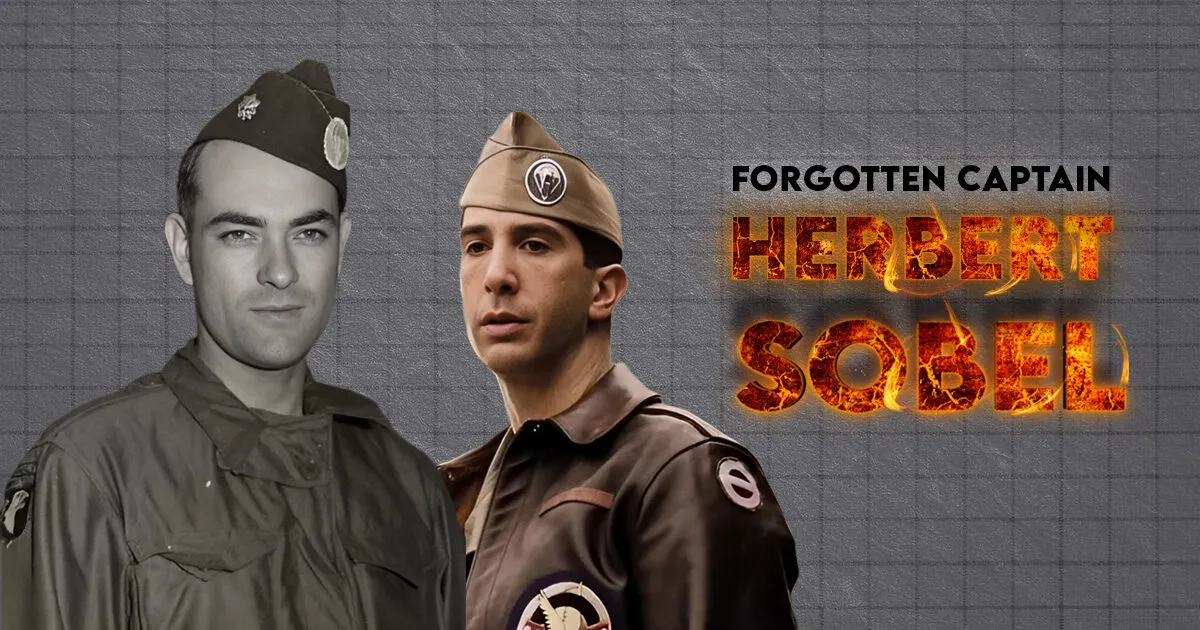
A man who trained 140 soldiers so well that they survive Normandy, Bastogne, and the deadliest war in human history. Decades later, that same man dies in a VA facility. Blind. His death certificate lists malnutrition as the cause. His own family doesn’t learn he is dead until days later.
This is the story of Captain Herbert Sobel.
The Man Before Easy Company
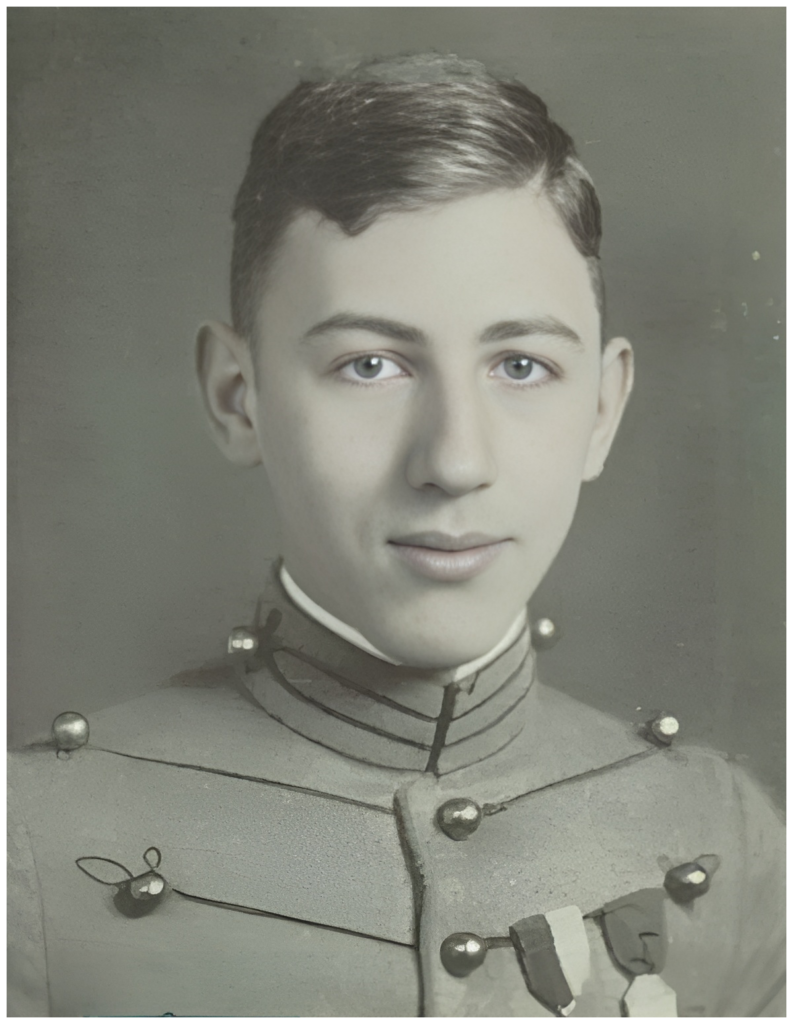
Herbert Maxwell Sobel was born on January 26, 1912, in Chicago, to a Jewish family. He grew up with three siblings and attended Culver Military Academy in Indiana, where he was on the swim team. He graduated from the University of Illinois, where he studied business, and took a commission as an Army officer. Ambrose says it came from the National Guard; his son wrote that he spent his later career in the reserves.
He held his commission years before Pearl Harbor, before most of the men he’d later command had even graduated high school. When Easy Company formed in 1942 he was a first lieutenant, and at twenty-eight he was the old man among its officers.
When the call went out for officers for the newly formed parachute infantry, he volunteered. He was assigned to the 506th Parachute Infantry Regiment, 101st Airborne Division, at Camp Toccoa, Georgia.
And then he was given Easy Company.
Herbert Sobel’s Training at Camp Toccoa
Sobel didn’t just train Easy Company. He broke them down and rebuilt them.
The centerpiece was Currahee. Three miles up, three miles down, in under 50 minutes. That mountain became a test of will more than fitness. Sobel made his men run it again and again. Sometimes after meals. The spaghetti run became infamous. In Don Malarkey’s memory the men were halfway through a spaghetti dinner when Sobel walked in and ordered them up Currahee; Ed Tipper remembered a spaghetti lunch and a whistle. Men vomited all along the trail. Those who accepted a ride back in the ambulances were shipped out the same day.
His punishments were creative and constant in ways that felt personal. Dirty ears cost a man his weekend pass. So did dirty stacking swivels. In one surprise search he confiscated everything from unauthorized ammunition to a can of peaches. On the night marches no one was allowed a drink, and at the end Sobel checked each man’s canteen to see that it was still full.
Dick Winters, who would later become the company’s most famous leader, put it simply in Beyond Band of Brothers (Chapter 2): Sobel “was not just unfair; he was plain mean.”
But Winters also said something else. Something most people skip over. “Herbert Maxwell Sobel ‘made’ Easy Company by producing a combat company that acted with a single-minded purpose.”
Forrest Guth agreed. “As far as I’m concerned, Sobel was the one who made E Company tough.” Don Malarkey, who by his own account wanted to tie Sobel to a pine tree when he left Toccoa, wrote in his memoir: “When the war ended, I wondered something else about Herbert Sobel: I wondered if he wasn’t a big reason some of us were still alive.”
Why Easy Company Hated Sobel
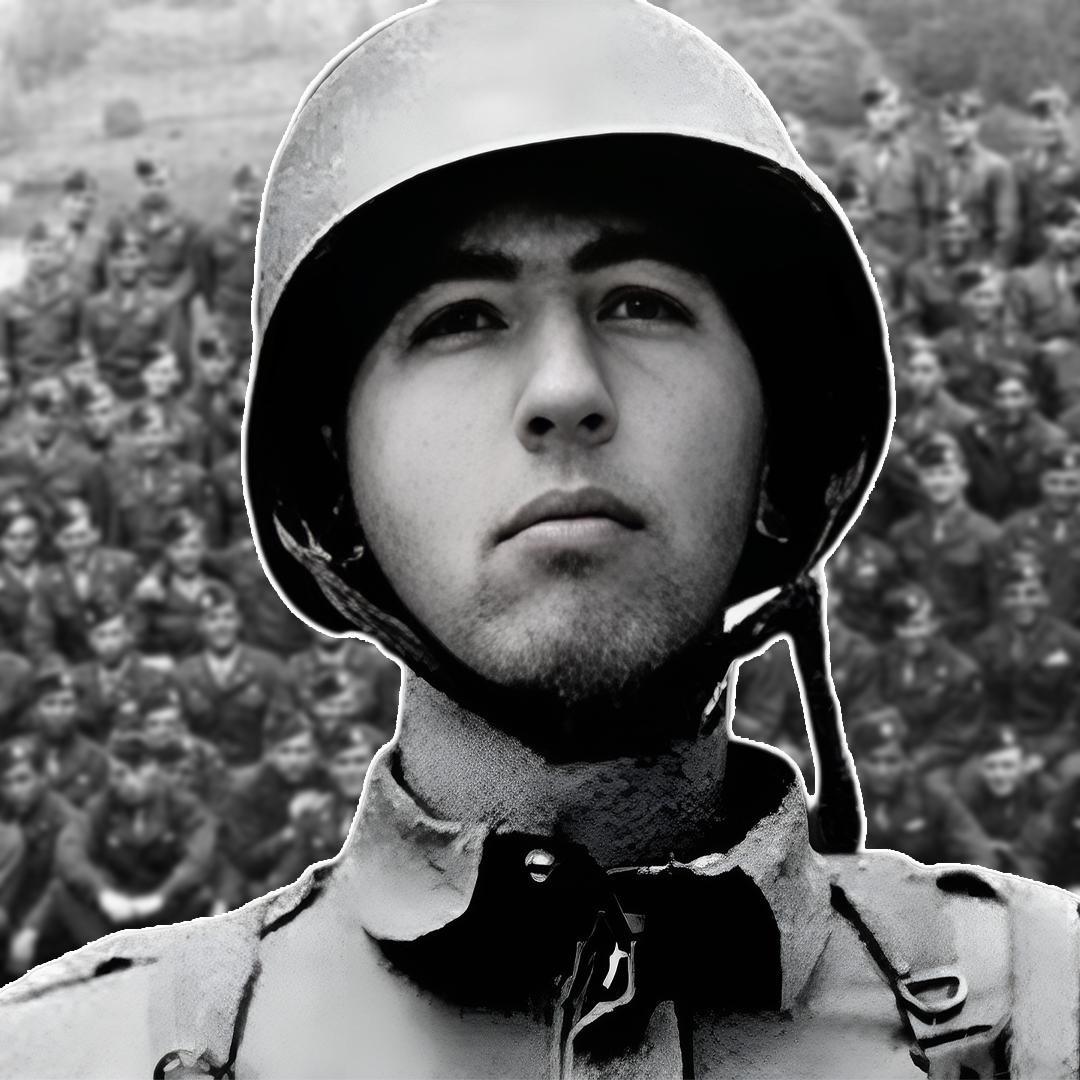
Here’s the problem. Sobel could train soldiers. He couldn’t lead them in the field.
During tactical exercises, he got lost. Repeatedly. He couldn’t read a map. He made decisions that, in real combat, would have gotten men killed. On a night march in England, Private George Luz imitated the voice of Maj. Oliver Horton, the battalion executive officer, and called out an order to cut the fences. Sobel had the wire cut, and the next morning Wiltshire farmers complained to Colonel Strayer about their wandering cows. Sobel fell for it completely.
As deployment grew closer, the gap between his garrison discipline and his field incompetence became terrifying. The men realized something: this man was going to get them killed in France.
Winters wrote in Chapter 2 of his memoir that Sobel’s fundamental flaw was his desire to “lead by fear rather than example.” The men respected toughness. They didn’t respect pettiness dressed up as leadership.
The Court-Martial That Changed Everything
On October 30, 1943, in England, things came to a head.
Sobel ordered Winters to inspect the latrines at 1000 hours. Sobel later said he had moved it to 0945. Winters said no one told him. Winters was busy censoring mail under direct orders from Battalion Commander Lt. Col. Robert Strayer. He showed up at 1000, as originally scheduled.
Sobel handed him a typed choice for “failure to inspect the latrine at 0945”: accept punishment under the 104th Article of War, or ask for trial by court-martial.
Winters could have taken the company punishment. Instead, he wrote his answer by hand at the bottom of the sheet.
“I request trial by Courts Martial for failure to inspect the latrine at 0945 this date.”
Sobel answered by denying him a 48-hour pass until after December 15, 1943. He insisted he had telephoned and sent a runner about the new time. Winters had no telephone in his room, and no runner had come.
On November 11, Lt. Col. Strayer set aside the punishment and closed the case without a court-martial. But by then, something bigger had started.
If you want to understand why Dick Winters clashed with authority throughout the war, this moment is where it began.
The NCO Mutiny Against Captain Sobel
Winters’ stand gave the noncommissioned officers courage. Sergeants Mike Ranney and Terrence “Salty” Harris called the company’s NCOs together. Almost every NCO in Easy Company agreed to surrender their stripes rather than go into combat under Sobel.
Winters attended the meeting. He tried to stop them. “Don’t even think about it,” he warned. “This is mutiny.”
They did it anyway.
When Colonel Robert Sink found out, he called the NCOs together and gave them hell. Under the Articles of War, he told them, he could have them shot. Ranney was busted to private. Winters wrote that Harris was transferred out of the regiment; Ranney’s own journal says Sink busted both men and sent Harris to A Company and Ranney to I Company of the 506th.
But Sink was smart enough to see the real problem. Sobel had lost his men. Completely. And you can’t lead soldiers who won’t follow you into a firefight. Within days, Sobel was reassigned to command a parachute training school at Chilton Foliat in Wiltshire, England. The school qualified doctors, chaplains, communications men, artillery observers and other key personnel who would jump on D-Day; by the invasion it had put more than four hundred officers and men through their qualifying jumps.
In February 1944, First Lieutenant Thomas Meehan took command of Easy Company. The Sobel era was over. Four months before D-Day.

Sobel on D-Day and Beyond
Sobel didn’t sit out the war after losing Easy Company.
He jumped into Normandy with the 101st Airborne in the early hours of June 6, 1944, according to the VA’s Veteran of the Day profile. He was there.
Later in the war he served on the regimental staff, and by the summer of 1945 he was the 506th’s supply officer. The VA’s Veteran of the Day profile says he earned a Bronze Star and was presented with the Combat Infantryman Badge.
And there’s a scene in Band of Brothers that captures one of the most loaded moments in the entire series. A promoted Major Winters crosses paths with the now-outranked Captain Sobel. Sobel tries to walk past without saluting. Winters stops him.
“We salute the rank, not the man.”
The real-life version of this moment is disputed. Winters wrote that it happened on a deserted company street at Mourmelon and that he said, “Captain, we recognize and honor the rank!” Don Malarkey placed it in Austria in 1945, outside Division supply, where Winters told him “Watch who comes out” before making Sobel salute. We’ll never know the full truth. But the tension between these two men was real and lasted until the war ended.
What Band of Brothers Didn’t Tell You About Herbert Sobel
The show gives you a handful of scenes of Sobel. A petty tyrant. A man who can’t read a map. A punchline played by the guy from Friends. Then he disappears from the story.
Here’s what they left out.
Sobel had a daughter. She died just days after birth. The show never mentions it. Neither does Ambrose’s book. His wife, a Catholic from a South Dakota farm family, had worked as a nurse in a hospital in Italy during the war; they met at Hines VA Hospital in Chicago. Sobel’s Jewish family never really accepted her. He married her anyway.
After the war, he didn’t become a bitter recluse. Every morning he got up early and made his wife breakfast. Every night after work he had a cocktail with her and they talked over the day. In the dead of winter he cleared the snow off her car and turned on the heater for her. He put money aside so all three of his sons could go to college. His son Michael called him “a great dad” who was “very loving and attentive.”
The show also skipped his postwar service. The VA’s Veteran of the Day profile says the Korean War brought him back to active duty. He stayed in the reserves for many years, his son wrote, and retired as a lieutenant colonel. Not a captain. A lieutenant colonel.
And there’s the irony the show couldn’t have scripted better. When Sobel was removed from command, Thomas Meehan replaced him. On D-Day, Meehan’s C-47 was shot down over Normandy. Everyone aboard died. Had Sobel still commanded Easy, he would presumably have been aboard that plane with his headquarters section. The mutiny that humiliated him may have saved his life.
The Question Nobody Asks: Was Antisemitism Part of the Story?
This is the part most articles skip. And it matters.
Herbert Sobel was likely the first Jewish person many of his rural, small-town enlisted men had ever met. According to Stephen Ambrose’s own book, the most common insult used behind Sobel’s back was a slur combining profanity with his religion.
Look at how Ambrose physically described Sobel: “His eyes were slits, his nose large and hooked. … He was ungainly, uncoordinated, in no way an athlete.” Sobel’s son Michael later pointed out that his father swam on the high school team at Culver Military Academy and did fifty to seventy-five push-ups a night alongside his young sons. Ambrose’s book, quoting Ed Tipper, says Sobel “could barely do twenty push-ups,” that his arms were trembling by twenty-four or twenty-five, and that he still finished the thirty the test required.
Tipper was remembering 1942 and Michael the years after the war, but the book’s description of Sobel’s face reads like a stereotype.
Ed Shames, another Jewish officer who served in Easy Company and its last surviving officer when he died in 2021, appears in Ambrose’s book with no mention that he was Jewish. Ambrose’s credibility took a hit in 2002, when he was found to have copied passages from other historians, and again in 2010, when his account of his interviews with Eisenhower was questioned.
None of this excuses Sobel’s failures as a field commander. It does mean the book’s portrait of him deserves a careful reading.
David Schwimmer, who is himself Jewish, was cast to play Sobel. That adds another layer to a story that’s more complicated than the show ever let on.
Herbert Sobel After the War
Sobel came home to Chicago. He worked as an accountant and later as a credit manager at A.C. McClurg & Co., a wholesale company. His son remembered a private man who never missed a day of work. He never talked about the war. Not to his wife. Not to his sons. Whatever happened between him and Easy Company, he kept it locked away.
But here’s the thing nobody expected. The man who terrorized 140 paratroopers turned out to be a devoted husband and father. That contrast is the part most people can’t square with the character they saw on HBO.
The Tragic End of Captain Sobel
In the 1960s, things started falling apart. Sobel’s son Michael grew his hair to his shoulders, went to Berkeley, and was arrested protesting at the 1968 Democratic National Convention. Herbert was a staunch conservative. The distance between them grew.
In 1970, Herbert Sobel shot himself in the head with a small-caliber pistol. The bullet entered his left temple, passed behind his eyes, and exited the other side. It severed both optic nerves. He survived. But he would never see again.
His wife later suggested that he feared he had cancer and would not be tested for it. They were not yet divorced, Michael wrote; that came later. At 58, the man who once commanded 140 paratroopers was permanently blind.
He spent his last 17 years at a Veterans Affairs assisted-living facility in Waukegan, Illinois. His son called the living conditions “horribly depressing”; the place was in a state of disrepair. His father was fully ambulatory but in and out of being lucid, sometimes in a semivegetative state. He did have friends on the ward.
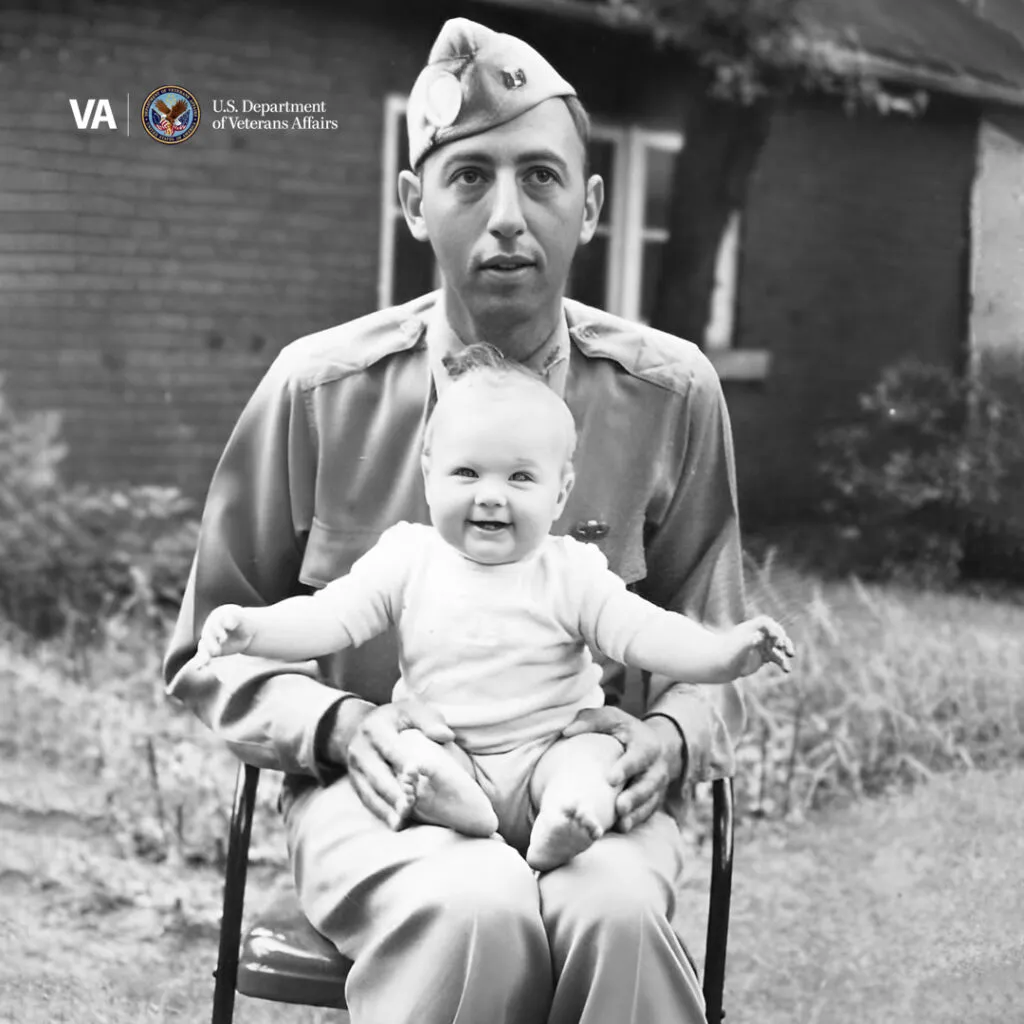
Bill Guarnere tried to get him to the reunions. He paid Sobel’s Airborne dues and sent him a card: “Come, the men want to see you.” Sobel never came to a reunion.
Herbert Sobel died on September 30, 1987. He was 75 years old. The cause of death on his certificate reads: malnutrition.
His immediate family was not with him when he died. Michael wrote that, to his knowledge, there was no service, and that it was days, perhaps a week, before Sobel’s sister phoned his mother with the news. “Our contact with him had waned over the years, and when he passed, we were unaware of the event.”
His sister handled the arrangements, and he was cremated.
Did Herbert Sobel Know What He Was Doing?
His son Michael believes he did.
Michael sees his father’s harshness as the job of a drill instructor. Winters made a related point in his memoir: Easy “coalesced to protect itself against Sobel.” “I believe that the men understand what my father’s function was and how he operated,” Michael wrote.
And the men, eventually, did understand.
Rod Strohl looked Stephen Ambrose in the eye and said it flatly: “Herbert Sobel made E Company.” Bill Wingett pushed back against the popular narrative: “I’ll argue hands down with anybody who says Sobel was the SOB they often say he was.”
At an Easy Company reunion in 2002, a veteran’s son approached Michael Sobel in tears. His father, the son said, credited Captain Sobel with saving his life.
You can argue about Sobel’s methods. You can argue about whether his cruelty was calculated or just who he was. What you can’t argue is the result. Easy Company became one of the finest combat units of the Second World War. They liberated towns across Europe. They came upon the Kaufering concentration camp. They survived Bastogne, the Bulge, and everything the German army threw at them.
And the man who helped make that possible died blind in a VA facility in Waukegan, his family unaware for days that he was gone.
Rod Strohl told Ambrose that Herbert Sobel made E Company. Bill Guarnere paid his dues and asked him to come to the reunions. He never came.
Watch the Short
This article was inspired by our YouTube Short on Captain Sobel’s tragic life. Watch below:
What Happened to Captain Herbert Sobel After Band of Brothers?
Captain Herbert Sobel, Easy Company’s first commander, played by David Schwimmer in the HBO miniseries, was relieved of command before D-Day, jumped into Normandy with the 101st, stayed in the Army Reserve after the war, and worked in Chicago as an accountant and credit manager. In 1970 Sobel attempted suicide with a small-caliber pistol fired through his temple. He survived, but the bullet severed his optic nerves. He spent the last 17 years of his life blind in a Veterans Affairs assisted-living facility in Waukegan, Illinois. He died on September 30, 1987, at age 75. His body was cremated. His death certificate listed malnutrition as the cause.
Correction, October 25, 2026: An earlier version of this article quoted a push-up line that is not in Stephen Ambrose’s book, attributed a quote to Bill Guarnere that we could not find in any source, altered the wording of quotes from Forrest Guth, Don Malarkey, Bill Wingett and Michael Sobel, placed Sobel’s divorce before his 1970 suicide attempt (his son says it came later), said he retired from the National Guard (it was the reserves), stated as fact a Bronze Star, Korean War dates and a burial at Montrose Cemetery that we could not confirm, and described the VA facility in invented detail. It has been corrected against Ambrose’s Band of Brothers, Winters and Kingseed’s Beyond Band of Brothers, Malarkey’s Easy Company Soldier, Guarnere and Heffron’s Brothers in Battle, Best of Friends, and Michael Sobel’s chapter in Marcus Brotherton’s We Who Are Alive and Remain.
Sources
This article draws from the following sources:
- Dick Winters and Cole C. Kingseed, Beyond Band of Brothers: The War Memoirs of Major Dick Winters (Chapters 2 and 4)
- Stephen Ambrose, Band of Brothers: E Company, 506th Regiment, 101st Airborne from Normandy to Hitler’s Eagle’s Nest
- Michael Sobel, “Herbert Sobel,” in Marcus Brotherton, We Who Are Alive and Remain: Untold Stories from the Band of Brothers (2009), and Marcus Brotherton, “The hidden truth about this controversial ‘Band of Brothers’ commander,” Fox News, October 16, 2023
- Don Malarkey with Bob Welch, Easy Company Soldier; William Guarnere and Edward Heffron, Brothers in Battle, Best of Friends; Leonard Rapport and Arthur Northwood Jr., Rendezvous with Destiny
- U.S. Department of Veterans Affairs, Veteran of the Day: Herbert Sobel
FAQ
What happened to Herbert Sobel after Band of Brothers?
After being removed from Easy Company, Sobel continued to serve in WWII and jumped into Normandy on D-Day. The VA’s Veteran of the Day profile credits him with a Bronze Star and a return to active duty in the Korean War. He stayed in the reserves, retiring as a lieutenant colonel, worked in Chicago as an accountant and credit manager, married, and had three sons and a daughter who died days after birth. In 1970, he attempted suicide and was left permanently blind. He spent his last 17 years in a VA facility in Waukegan, Illinois, and died of malnutrition in 1987.
Was David Schwimmer’s portrayal of Sobel accurate?
Schwimmer’s performance is widely praised, but the accuracy of the character is debated. The show relied heavily on Dick Winters’ perspective, and Winters strongly disliked Sobel. Sobel’s son Michael wrote that the show depicted his father as “an inept ne’er-do-well” and remembers a father in excellent physical shape; he has said he bears no animosity toward Ambrose. Critics have pointed to the stereotyped physical description in Ambrose’s book. The real Sobel also jumped into Normandy on D-Day, which the show leaves out.
Did the Easy Company NCO mutiny really happen?
Yes. In late 1943, almost every NCO in Easy Company turned in their stripes rather than serve under Sobel in combat. Sergeants Mike Ranney and Salty Harris organized the protest. Colonel Robert Sink busted Ranney to private, transferred Harris, and recognized Sobel had lost his men. Sobel was reassigned to a training school, and Lt. Thomas Meehan replaced him months before D-Day.
Where is Herbert Sobel buried?
Sobel was cremated after his death in 1987, and his sister handled the arrangements. His son Michael wrote that, to his knowledge, there was no service, and that the family learned of the death days later. The published sources we checked do not record where his ashes rest.
Was Captain Sobel in Band of Brothers a real person?
Yes. Captain Herbert Maxwell Sobel was a real US Army officer, born January 26, 1912, in Chicago. He commanded Easy Company, 506th Parachute Infantry Regiment, 101st Airborne Division during their training at Camp Toccoa, then served in WWII (he jumped into Normandy on D-Day) and stayed in the Army Reserve afterward, retiring as a lieutenant colonel. The Band of Brothers character played by David Schwimmer is based directly on him, though his son Michael has disputed the show’s portrayal and critics have pointed to the stereotyped physical description in Ambrose’s book.
Did Herbert Sobel fight on D-Day?
Yes. Despite being removed from Easy Company’s command, Sobel jumped into Normandy with the 101st Airborne in the early hours of June 6, 1944, according to the VA’s Veteran of the Day profile. He served on the 506th’s staff for the rest of the war and was the regiment’s supply officer by its end.