A German MG 42 round pierced the front of his helmet near Koevering in September 1944. The bullet grazed his forehead, left a brown burn mark, and exited the side of the steel pot without breaking the skin. Captain Lewis Nixon was face-down in 350 yards of open Dutch field at the time. Major Dick Winters turned to check on his friend and found Nixon examining the pierced helmet with a big smile. Six months later, on March 24, 1945, Nixon was the jumpmaster on a C-46 transport that took a direct hit from German flak over the Rhine. Only Nixon and three others got out alive before the plane went down. By May, Major Winters was opening Hermann Göring’s 10,000-bottle wine cellar to him at Berchtesgaden. The cellar had originally held 16,000 bottles. The 3rd Infantry Division had reached it first and trucked away 6,000.
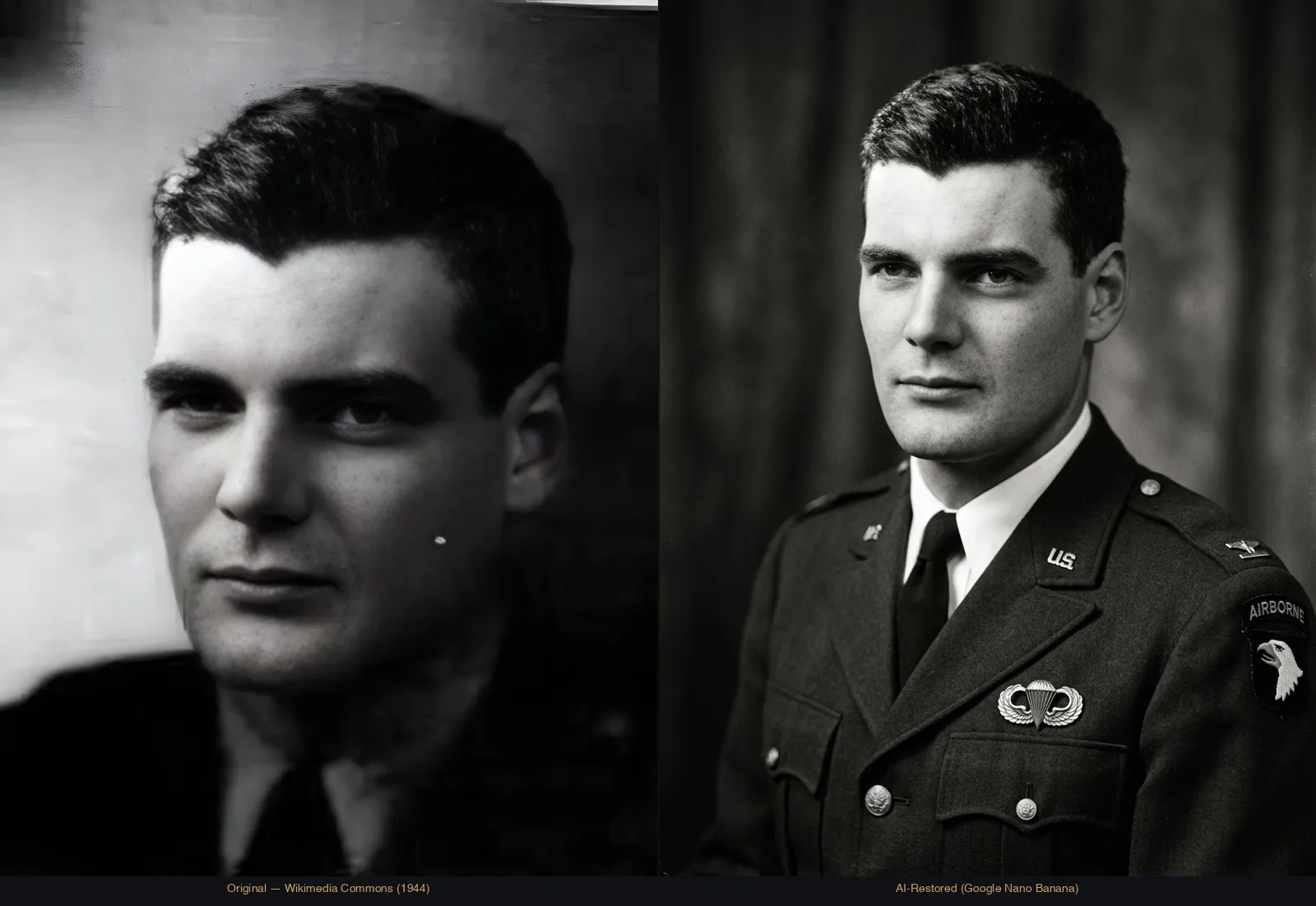
This is the verified true story of Captain Lewis Nixon III, the battalion intelligence officer of the 506th Parachute Infantry Regiment, drawn directly from Major Dick Winters’ memoir Beyond Band of Brothers and Stephen Ambrose’s Band of Brothers. The HBO miniseries gave us Ron Livingston’s affable, scotch-drinking Nixon. The historical record is harder. He was a Yale dropout who chose the airborne, fought through three combat jumps in Europe without ever firing a shot in anger, was demoted because of his drinking, and walked away from a flak hit on his transport that killed all but four of the men aboard. His closest friend, Dick Winters, would write that Nixon was the best combat officer he ever served with under fire.
Who was Lewis Nixon?
Lewis Nixon III was born in New York City on September 30, 1918, the eldest of three children of Stanhope Wood Nixon and Doris Ryer Nixon. The family was wealthy in the literal sense and military in the inherited sense. His grandfather, Lewis Nixon I, was a naval architect who designed U.S. battleships and founded the Nixon Nitration Works in Edison, New Jersey, an industrial chemicals firm that supplied munitions ingredients to two world wars. The family’s ancestry, by Winters’ own account in Beyond Band of Brothers, traced back to General Andrew Lewis, George Washington’s chief of staff, with forebears who fought in the War of 1812, the Mexican-American War, the Spanish-American War, and the First World War.
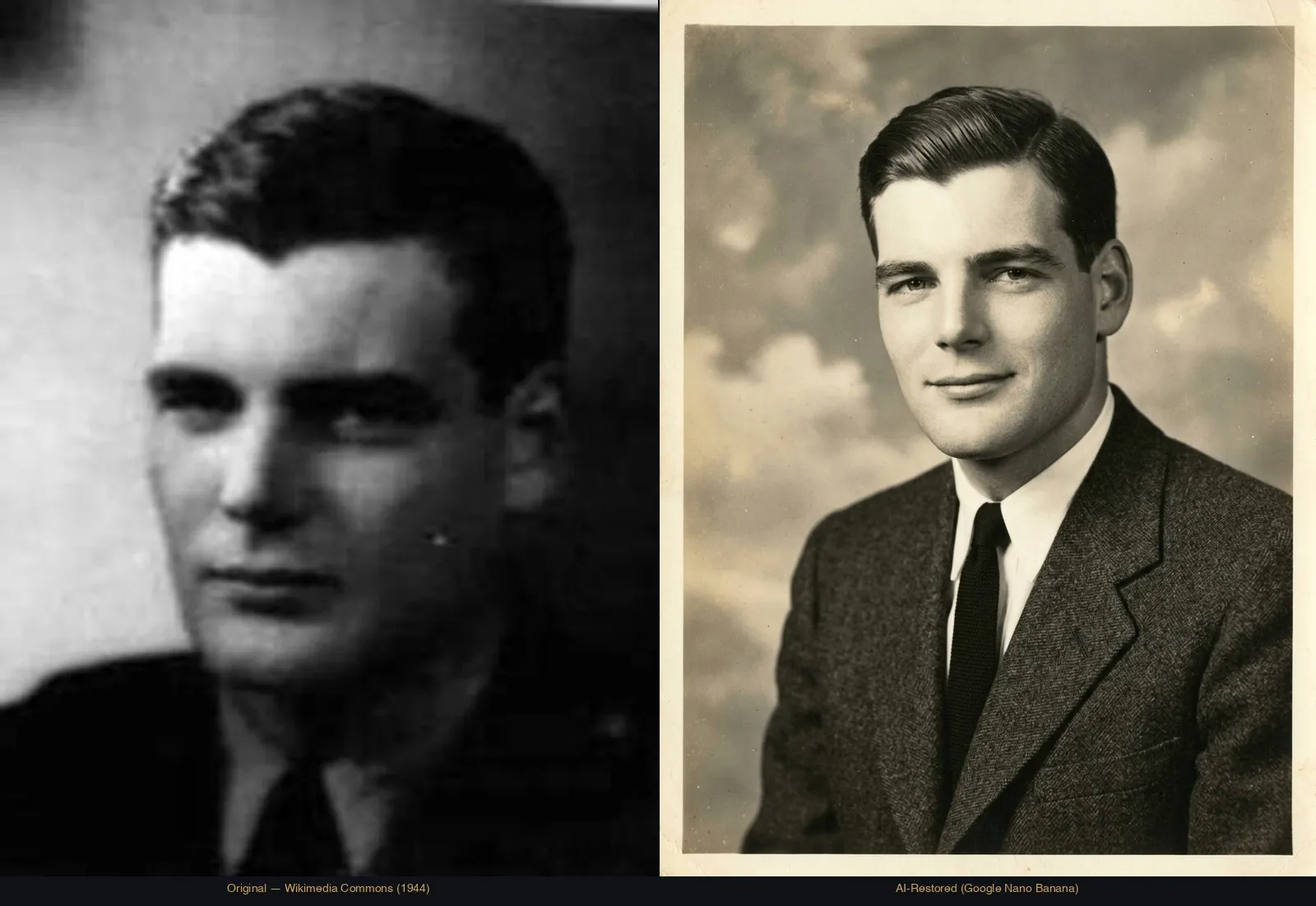
His childhood was split between Manhattan and the family estate in Montecito, California. He spent a year as a boy living in a family villa in the Côte d’Or region of France, traveled extensively across England, France, and Germany before the war, and graduated from Cate School, a strict boarding school in Carpinteria, near Santa Barbara. He then attended Yale University for two years, studying engineering from 1937 to 1939, supplemented by summer engineering courses at the Massachusetts Institute of Technology. He did not graduate. By January 14, 1941, eleven months before Pearl Harbor, he had volunteered to be drafted and reported for service at Trenton, New Jersey.
The decision is the detail that explains the rest of his life. A man with his money and lineage did not have to leave Yale, did not have to enlist before being drafted, and did not have to volunteer for the airborne. He chose all of it. Winters wrote in his memoir that Nixon was far more educated and worldly than most of his peers. The two of them came from diametrically opposed backgrounds: Winters working class from Lancaster County, Pennsylvania, Nixon a Manhattan industrial heir. The friendship that developed across that gap held for fifty-three years. The drinking that defined the rest of Nixon’s life had also begun early, by the memoir’s account; alcohol abuse was a documented pattern in his father Stanhope, and Lewis adopted it long before the war.
Toccoa, Easy Company, and the friendship that defined him
After Officer Candidate School at Fort Benning in 1941, Nixon was commissioned a second lieutenant of infantry, volunteered for the new airborne, and reported to Camp Toccoa, Georgia, in the summer of 1942 with E Company, 506th Parachute Infantry Regiment. Captain Herbert Sobel commanded the company. Lieutenant Richard “Dick” Winters was the platoon leader Nixon naturally gravitated toward. Both college-educated, both quiet around the louder officers, both capable of reading a map and a man.
Stephen Ambrose, in Band of Brothers, describes them as complementary. Winters was the disciplined teetotaler. Nixon drank, smoked, and read books on his bunk between training runs. Winters trusted him completely. By the time the regiment shipped to England in 1943, Nixon was the 2nd Battalion intelligence officer (S-2). The job suited him: he could read German radio traffic and prisoner interrogations the way he had read his Yale assignments, and the senior officers above Winters knew it.
D-Day, Carentan, and the jump to regiment
Nixon jumped into Normandy on the night of June 5-6, 1944. As 2nd Battalion S2, he flew in the same C-47 stick as Winters and landed in the same hedgerow chaos. The drop was scattered across miles of countryside. Nixon and Winters regrouped near Sainte-Mère-Église in the early morning hours and walked together toward the assembly point. Within hours, Easy Company was attacking the German artillery position at Brécourt Manor, an action now studied at West Point.
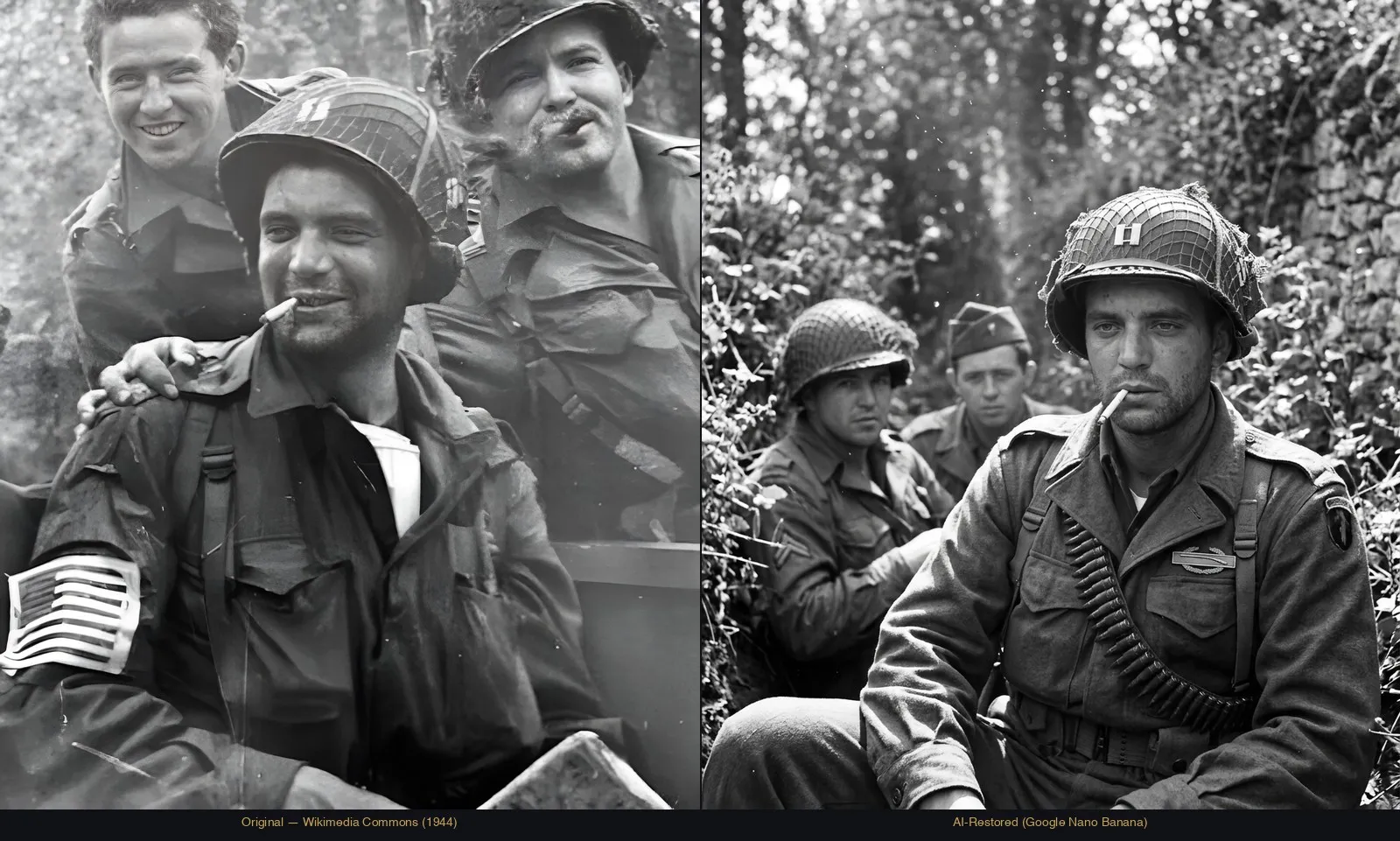
After the Battle of Carentan on June 12, 1944, Nixon was promoted to a higher staff role: 506th Regimental S-2. He moved up from battalion to regiment, the intelligence officer for all three battalions of the 506th PIR under Colonel Robert Sink. The promotion came on the strength of his Normandy work. Through Carentan and the rest of the campaign, Winters wrote in Beyond Band of Brothers, Nixon’s value was the calm voice in the operations tent. He did not panic. He did not posture. He read terrain and enemy and told the senior officers what he thought.
Operation Market Garden and the helmet near Koevering
In September 1944 the 101st Airborne jumped into Holland for Operation Market Garden. The plan was to seize a corridor of bridges into Germany. The Allies took most of them. They lost the last one at Arnhem.
Several days into the campaign, during a flanking maneuver to reopen Hell’s Highway south of Veghel, Easy Company was ordered to cross 350 yards of open ground near the village of Koevering. The field had no cover. Halfway across, the men were pinned down by intense machine-gun fire from German Royal Tiger tanks and troops of the 6th German Parachute Regiment. As the paratroopers hit the dirt, a machine-gun bullet struck Nixon’s helmet. The round pierced the front of the steel pot, grazed his forehead, left a brown burn mark, and exited the side. It did not break the skin.
Winters, lying in the same field a few yards to the right, turned to check on his friend. He found Nixon examining the pierced helmet “with a big smile on his face.” Winters wrote afterward that the moment confirmed what he had already suspected: Nixon was the coolest man under fire he had ever encountered. The full memoir line is direct: “I still regard Lewis Nixon as the best combat officer who I had the opportunity to work with under fire. He never showed fear, and during the toughest times he could always think clearly and quickly.”
Winters also recorded the personal weight of the moment. “From a personal standpoint, I would have been devastated had Nixon been killed,” he wrote. The luckier irony was statistical. The bullet did not break the skin, which meant Nixon was not eligible for a Purple Heart. He would, by Winters’ own count, become “one of the very few men of 2nd Battalion who jumped in Normandy and went through the entire war without receiving at least one Purple Heart.”
Bastogne and the Vat 69 whiskey
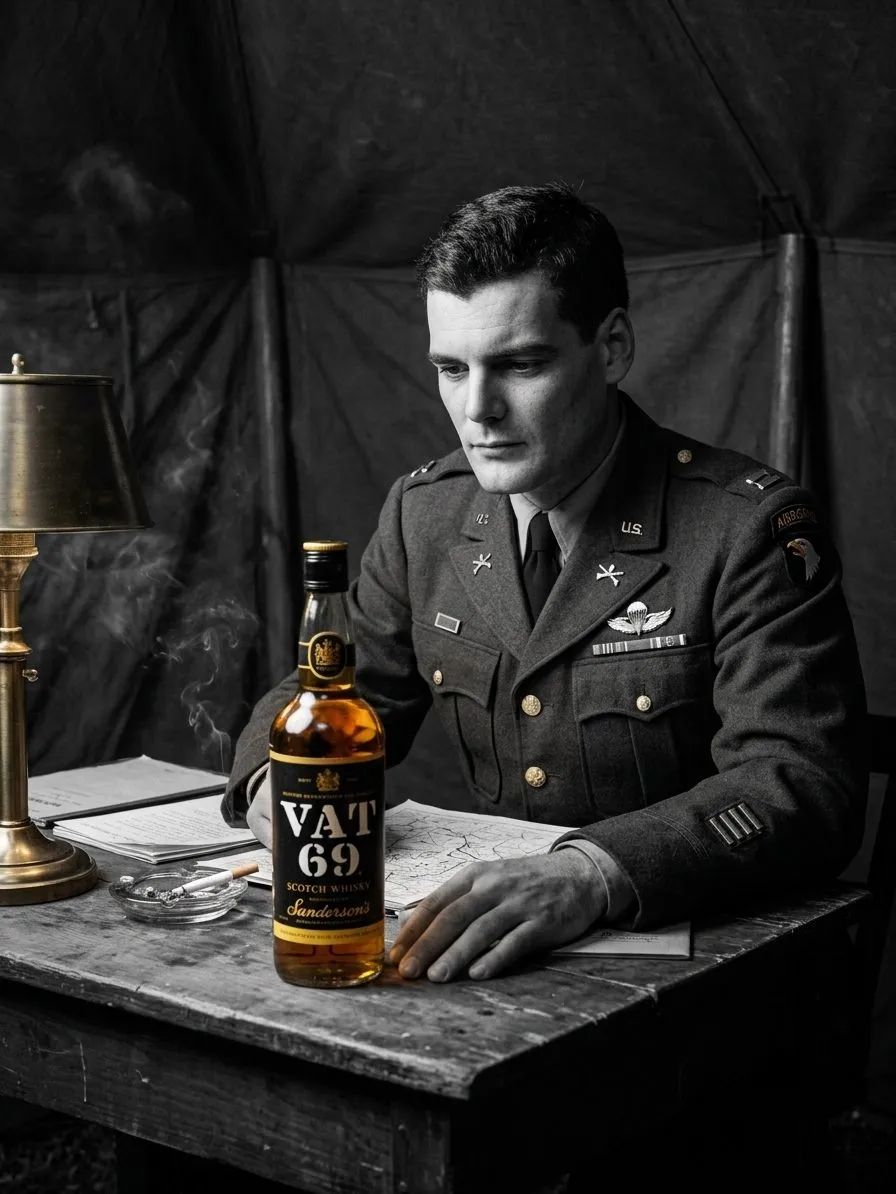
Nixon’s whiskey of choice was Vat 69, a blended Scotch produced by William Sanderson. The detail is documented in Stephen Ambrose’s Band of Brothers and confirmed in Winters’ memoir, where Winters quotes himself directly on how the brand traveled with the company across two continents. “While we were in training before we shipped overseas,” Winters wrote, “Nixon hid his entire inventory of Vat 69 in my footlocker, under the tray holding my socks, underwear, and sweaters. What greater trust, what greater honor could I ask for than to be trusted with his precious inventory of Vat 69?” Winters did not drink. The space was free.
Bastogne, December 1944, was where the legend of Nixon’s loyalty hardened. The 101st Airborne was surrounded. The official orders sent telegrams to officers offering a thirty-day stateside leave through a draw of names. Nixon, by Winters’ own account, refused the lottery. He stayed with the battalion on the line. He drank through it. The drinking did not stop after the siege broke.
The demotion at Mourmelon, spring 1945
The Battle of the Bulge ended. The 101st Airborne pulled back to Mourmelon, France, in early 1945 to rest and refit. Nixon was still drinking. He had been promoted to 506th Regimental S-2 after Carentan, and the regimental seat was high-visibility, with staff meetings with Colonel Sink and briefings up to division. By March 1945, Sink had run out of patience.
Sink approached Major Dick Winters, who by then commanded 2nd Battalion, with the regiment’s frustration in plain language. “God damn it, the man’s drunk all the time,” Sink told Winters in a passage Winters preserved in his memoir. “I can’t get any damn work out of him.” Sink’s initial intention was to transfer Nixon out of the 506th entirely. Winters intervened on his friend’s behalf. He told Sink that he could still get productive work out of Nixon if Nixon was working directly under him. Sink considered, then relented: “You’ve got him.”
The result was a demotion in everything but the captain’s bars on Nixon’s collar. He was reassigned from 506th Regimental S-2 down to 2nd Battalion S-3, the operations officer working directly under Winters. He kept his rank. He lost the regimental access. Sink was rid of his daily exposure to the drinking. Winters had his closest friend back inside the battalion. Nixon, by Winters’ account, took the demotion without a fight. The arrangement suited him.
Operation Varsity: the C-46 he barely got out of
On March 24, 1945, the Allies launched Operation Varsity, the largest single-day airborne operation of the war and the last airborne deployment in Europe. The 101st Airborne was not part of the drop; they had earned their rest. But division command allowed them to send observers. Major Winters dispatched Nixon to jump with the U.S. 17th Airborne Division across the Rhine.
Nixon was assigned as the jumpmaster on his C-46 transport. As the aircraft approached the drop zone over the Rhine, it took a direct hit from heavy German antiaircraft fire. Nixon was at the open door, in his jumpmaster position. He and three other men got out before the plane went down. Every other paratrooper and crewman on board was killed. According to the U.S. Army Historical Foundation, the 17th Airborne lost 1,300 of its 9,650 men in the operation, with twenty-one of its 144 transport aircraft shot down. Nixon was on one of those twenty-one.
He spent one night on the ground with the 17th Airborne, then flew back to 2nd Battalion at Mourmelon on a special return flight. Winters, who picked him up, wrote in his memoir that Nixon was “visibly shaken.” He retreated into heavy drinking that evening. The line in Episode 8 of the miniseries, “the rest of the boys, well, they blew up over Germany somewhere,” points to this jump.
The grim record had an unusual upside. By making the Rhine jump in addition to Normandy and Holland, Nixon became one of only a handful of men in the 101st Airborne to earn three combat jump stars on his wings. The first jump had been into Normandy on the night of June 5-6, 1944. The second was into Holland in September. The third was the C-46 over the Rhine. By the end of his service in Europe, he had jumped from three transport aircraft into three combat zones and had not fired his weapon in any of them.
His decorations reflected that service without ever including a Purple Heart: the Bronze Star, the European-African-Middle Eastern Campaign Medal, the World War II Victory Medal, the American Campaign Medal, and the Parachutist Badge with three combat jump stars. The helmet round at Koevering that never broke the skin is the reason the Purple Heart is missing from that list.
Berchtesgaden: 16,000 bottles, 6,000 stolen, 10,000 left
In May 1945, Easy Company captured Berchtesgaden, the Bavarian retreat that had served as Hitler’s residence and the property of senior Nazi officials. Hermann Göring’s personal wine cellar was inside, hidden beneath Göring’s officers’ club. Major Dick Winters discovered it. According to the National WWII Museum, the cellar had originally held an estimated sixteen thousand bottles, including some of the rarest Bordeaux and Burgundy in occupied Europe. Much of it had been stolen by Göring’s agents from French vineyards over the previous five years.
Easy Company was not the first Allied unit there. The 7th Infantry Regiment of the 3rd Infantry Division had reached Berchtesgaden first, and their commander had quietly ordered six trucks to haul away roughly six thousand bottles. By the time Winters found the cellar door, the remaining inventory was around ten thousand bottles, stacked on racks reaching the ten-foot ceilings. He posted a double guard. He ordered his men to abstain for seven days to keep the battalion from disintegrating into a drunken brawl.
Winters then went and found Nixon. The deal he proposed, recorded in his memoir, was simple: if Nixon could sober up, Winters would show him something he had never seen before. Nixon sobered up overnight. The next morning, Winters took him to the cellar door and let him in. Nixon selected his personal share first, then organized a detail to load five trucks with bottles for the rest of the companies and battalion headquarters. The famous photograph of him in his open-collared field jacket on V-E Day morning, hung over and holding a Vat 69 bottle, was taken at Berchtesgaden the day after.
Why Nixon went back to the Kaufering camp
Easy Company stumbled onto the Kaufering subcamp complex of Dachau on April 27-28, 1945. Hundreds of charred corpses. Emaciated survivors with typhus and starvation. The kind of scene that Winters wrote, in his memoir, “defied description and left a permanent psychological mark.” Episode 9 of the miniseries shows General Maxwell Taylor formally declaring martial law and ordering local German civilians to bring shovels to the camp. That order was real. The Allied policy across the European theater was to force the civilian population to confront what their government had done.
The historical record in Winters’ own memoir adds a step the show compresses out. Winters did not wait for Taylor’s division-level order to arrive. As soon as the camp was secured, he turned to his battalion operations officer, Captain Lewis Nixon, and personally directed him to gather the local civilian population, march them into the camp, and put them to work managing the crematorium and the burial pits. Nixon executed the order. The miniseries depicts his return to the camp later in Episode 9 as personal grief, a broken man drinking and wandering. The reality was operational. He was the officer Winters trusted to enforce the work detail without losing his composure in front of the German civilians or the surviving prisoners. The personal weight came with the duty, not instead of it.
After the war: three marriages and one Grace
Nixon was discharged in late 1945. He returned to New Jersey and joined Nixon Nitration Works in Edison, working alongside his father Stanhope and, for several post-war years, alongside Dick Winters, who had taken a position at the company. By the 1950s Nixon was helping run the family business.
His personal life was harder. His first wife, Katharine Page of Phoenix, Arizona, whom he had married on December 20, 1941, initiated divorce proceedings while he was still in Europe. By Winters’ account, she had appeared more interested in the Nixon family’s wealth than in Nixon himself. The divorce was finalized in late 1945; the marriage license records for his subsequent wedding cited “drunkenness” alongside incompatibility as the cause of the separation. Winters believed it cost Nixon his faith in women.
In June 1946 Nixon married Irene Miller, an Englishwoman he had met while stationed in Aldbourne during the war. Irene stood by him through the deaths of his parents and the suicide of his sister, but the marriage came apart under the strain of his alcoholism and the family’s inheritance disputes, and the couple divorced in the mid-1950s.
It was Grace Umezawa, a Japanese-American woman whose own war had been spent in U.S. internment camps, first in horse stalls at the Santa Anita Racetrack in California, later in Arizona, who finally brought Nixon the peace he had not been able to find for himself. They married in 1956, with Dick Winters standing as best man. Grace, by Winters’ account, was the woman who finally helped Nixon overcome the alcoholism that had defined his adult life. The two of them spent the rest of his life traveling and living quietly together in California. Winters wrote that Nixon had not, until Grace, ever experienced true love.
Death and Winters at the funeral
Lewis Nixon III died on January 11, 1995, in Los Angeles, California, at the age of seventy-six. The cause was complications from type 2 diabetes. He is buried at Forest Lawn Memorial Park in the Hollywood Hills, in the Blessed Assurance section; his Find a Grave memorial records the site. He had no children.
At Grace’s request, Dick Winters flew out from Pennsylvania to deliver the eulogy. Easy Company’s Clarence Hester and Bob Brewer were also there. He chose not to recite the tactical record, the three combat jumps, the helmet at Koevering, the C-46 over the Rhine, the Berchtesgaden cellar. Instead, by the account in his memoir, he read aloud a line from a letter Grace had sent him during Nixon’s final illness: “Lewis is so brave; he never complains; he always has a smile for me whenever I come into his room, and that just makes it all worthwhile.” The friendship that began at Camp Toccoa in July 1942 had ended in a Los Angeles funeral home in January 1995. Fifty-three years.
Ron Livingston and the casting of Lewis Nixon
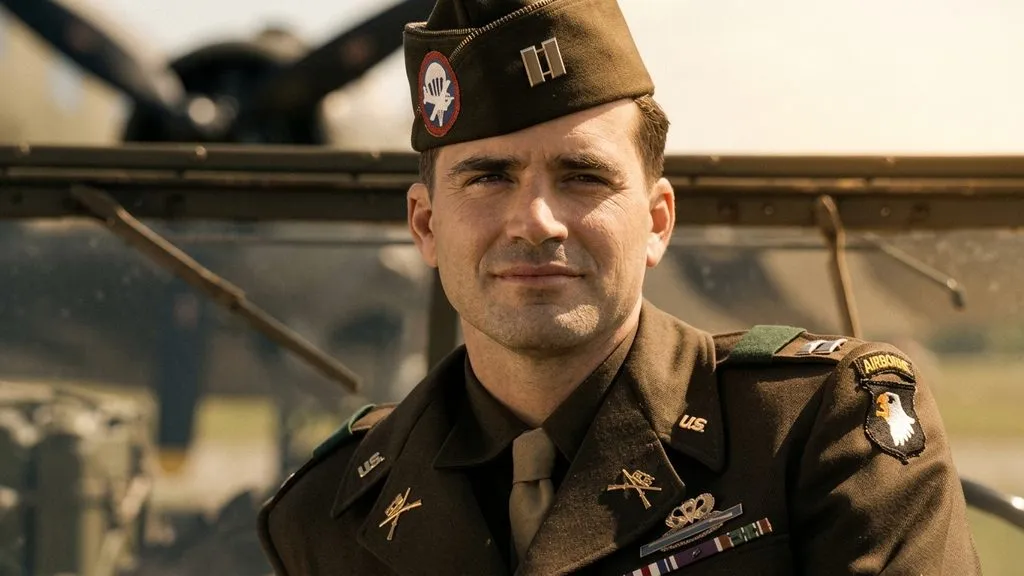
Ron Livingston was cast as Nixon in the 2001 HBO miniseries, and the character became one of the show’s emotional anchors. He had been working in film and television for a decade, best known to American audiences for the 1999 comedy Office Space. Livingston brought a dry, slightly cynical warmth to the role that turned out to match Nixon’s actual postwar interview footage almost exactly.
The wardrobe department gave him a real Vat 69 bottle to keep on set. Livingston met with Nixon’s family during pre-production. The performance earned him strong reviews, and the friendship between Livingston’s Nixon and Damian Lewis’s Winters became one of the emotional spines of the miniseries.
The question worth asking
The easy reading of Lewis Nixon’s life is that he was a privileged drunk who happened to land in a war movie. The verified record makes it harder to repeat with any honesty.
The harder reading is that Nixon left Yale before graduation, volunteered for the airborne, jumped into Normandy with the same odds as a farm boy from Iowa, took a German MG 42 round through his helmet at Koevering and laughed it off, was demoted at Mourmelon because his drinking had outrun his command and accepted the demotion without complaint, was the only man besides three others to walk out of his Operation Varsity transport, executed Winters’ Kaufering order when most officers would have looked away, and spent the rest of his life trying to make peace with what he had seen, first with Vat 69 and eventually with Grace Umezawa. Her own war had been spent in U.S. internment camps. His best friend, Dick Winters, who knew him longer than anyone alive, called him in print the best combat officer he ever served with under fire.
That is the man Ron Livingston was reaching for. The miniseries got him most of the way. The other twenty percent is what this article is for.
Related Band of Brothers stories
- Dick Winters: The Complete Biography of Easy Company’s Real Leader
- Are Easy Company Members Still Alive? Last Survivors of Band of Brothers
- Ronald Speirs: The Real Story Behind Easy Company’s Most Feared Officer
Frequently Asked Questions
Was Lewis Nixon really an alcoholic?
Yes. The real Lewis Nixon Band of Brothers depicts is consistent with the documented record. Stephen Ambrose’s Band of Brothers and Dick Winters’ memoir Beyond Band of Brothers both document Nixon’s heavy drinking from before the war onward, a pattern Winters traces to Nixon’s father Stanhope. Nixon was demoted from 506th Regimental S-2 to 2nd Battalion S-3 in spring 1945 at Mourmelon because of it. Colonel Sink’s recorded words to Winters were direct: “God damn it, the man’s drunk all the time. I can’t get any damn work out of him.”
Did Lewis Nixon really get shot in the helmet?
Yes, but the wound was closer to nothing than to a graze. During Operation Market Garden in September 1944, near the village of Koevering during a flanking maneuver to reopen Hell’s Highway south of Veghel, a round from a German MG 42 machine gun pierced the front of Nixon’s helmet, grazed his forehead, and exited the side of the steel pot. It left a brown burn mark and did not break the skin. Dick Winters describes finding Nixon “examining the pierced helmet with a big smile on his face.”
Why was Nixon demoted in Band of Brothers?
The demotion happened in spring 1945 at Mourmelon, France, after the Battle of the Bulge. Colonel Robert Sink had reached the end of his patience with Nixon’s drinking at the regimental headquarters. Sink wanted to transfer Nixon out of the 506th entirely. Winters intervened, asking that Nixon be reassigned to 2nd Battalion under his direct command. Sink agreed: “You’ve got him.” Nixon kept his captain’s rank but moved from 506th Regimental S-2 to 2nd Battalion S-3 (operations officer).
Did Lewis Nixon really survive a plane crash?
Yes. On March 24, 1945, during Operation Varsity (the airborne crossing of the Rhine), Nixon was the jumpmaster on a C-46 transport attached to the U.S. 17th Airborne Division. The plane took a direct hit from German antiaircraft fire before reaching the drop zone. Nixon was near the open door in his jumpmaster position and, with three other men, got out before the plane went down. Every other paratrooper and crewman on board was killed.
When did Lewis Nixon die?
Lewis Nixon III died on January 11, 1995, in Los Angeles, California, at age 76. The cause was complications from type 2 diabetes. He is buried at Forest Lawn Memorial Park in the Hollywood Hills. Dick Winters delivered the eulogy at his funeral, at the request of Nixon’s widow Grace Umezawa.
Sources
- Stephen Ambrose. Band of Brothers: E Company, 506th Regiment, 101st Airborne from Normandy to Hitler’s Eagle’s Nest. Simon & Schuster, 1992.
- Major Dick Winters with Cole C. Kingseed. Beyond Band of Brothers: The War Memoirs of Major Dick Winters. Berkley Caliber, 2006.
- Larry Alexander. Biggest Brother: The Life of Major Dick Winters, the Man Who Led the Band of Brothers. NAL Caliber, 2005.
- The National WWII Museum: “Million Dollar Hangover: Victory Celebration at Berchtesgaden”.
- U.S. Army Historical Foundation: Operation Varsity: The Last Airborne Deployment of World War II.
- Airborne and Special Operations Museum: Role of the 82nd and 101st Airborne in the Holocaust liberation.