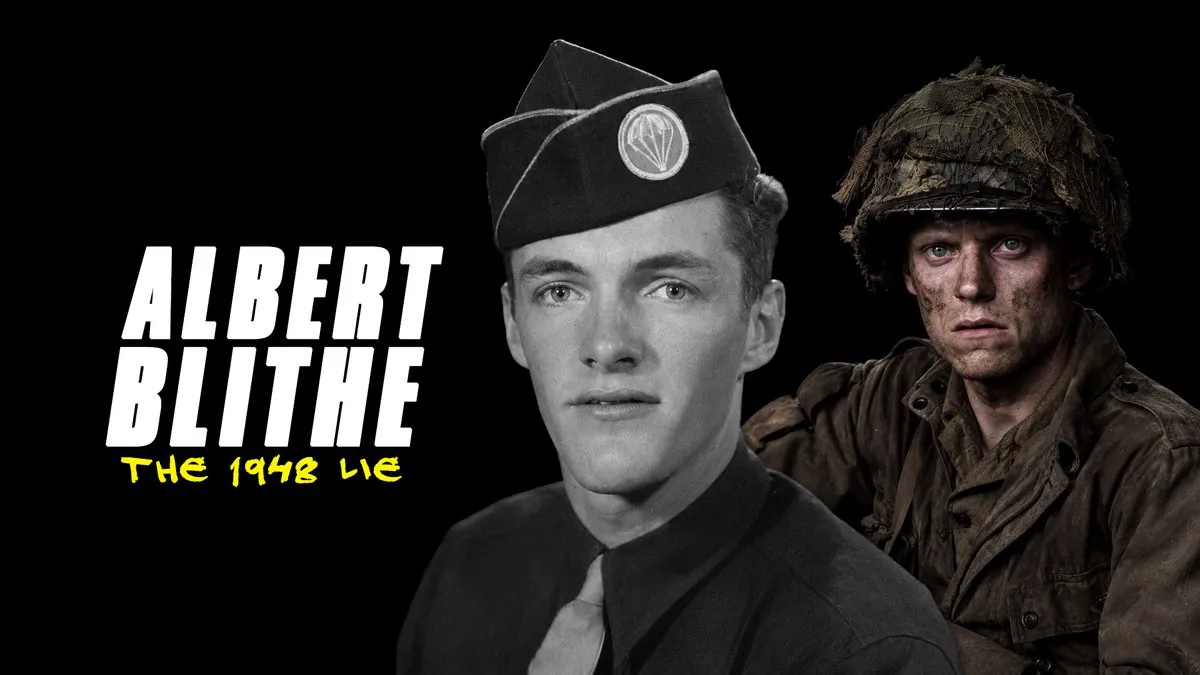
Band of Brothers tells viewers that Albert Blithe died in 1948 from his Normandy wounds. He didn’t. Blithe recovered, fought again in Korea with the 187th Airborne, served two more decades in the Army, and lived until December 1967. The 1948 date came from veterans who believed they had been to his funeral, and the episode’s closing card was never changed.
This is what actually happened to Albert Blithe: the wound, the temporary blindness, the Korean War service, and the real cause of death twenty-three years after Easy Company stopped writing him into history.
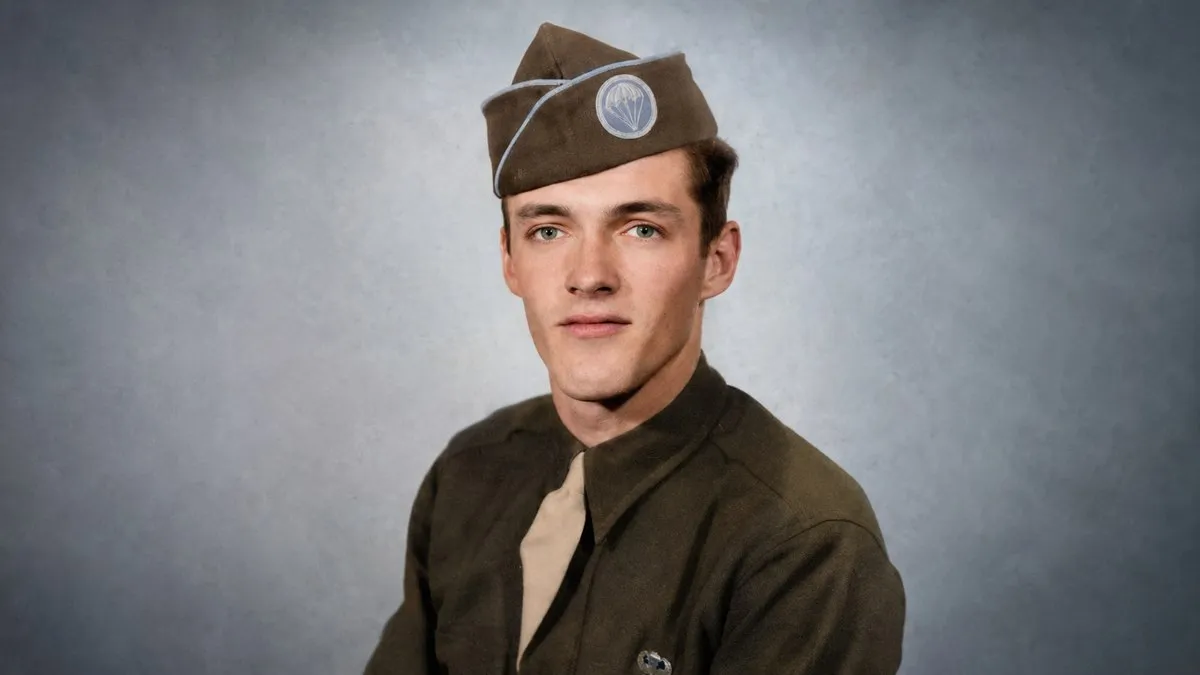
Who was Albert Blithe?
Albert Blithe was a private first class with Easy Company, 506th Parachute Infantry Regiment, 101st Airborne Division. He jumped into Normandy on D-Day, was wounded south of Carentan later that month, and is one of the small number of Easy Company soldiers Stephen Ambrose wrote into Band of Brothers as a named character. The 2001 HBO miniseries kept him in the third episode, then dropped him from the story entirely.
Blithe was born in Philadelphia on June 25, 1923, enlisted in the paratroopers in August 1942 at age 19, and was a rifleman when Easy Company jumped into Normandy. He was 20 years old on D-Day, and turned 21 nineteen days later. Most of what viewers know about him comes from a single 50-minute episode; the rest of his career comes from his son Gordon’s account in Marcus Brotherton’s A Company of Heroes and from Dick Winters, who set the record straight in his memoir.
Did Albert Blithe die in 1948?
No. Albert Blithe died on December 17, 1967, in West Germany, while still on active duty. He was 44. The Department of the Army’s letter to his widow, as his son Gordon describes it, gives a perforated ulcer, emergency surgery, then complications and kidney failure. It was not a wound he took in the war.
The “died of his wounds in 1948” claim comes from the end-of-episode card in Band of Brothers’ third installment, “Carentan.” His son Gordon traced the date to Bill Guarnere and Babe Heffron, who believed they had attended his funeral in 1948; the last they knew of him, he had been seriously wounded near Carentan (Marcus Brotherton, A Company of Heroes). The Ambrose printing we checked describes the wound but gives no 1948 death date. Gordon also notes that the Blu-ray edition’s interactive guide gives the correct year, 1967, while the episode itself was never corrected.
Blithe’s son Gordon spent years flagging the error, leaving messages on internet sites and showing his father’s documents to the 506th Infantry’s webmaster in a three-hour interview (A Company of Heroes). The closing card itself was never changed.
What was Albert Blithe’s wound in Normandy?
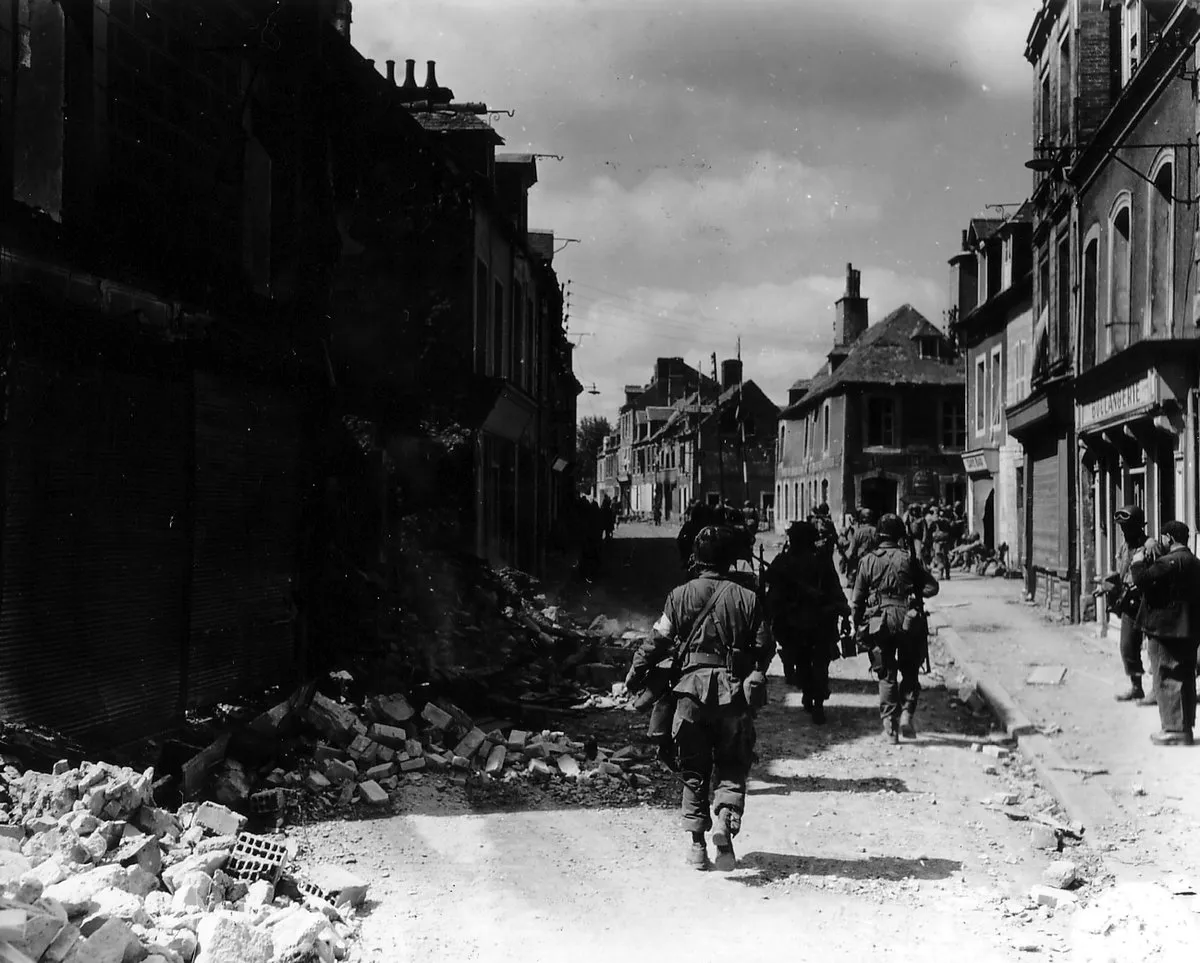
A German sniper hit Blithe where the neck meets the right shoulder, on a daylight patrol south of Carentan in late June 1944. The accounts describe the same wound in different words. Ambrose writes that the sniper put a bullet into his neck, and Bill Guarnere, who led the patrol, says it hit him in the back of the neck. Dick Winters wrote that the German shot Blithe “through the collarbone.” Joe Lesniewski, also on the patrol, recalled that the bullet hit the back of his neck and a piece of his collarbone came out. His son Gordon said the scar was on his upper right shoulder. Winters places the patrol after Easy returned to the line on June 20; no source we found gives the exact day.
Blithe was evacuated to England for treatment and was off the line for the rest of Easy Company’s Normandy campaign. The show ends his arc there. In reality, the wound sent him home to recover: his son Gordon recalls his father’s time in a veterans’ hospital in Ashland, West Virginia (Marcus Brotherton, A Company of Heroes). He went back into the Army afterward and made it his career.
The wound left lasting damage. It brought him a partial disability rating, and a man who had known him later told Gordon the shoulder was so badly hurt that he had a permanent profile excusing him from saluting (A Company of Heroes).
Did Albert Blithe really go blind after Carentan?
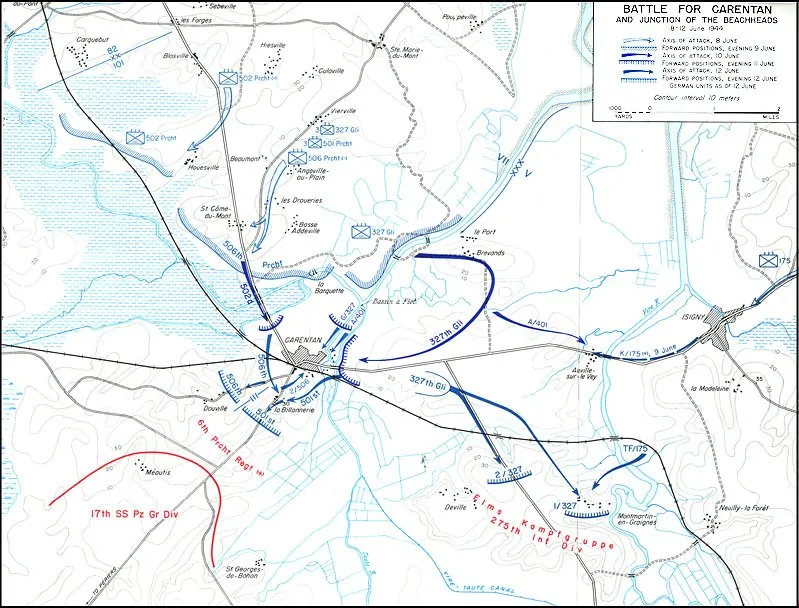
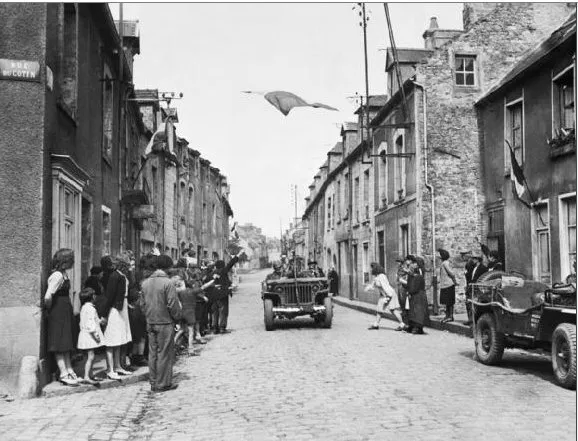
Yes. Blithe suffered temporary hysterical blindness during the attack on Carentan on June 12, 1944, and the show follows the outline of what happened. Dick Winters found him in the aid station, unable to see; his sight came back within moments, while Winters was still talking to him (Ambrose, Band of Brothers; Winters, Beyond Band of Brothers). The condition, now classified as functional neurological disorder, is a stress response, not a physical eye injury.
In the episode, Lieutenant Ronald Speirs gives Blithe the speech about accepting that he is already dead. We found no veteran’s account of that exchange. Speirs’s biographers call it a fictionalized scene, and his stepson, Marv Bethea, told Marcus Brotherton the family does not know whether it reflected Speirs’s actual outlook. In real life, Winters wrote, Blithe went straight back to duty once he could see, and he was still on the line south of Carentan when the sniper hit him.
What happened to Blithe after Band of Brothers ends?
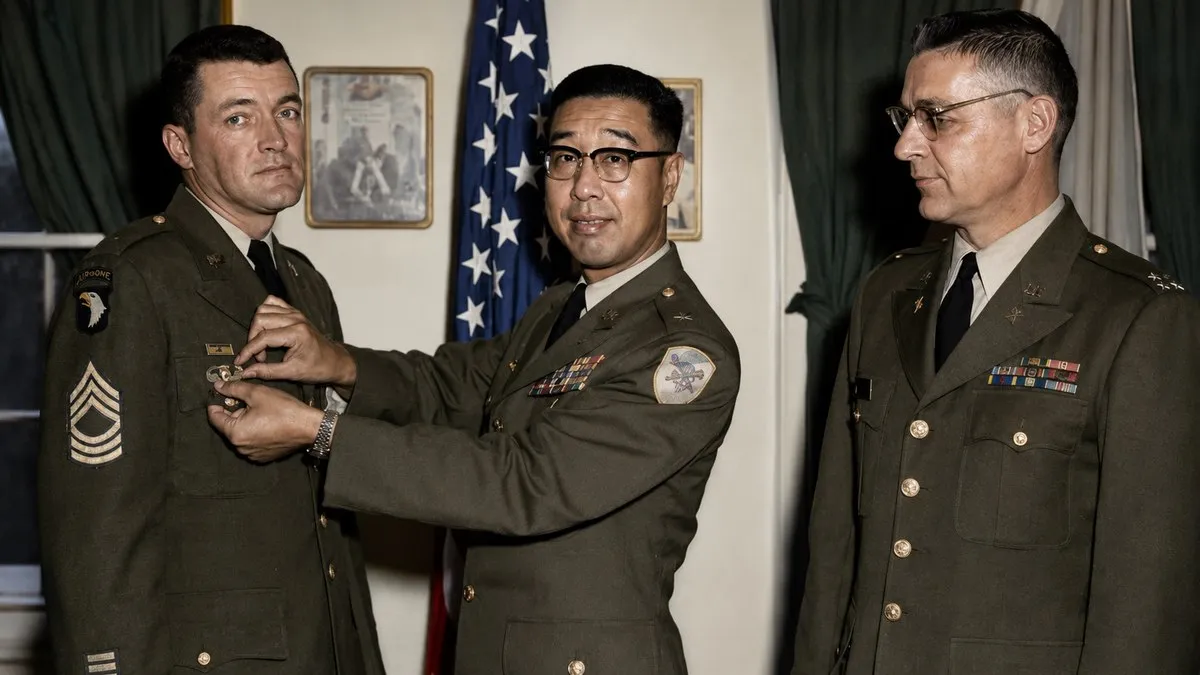
Blithe went back into the Army after a year on disability pay, fought in Korea with the 187th Airborne Regimental Combat Team, jumped with the 82nd Airborne in the 1950s, and rose to master sergeant before his death on active duty in 1967.
Family documents place him at Fort Bliss, Texas, in 1948, the year his daughter Barbara was born there (A Company of Heroes). In Korea he served with the 187th Airborne Regimental Combat Team, the “Rakkasans,” and was awarded the Silver Star and the Bronze Star (Winters, Beyond Band of Brothers). A signed military affidavit his son kept records that he went on to jump with the 82nd Airborne in the 1950s. He met his second wife, Kay, at the USO in Fayetteville, North Carolina, while stationed at Fort Bragg, and they married in 1957. Later he was a parachute-rigger instructor at Fort Lee, Virginia.
After a ministroke put him on temporary retirement, he worked to get his strength back and was allowed to return to duty. The Army posted him to West Germany in June 1967, to the 8th Supply and Transport Battalion, 8th Infantry Division. He was still on active duty when he died on December 17, eight days before Christmas.
What did Blithe do between WWII and Korea?
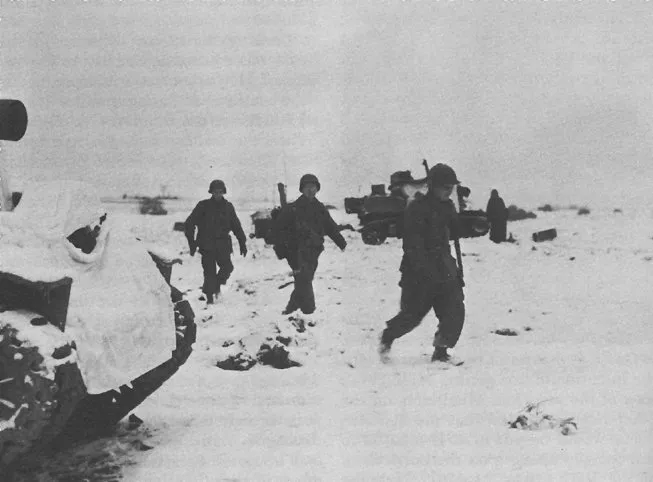
Not much. He spent about a year at home on a partial disability payment, then waived it and re-enlisted; by 1948 he was at Fort Bliss, Texas. His first wife, Flora Mae, was from West Virginia, and Gordon assumes they met while his father was in the veterans’ hospital in Ashland. Gordon also recalls that the family went to Germany around 1948 and came back, and that the couple divorced around 1951 (A Company of Heroes). We have not seen a record of the exact re-enlistment date.
By the Korean War he was with the 187th Airborne Regimental Combat Team. Ronald Speirs’s biographers note that Blithe served in Speirs’s regiment in Korea (Fierce Valor).
He never told his own story in print. He died two decades before Easy Company veterans like Dick Winters were interviewed for the book, and his son says the only time he asked about the war, his father answered two questions: yes, he had killed, and yes, he had been scared.
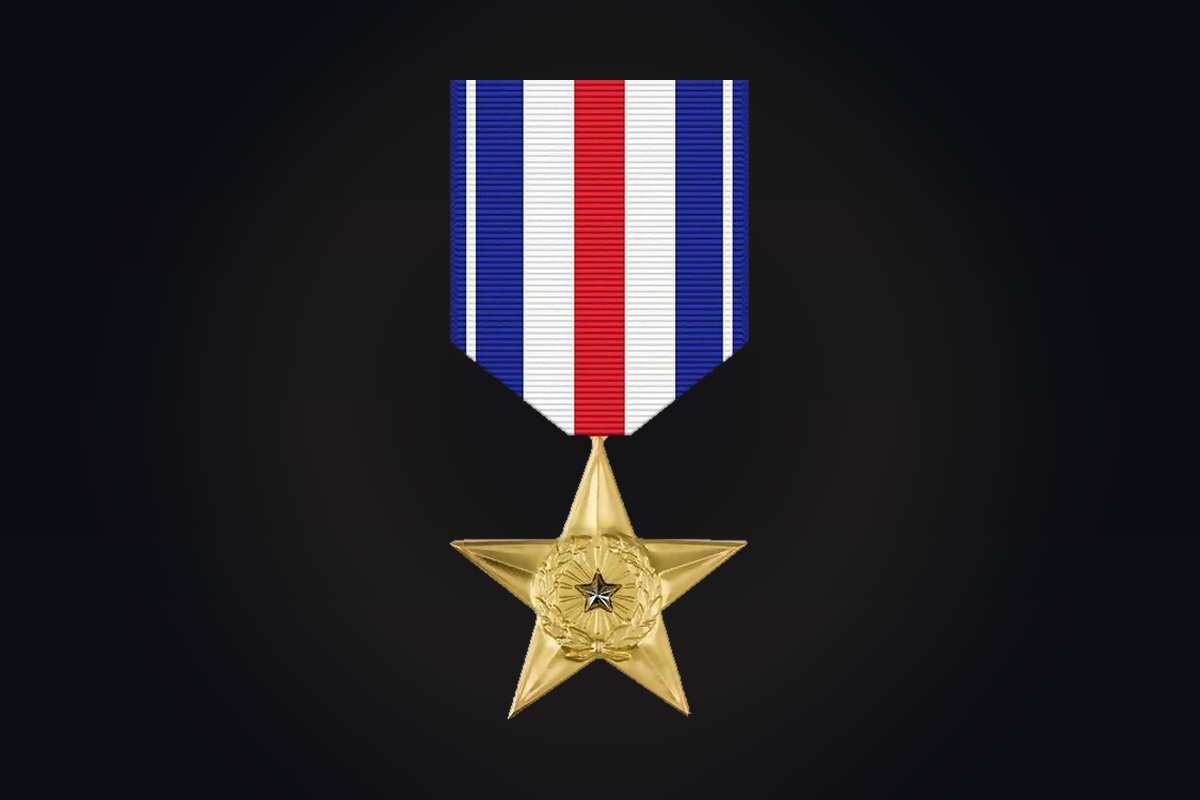
What medals did Albert Blithe win?
Dick Winters and Blithe’s son Gordon both record a Silver Star and a Bronze Star from his Korean War service with the 187th Airborne. His Arlington headstone also carries “PH” for the Purple Heart, and as a qualified paratrooper who jumped into Normandy he wore the parachutist’s wings.
The Silver Star is the U.S. military’s third-highest award for valor in combat. We have not seen Blithe’s citation, so we do not describe the action it recognized. Wikipedia’s infobox, citing an Army award recommendation (DA Form 638) we have not been able to examine, lists one Silver Star, three Bronze Stars and three Purple Hearts; until that record is checked, we report only the awards confirmed above. Either way, the decorations came after the part of his life the miniseries shows.
For context on how Easy Company’s awards stacked up overall, see our Band of Brothers pillar with the full company breakdown.
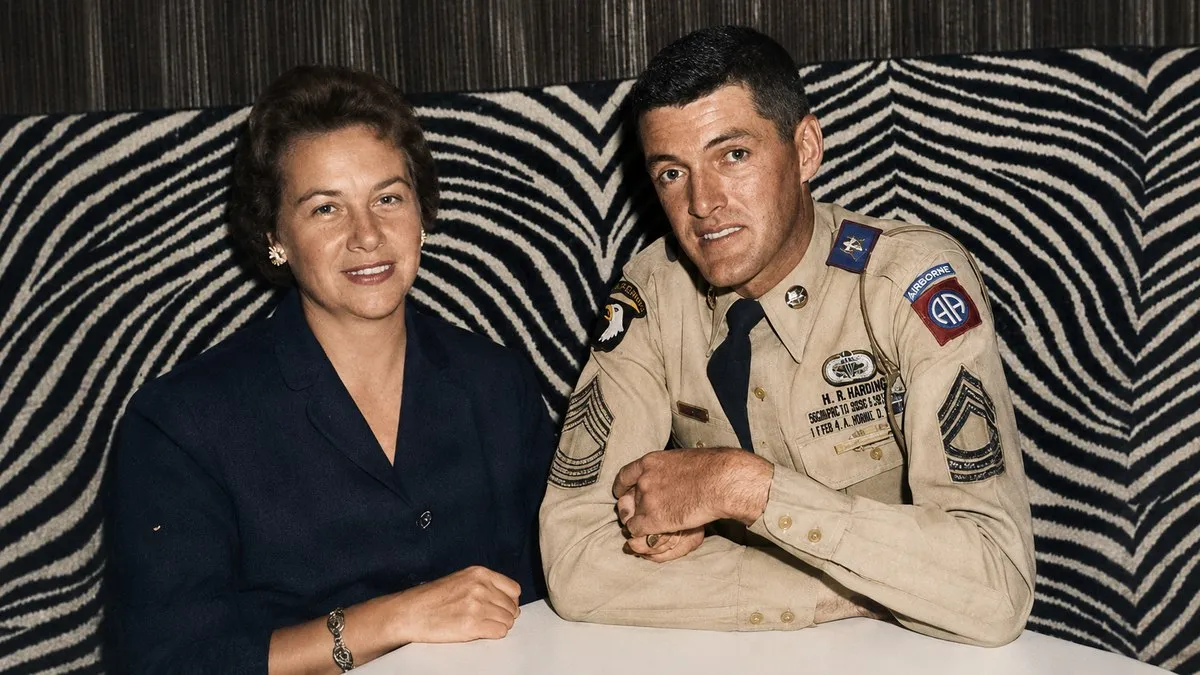
How did Albert Blithe actually die?
Blithe died on December 17, 1967, in West Germany, after emergency surgery for a perforated ulcer; complications followed and his kidneys failed. That is the sequence the Department of the Army gave his widow in a letter dated December 18, 1967, as his son Gordon describes it (A Company of Heroes). He was 44 years old. Find a Grave and Wikipedia give the place of death as Wiesbaden.
A week before his death he had attended a commemorative weekend in Bastogne, Belgium, a battle he had not fought in, and he came back feeling unwell. He went to the emergency room, was diagnosed with a perforated ulcer and had surgery the next day (A Company of Heroes, describing the Army’s letter).
A perforated ulcer is a hole through the stomach or duodenal wall. Even with mid-1960s surgical care, mortality ran high once peritonitis set in. His death was unrelated to any wartime wound. His health had not been good, though: a few years earlier a ministroke had put him on temporary retirement before he worked his way back to duty.
Some accounts online give “kidney failure” as the cause and others a perforated ulcer. Both appear in the Army’s letter as his son describes it: the ulcer, the surgery, then complications and kidney failure.
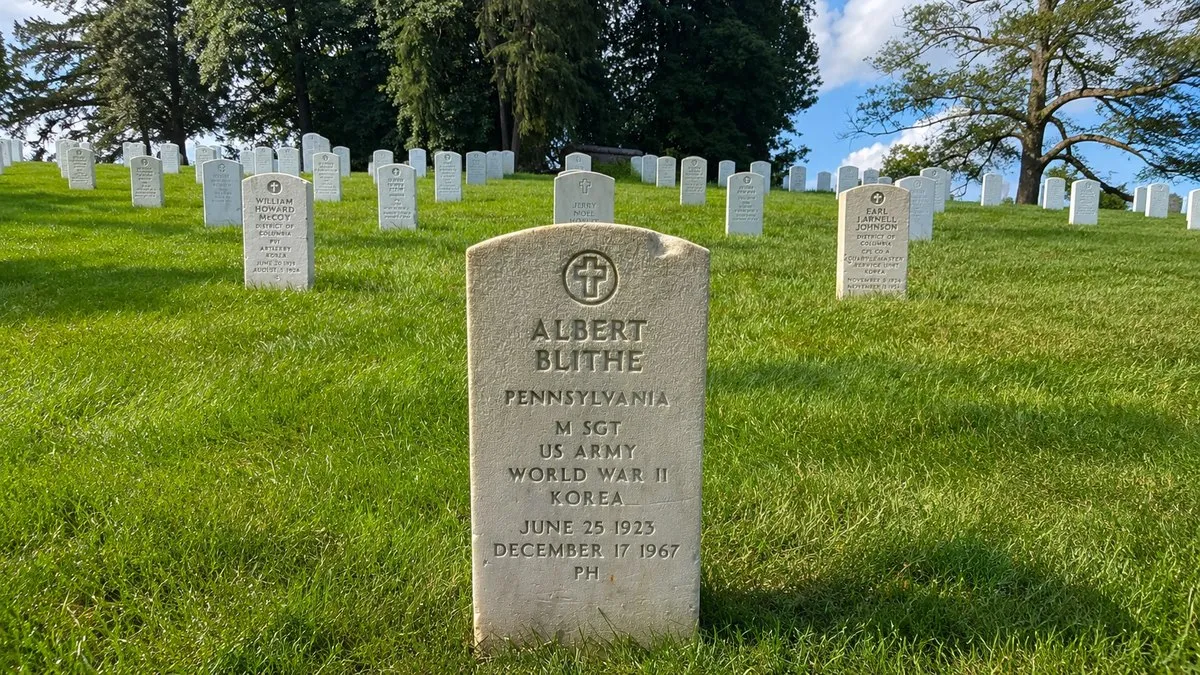
Is Albert Blithe buried at Arlington?
Yes. Blithe is buried in Arlington National Cemetery; Find a Grave lists the plot as Section 31, Site 7672. His son Gordon, who was there when his father died, confirms the Arlington burial (A Company of Heroes). His body was brought home from Germany for burial.
The headstone reads M SGT, US Army, with World War II and Korea, his dates, and “PH” for the Purple Heart. Visitors can locate the grave through the ANC Explorer at ancexplorer.army.mil.

Why does the Band of Brothers DVD still say he died in 1948?
HBO never changed the episode’s closing card, even after the error was publicly corrected. Gordon Blithe noted in Brotherton’s 2010 book that the miniseries was never corrected, though the Blu-ray edition’s interactive guide, “In the Field with the Men of Easy Company,” states correctly that Blithe died in 1967 (A Company of Heroes).
By Gordon’s account, Tom Hanks and Steven Spielberg sent him e-mails apologizing for the oversight. We know of no re-edit of the episode itself.
Gordon’s account explains where the date came from. Bill Guarnere and Babe Heffron had sworn they attended his father’s funeral in 1948. The last they knew of Blithe, he had been seriously wounded near Carentan, and they never saw him alive again. Gordon thought they had been to another Albert Blithe’s funeral, or had been to so many funerals over the years that they were thinking of somebody else. In their own later book, Guarnere says only that Blithe never saw combat with them again and that he thought Blithe ended up back in combat in Korea (Brothers in Battle, Best of Friends).
The Blithe case is unusual mainly for how long the wrong date has stayed on screen.
Blithe outlived his own death card by nineteen years, and spent nearly all of them in the Army. The screen still says he stopped in 1948.
This is one of several factual issues the miniseries carries. See our piece on Captain Herbert Sobel for another case where the show condenses the post-war story into something the historical record contradicts.
The corrected Blithe timeline
- June 25, 1923: Born in Philadelphia, Pennsylvania.
- August 18, 1942: Enlists in the paratroopers in Philadelphia.
- June 6, 1944: Jumps into Normandy with Easy Company, 506th PIR, 101st Airborne.
- June 12, 1944: Suffers temporary hysterical blindness during the attack on Carentan; his sight returns within moments and he goes back to duty.
- Late June 1944: Shot by a German sniper in the neck and collarbone area while on point for a daylight patrol south of Carentan; evacuated to England.
- 1944-1945: Sent back to the United States to recover, at a veterans’ hospital in Ashland, West Virginia. Never returns to Easy Company.
- After the war: Draws a partial disability payment for a year, then waives it and re-enlists. At Fort Bliss, Texas, by 1948.
- Korean War: 187th Airborne Regimental Combat Team. Awarded the Silver Star and the Bronze Star.
- 1950s-1960s: Jumps with the 82nd Airborne; marries Kay at Fayetteville, near Fort Bragg, in 1957; later a parachute-rigger instructor at Fort Lee. Posted to West Germany in June 1967.
- December 17, 1967: Dies on active duty in West Germany after emergency surgery for a perforated ulcer, followed by kidney failure. Buried in Arlington National Cemetery.
Frequently asked questions
When was Albert Blithe born?
June 25, 1923, in Philadelphia, Pennsylvania. One online source lists June 20; June 25 is the date on his Arlington headstone and the one his son gives in Marcus Brotherton’s A Company of Heroes.
Was Albert Blithe at Bastogne?
No. His Normandy wound sent him back to the United States to recover; his son Gordon recalls a veterans’ hospital in Ashland, West Virginia (Marcus Brotherton, A Company of Heroes). The miniseries’ “Carentan” episode is the last time the show follows him.
Did Albert Blithe meet Stephen Ambrose?
No. Blithe died in 1967, decades before Ambrose began interviewing Easy Company veterans for the 1992 book. According to his son, the 1948 date came from Bill Guarnere and Babe Heffron, who believed they had attended Blithe’s funeral that year.
Did the Blithe family ever respond publicly?
Yes. Gordon Blithe, Albert’s son, worked to correct the record after the miniseries aired. In Marcus Brotherton’s oral history A Company of Heroes, he said he wants people to remember his father as “a true American paratrooper who put his life on the line for this country and thousands of other people in this world.” He also credited Dick Winters with setting the record straight in his memoirs.
Sources
- Stephen E. Ambrose, Band of Brothers: E Company, 506th Regiment, 101st Airborne (Simon & Schuster, 1992).
- Dick Winters with Cole C. Kingseed, Beyond Band of Brothers (2006): the Carentan blindness, the sniper wound, and his Korean War Silver Star and Bronze Star.
- William Guarnere and Edward Heffron, Brothers in Battle, Best of Friends (2007), and Marcus Brotherton, We Who Are Alive and Remain (2009): two patrol members’ accounts of the wound.
- Marcus Brotherton, A Company of Heroes (Berkley Caliber, 2010), carrying the Blithe family’s firsthand account.
- Jared Frederick and Erik Dorr, Fierce Valor: The True Story of Ronald Speirs and His Band of Brothers (2021): the Speirs and Blithe scene.
- Find a Grave memorial 19080453, Albert Blithe, Arlington National Cemetery.
CineMilitary Editorial
Correction, October 25, 2026: An earlier version of this article said Albert Blithe died four days before Christmas and that Easy Company dropped into Sainte-Mère-Église. He died on December 17, 1967, and Easy Company jumped into Normandy near Sainte-Marie-du-Mont. It also said Blithe rejoined the 101st for the rest of the war and was a Bastogne veteran; his son’s account in Marcus Brotherton’s A Company of Heroes shows the wound sent him home to recover. An earlier version of this article said Ambrose described Blithe’s wound as a collarbone hit and that it came on his 21st birthday, that his sight returned after a day or two, that several veterans confirmed the Speirs speech, that he spent four years as a civilian, jumped in Korea and served in Taiwan, that he held three Bronze Stars and three Purple Hearts, and that kidney failure played no part in his death; it also quoted his wife in words we could not trace. It has been corrected against Ambrose’s Band of Brothers, Dick Winters’s Beyond Band of Brothers, Guarnere and Heffron’s Brothers in Battle, Best of Friends, Marcus Brotherton’s We Who Are Alive and Remain and A Company of Heroes (his son Gordon’s account, including the Army’s December 1967 letter), Fierce Valor, and his Arlington headstone.