He is on screen for about thirteen seconds. A grinning paratrooper holds up a sack of potatoes he has scrounged from a French cellar, shows it off to the man beside him, turns to cross the street, and the artillery finds him. Most people who watch Band of Brothers never catch his name. The show barely says it.
But the man with the potatoes was real. And the thirteen seconds the camera gave him hide one of the quietest, most stubborn acts of loyalty in all of Easy Company.
His name was Bill Kiehn. This is the real Bill Kiehn Band of Brothers never had the runtime to show.
Who was Bill Kiehn in Band of Brothers?
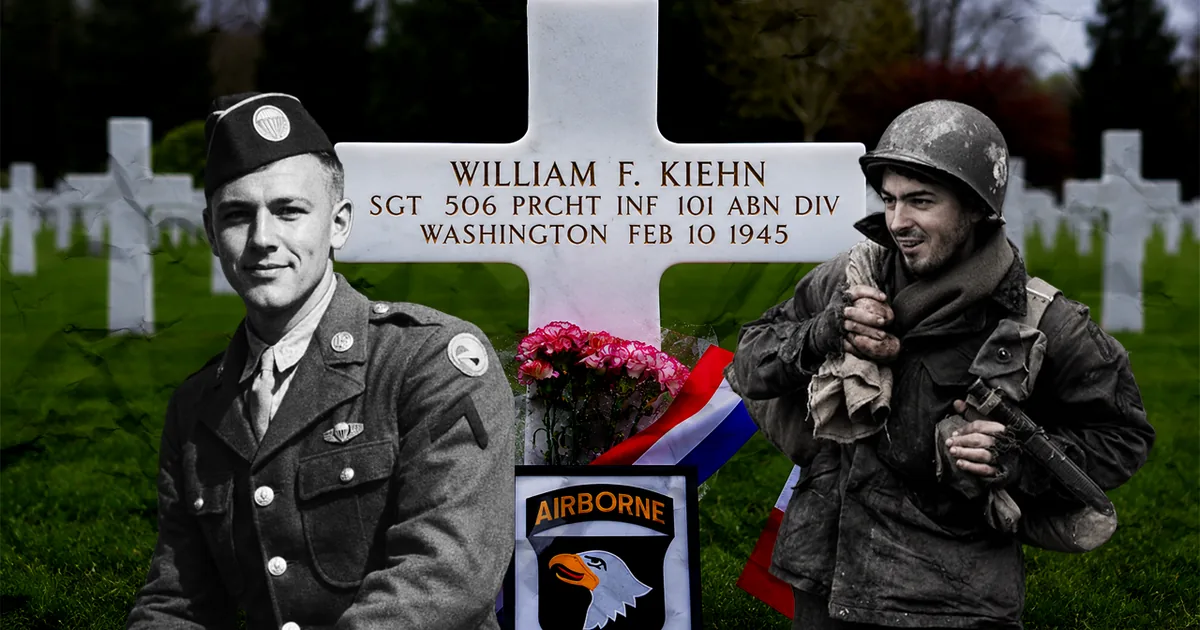
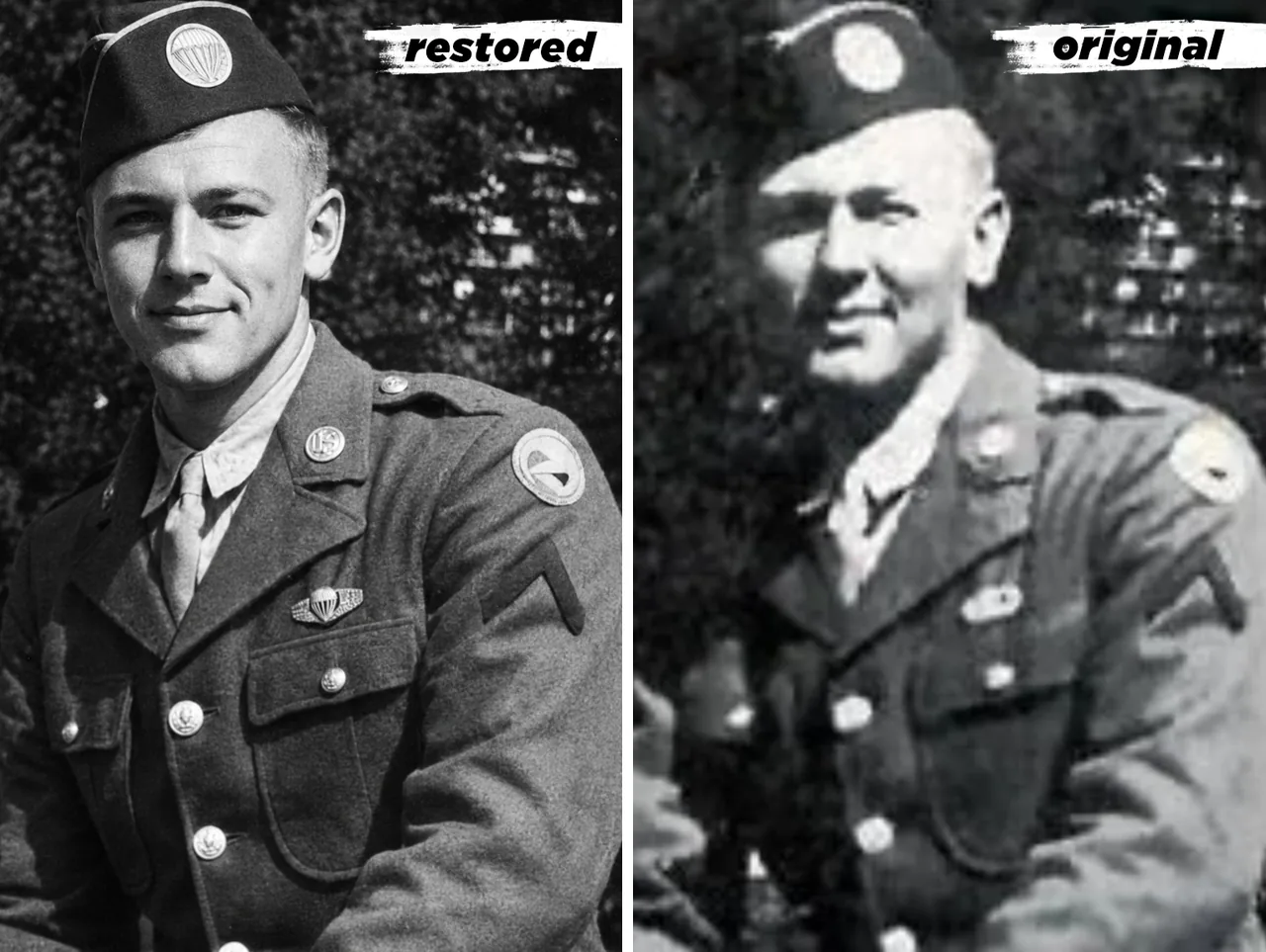
Sergeant William F. “Bill” Kiehn was an original Toccoa member of Easy Company, 506th Parachute Infantry Regiment, 101st Airborne Division. He was killed by German artillery at Haguenau, France, on February 10, 1945, at the age of 23. What the show does with that moment is where the record and the screen part company. In HBO’s Band of Brothers, he appears in Episode 8, “The Last Patrol,” carrying that sack of potatoes between two buildings at the exact moment a shell lands. The narration, delivered in Private David Webster’s voice, sums him up in a single line: “Bill Kiehn, a Toccoa man, was killed because he was carrying a sack of potatoes from one building to another.”
That is almost everything the series tells you about him. It is not everything that happened.
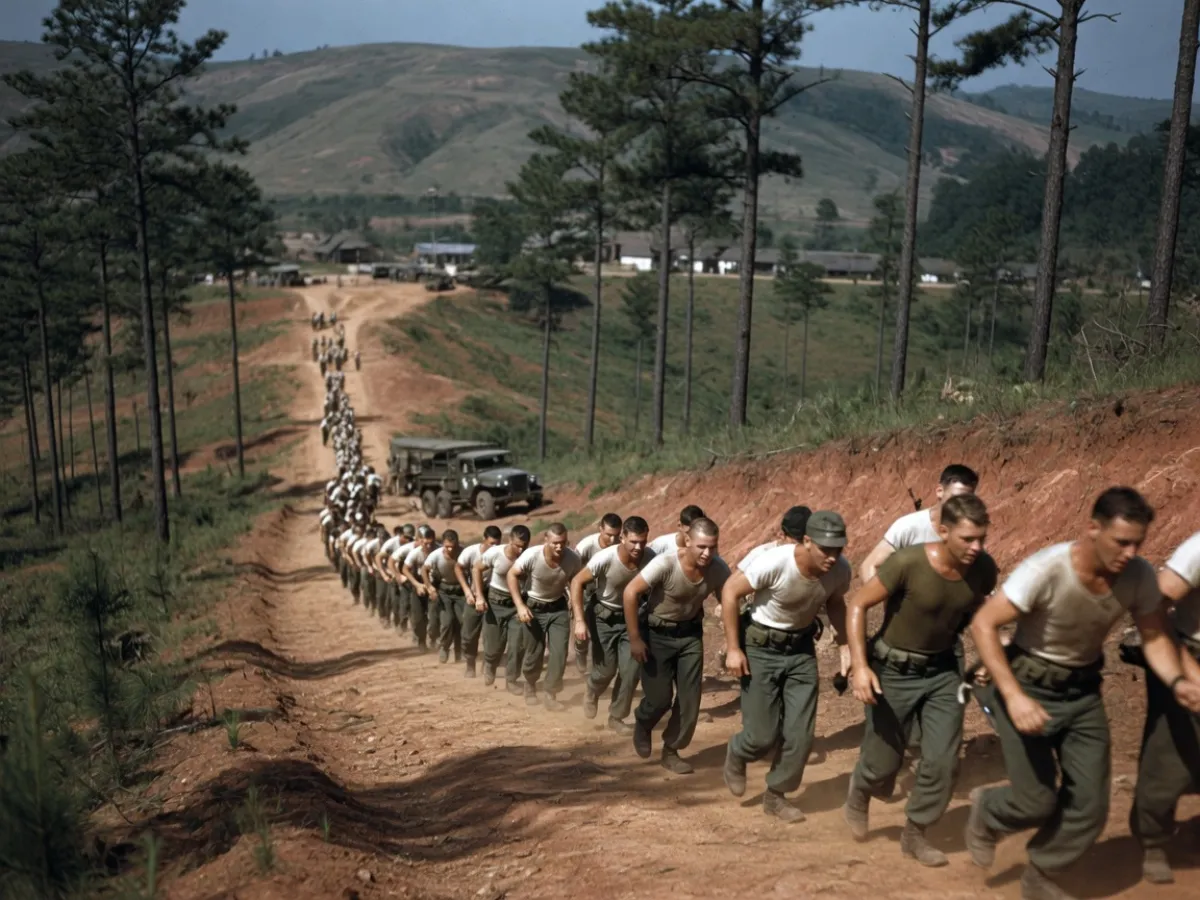
To be a “Toccoa original” meant something specific inside Easy Company. It meant you were there at the beginning, at Camp Toccoa in Georgia in 1942, running up and down Currahee mountain under Captain Herbert Sobel, before D-Day, before the company had a reputation to live up to. The Toccoa men were the core. By the war’s final winter, very few of the Toccoa men were still standing. Kiehn was one of the few, and he had gone out of his way to stay that way.
But the cameo skips the part that says the most about him.
Why did Bill Kiehn go AWOL?
Bill Kiehn went AWOL, or absent without leave, to get back to Easy Company, not to escape the war but to return to it. AWOL meant a soldier had left his post without permission, normally a punishable offense. That single fact reverses everything the term usually means.
Kiehn was wounded at Carentan in the summer of 1944, in the brutal hedgerow fighting that followed the Normandy jump. He was evacuated, treated, and, like other recovered men, funneled into a replacement depot: the Army’s holding pool for soldiers ready to go back to the line. The depot did not send men back to their old units. It sent them wherever the need was greatest. Kiehn was about to be reassigned to a different outfit entirely, one full of strangers.
So he left. According to Marcus Brotherton’s oral history Shifty’s War, Kiehn simply walked out of the replacement system, absent without leave, and made his own way back to the company he had trained with at Toccoa. Men went AWOL all the time in that war, almost always to get away from the front. Kiehn went AWOL to get back to it.
Was Bill Kiehn punished for it? Going absent without leave was against regulations. But a recovered soldier slipping back to his own rifle company to fight is a very different thing from one running for the rear, and the Army treated it as such. Kiehn was back in Easy Company’s ranks, exactly where he wanted to be, and exactly where the wounding had nearly cost him his place.
The cost of that choice is easy to miss. While Kiehn was wounded and in the depot, Easy Company jumped into Holland for Operation Market Garden. He missed it. He could have ridden his recovery much further from danger. Instead he talked, walked, and broke the rules to put himself back in a line company in the last winter of the war.
Which makes what the show does put on screen harder to watch, and worth untangling, because the popular retellings have muddled it.
What the show changed, and what the internet got wrong
The series compresses and dramatizes Kiehn’s death, and in the years since, online retellings have tangled it with a second soldier’s. Here is what the record actually shows, separated cleanly.
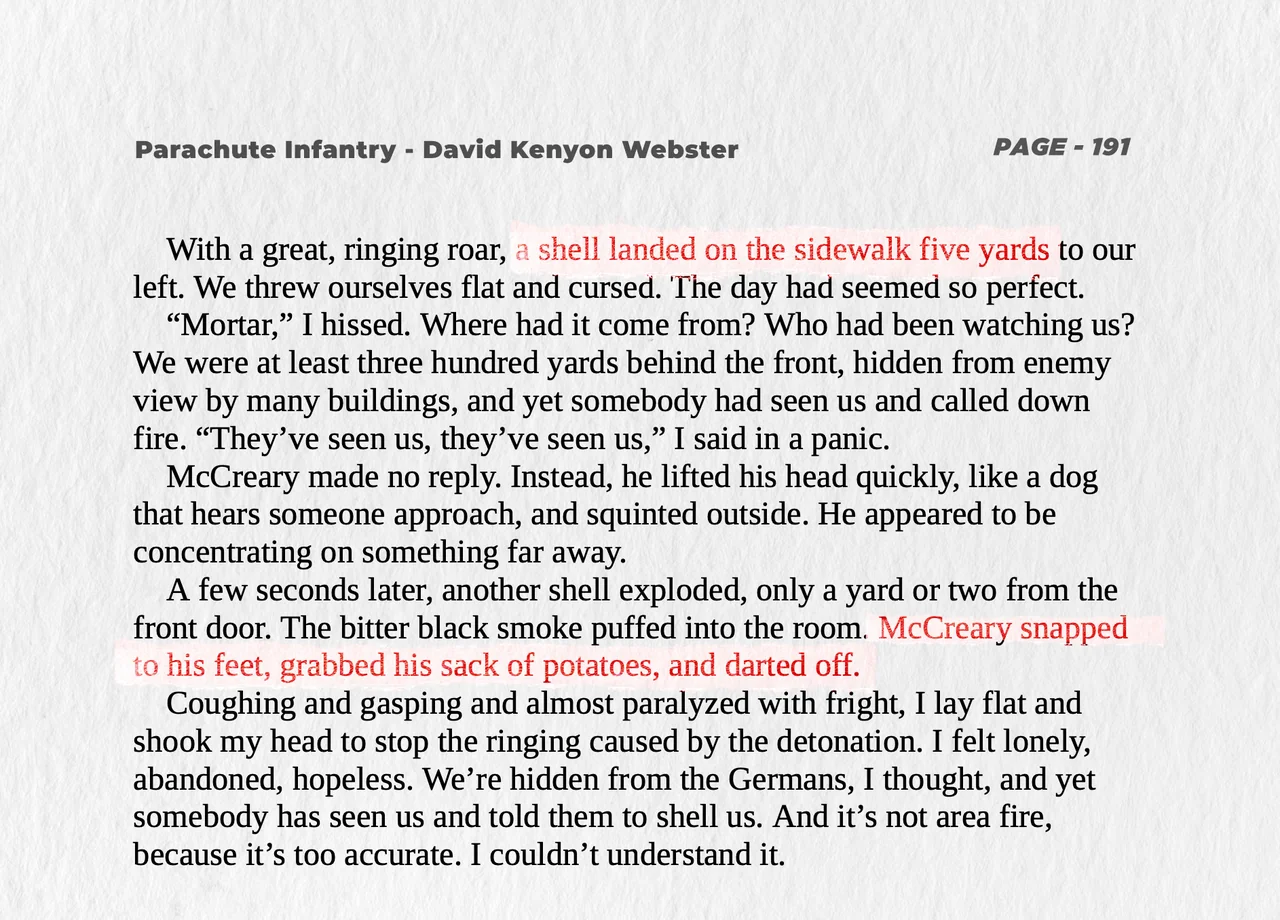
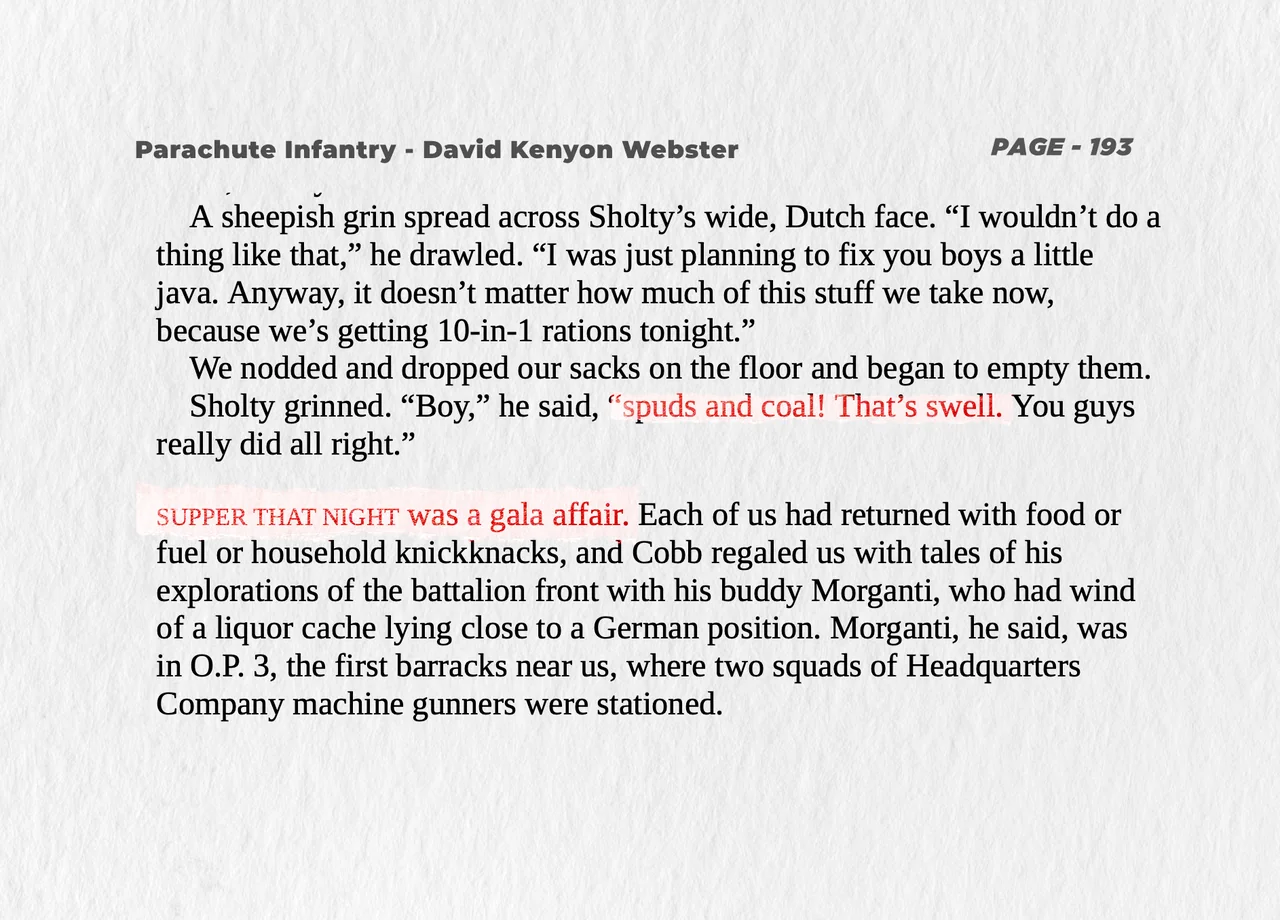
The potatoes. The on-screen line is given in David Webster’s voice, and Webster was a credible witness. He was at Haguenau, and his memoir is the book that helped inspire the series. But in Webster’s own memoir, Parachute Infantry, the potato-scrounging he describes in that stretch of Haguenau ends very differently. Webster and his buddy McCreary raid a flooded cellar for spuds; two shells land within yards of them; both men throw themselves flat, then get up, carry the sacks home, and cook the potatoes that night. The scroungers survive. The image of a man killed in the act of carrying potatoes is the show’s dramatization. The production borrowed a real (and survivable) potato detail and attached it to Kiehn’s death. The potatoes are a storyteller’s touch. The death is real.
The basement account. If you have read about Bill Kiehn online, you have probably seen a different version: that the potato scene was invented, and that he was actually killed when an artillery shell struck a building he was resting in. Some retellings put him asleep in a cellar when the ceiling came down. That account traces to his own Toccoa comrade, Sergeant Paul “Hayseed” Rogers, and it is repeated on the Band of Brothers wiki and in widely shared posts. Rogers knew Kiehn and was there, so his version deserves to be taken seriously, even though it does not appear in the major published memoirs, which do not describe Kiehn’s death at all. Honestly, the exact circumstances are not settled.
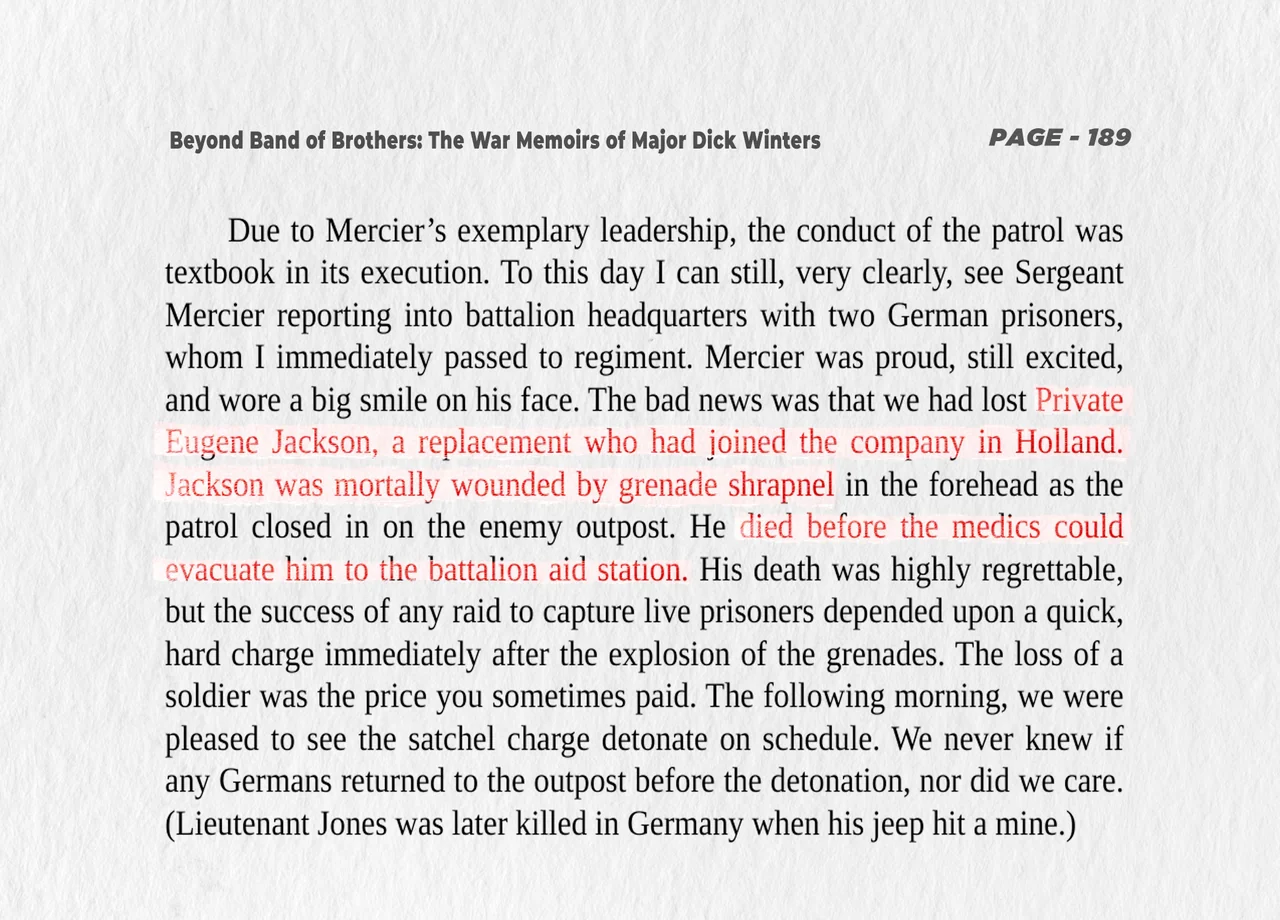
What the basement account is not is the death of Eugene Jackson. Online retellings sometimes merge the two men, but they were different soldiers who died in different ways. Private Eugene Jackson was a replacement who joined Easy Company in Holland; he was mortally wounded by grenade shrapnel during the Haguenau river patrol and, as Dick Winters records in Beyond Band of Brothers, died before the medics could get him back to the aid station. Kiehn was a Toccoa original killed by artillery, days apart from Jackson. Two men, two deaths, worth keeping separate.
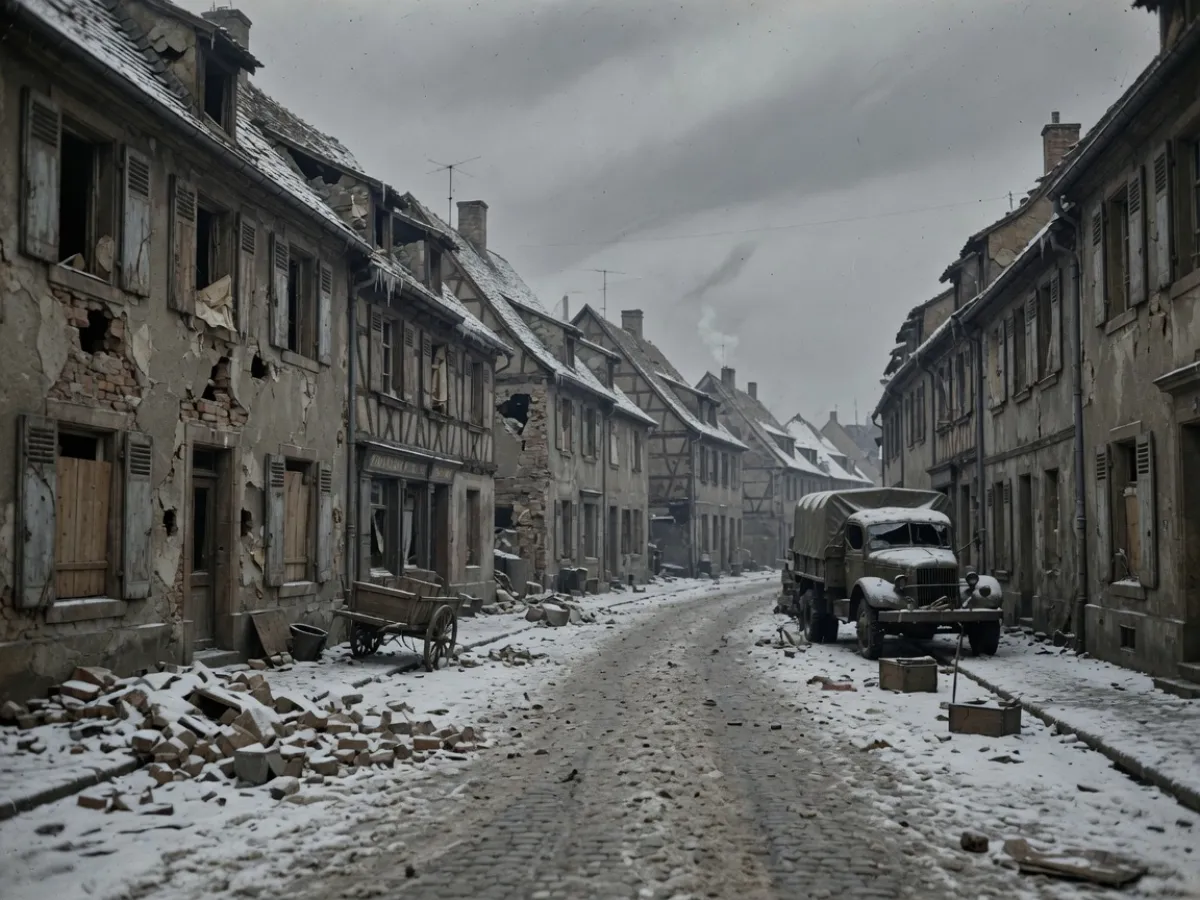
The undisputed core. Strip away the dramatization and the confusion, and what every account agrees on is simple and grim. Bill Kiehn was killed by German artillery in a quiet sector at Haguenau, not in a firefight, not on a heroic charge. A shell, the wrong few seconds, and a Toccoa original was gone. Whether he was in the open or inside a building when it hit, there was nothing he could have done. That is the cruelty of it.
It is also why the thirteen seconds sting. The show is, in its own way, honest about the randomness of how he died. It just has no time to say how hard he fought to be there at all.
Where is Bill Kiehn buried?
Bill Kiehn is buried at Epinal American Cemetery in France, in Plot A, Row 19, Grave 14. He is one of the American soldiers whose family chose not to have his remains brought home, leaving him at rest among the men he served beside in Europe.
He was 23 years old. He was killed on February 10, 1945. The war in Europe ended on May 8, 1945, less than three months later. He had survived Carentan. He had survived his wounds. He had broken the rules to come back when he did not have to. And he was killed in a quiet sector, by a random shell, in the final weeks of a war he had already given almost everything to.
What medals did Bill Kiehn earn?
Kiehn’s decorations reflect a short, hard war. As a Toccoa original who made the Normandy combat jump and fought through Carentan, Bastogne, and Haguenau, he wore the Parachutist Badge and the Combat Infantryman Badge. He earned at least two Purple Hearts: the first for the wound at Carentan that sent him to the replacement depot, and the second, awarded posthumously, for the shellfire that killed him at Haguenau.
No first-person words of Kiehn’s survive. He was killed in February 1945, long before the veterans who outlived him sat for the interviews and memoirs that shaped the Easy Company record. What we know of him comes from the men who watched him fight and remembered him afterward, which is its own kind of testimony.
The thirteen seconds
There is no neat lesson in Bill Kiehn’s death, and trying to force one would be its own kind of dishonesty. He was not killed doing something cinematic. On screen he is struck carrying potatoes; by his comrade’s account a shell simply found the building he was in. Either way, it happened in a town that was quiet that morning, after he had gone to extraordinary lengths simply to be standing there in an Easy Company uniform at all.
HBO had ten hours to tell Easy Company’s story, and gave Bill Kiehn about thirteen seconds. Knowing what he did to earn his place back in that uniform, should the show have given him more? Or is a sack of potatoes and a single line from a friend exactly the kind of small, unremarkable goodbye that most of these men actually got?
Related Easy Company stories
- David Webster: the Harvard man who narrated Kiehn’s death
- Dick Winters: the officer who held Easy Company together
- Herbert Sobel: the Toccoa captain who built them
Sources
- Band of Brothers (HBO, 2001), Episode 8, “The Last Patrol”: David Webster narration (“Bill Kiehn, a Toccoa man, was killed because he was carrying a sack of potatoes…”).
- David Kenyon Webster, Parachute Infantry: An American Paratrooper’s Memoir of D-Day and the Fall of the Third Reich (Louisiana State University Press, 1994). “Haguenau” chapter: the cellar potato-scrounging scene with McCreary, in which the men survive the shelling and eat the potatoes that night.
- Dick Winters with Cole C. Kingseed, Beyond Band of Brothers: The War Memoirs of Major Dick Winters (Berkley, 2006). The Haguenau patrol: Private Eugene Jackson, a replacement who joined in Holland, mortally wounded by grenade shrapnel and dead before reaching the aid station (establishing Jackson as a separate man from Kiehn).
- Stephen E. Ambrose, Band of Brothers: E Company, 506th Regiment, 101st Airborne from Normandy to Hitler’s Eagle’s Nest (Simon & Schuster, 1992). The Haguenau chapter the series drew on.
- Marcus Brotherton, Shifty’s War (Berkley Caliber, 2011). Kiehn’s Carentan wound and his AWOL return to Easy Company.
- The basement/shell account of Kiehn’s death is attributed to Easy Company veteran Sgt. Paul C. “Hayseed” Rogers and is repeated on the Band of Brothers Wiki and in shared social-media posts; it is not corroborated in the published memoirs above.
- Bill Kiehn at Find a Grave #56373461; American Battle Monuments Commission, Epinal American Cemetery burial record; ww2gravestone.com.
Frequently asked questions
How did Bill Kiehn die?
Bill Kiehn was killed by German artillery at Haguenau, France, on February 10, 1945, at age 23, in a quiet sector rather than a firefight. HBO’s series shows him struck while carrying potatoes in the open; his Toccoa comrade Paul Rogers said a shell hit a building he was resting in. The artillery and the date are undisputed; the exact circumstances are debated.
Did Bill Kiehn really die carrying potatoes?
The show depicts him killed while carrying a sack of potatoes, with the narration given in David Webster’s voice. But in Webster’s own memoir, Parachute Infantry, the soldier who scrounges potatoes in that stretch of Haguenau (his buddy McCreary) survives the shelling, and the men cook the potatoes that night. So the on-screen “killed carrying potatoes” is the show’s dramatization. What is undisputed is that Kiehn was killed by German artillery at Haguenau.
Is the soldier who dies in the basement in Band of Brothers Bill Kiehn?
No. In Episode 8, the soldier who dies in the cellar aid post is Private Eugene Jackson, a different Easy Company man, mortally wounded by a grenade on the river patrol. On screen, Kiehn’s death is the potato scene. Confusingly, a separate real-life account from Kiehn’s comrade Paul Rogers holds that Kiehn himself was actually killed inside a building hit by a shell, which is why “a basement” gets attached to both stories. What is undisputed: Kiehn was killed by German artillery at Haguenau on February 10, 1945.
Did Paul Rogers dispute the Bill Kiehn potatoes scene?
Yes. An account attributed to his Toccoa comrade, Sergeant Paul “Hayseed” Rogers, holds that the potato scene was dramatized and that Kiehn was actually killed when an artillery shell struck a building he was resting in. Rogers knew Kiehn personally, so his version carries weight, though it is not corroborated in the major published memoirs. Webster’s and Winters’s books do not describe Kiehn’s death. It is a different event from the death of Eugene Jackson, a replacement killed by a grenade on the patrol. Every account agrees on the core: Kiehn was killed by German artillery at Haguenau on February 10, 1945.
Why did Bill Kiehn go AWOL?
After being wounded at Carentan, Kiehn was sent to a replacement depot and was about to be reassigned to a different unit. He went AWOL to avoid that and made his own way back to Easy Company, going absent without leave to return to combat with his original company, not to escape it.
Where is Bill Kiehn buried?
Bill Kiehn is buried at Epinal American Cemetery in France, Plot A, Row 19, Grave 14. His remains were not repatriated to the United States.
Who played Bill Kiehn in Band of Brothers?
No actor is credited for Bill Kiehn in HBO’s Band of Brothers. His on-screen moment in Episode 8, “The Last Patrol,” is a brief, non-speaking background appearance, and the performer who carries the sack of potatoes is uncredited in the cast listings. The character is identified only through David Webster’s voiceover, not by an actor’s name.
Was Bill Kiehn a real person?
Yes. Sergeant William F. “Bill” Kiehn was a real soldier, an original Toccoa member of Easy Company, 506th Parachute Infantry Regiment, 101st Airborne Division. He was killed by German artillery at Haguenau, France, on February 10, 1945, at age 23. His brief HBO cameo is based on an actual man, not a composite or invented character.
Where was Bill Kiehn from?
Bill Kiehn was born on October 10, 1921, in Olmsted County, Minnesota. He enlisted on September 14, 1942, in Tacoma, Washington, where he had been working as an electrician and lineman. He then volunteered for the paratroopers and was assigned to Easy Company, 506th PIR, at Camp Toccoa in Georgia.
What was Bill Kiehn’s rank?
Bill Kiehn served as a sergeant in Easy Company, 506th Parachute Infantry Regiment, 101st Airborne Division. He is usually listed as Sergeant William F. “Bill” Kiehn, one of the Toccoa originals who trained with the company from its formation in 1942 until his death at Haguenau in February 1945.
What battles did Bill Kiehn fight in?
As a Toccoa original, Bill Kiehn jumped into Normandy on D-Day and fought through the Carentan hedgerows, where he was wounded. He missed Operation Market Garden in Holland while recovering, then went AWOL to rejoin Easy Company. He fought in the Battle of the Bulge at Bastogne before being killed at Haguenau on February 10, 1945.