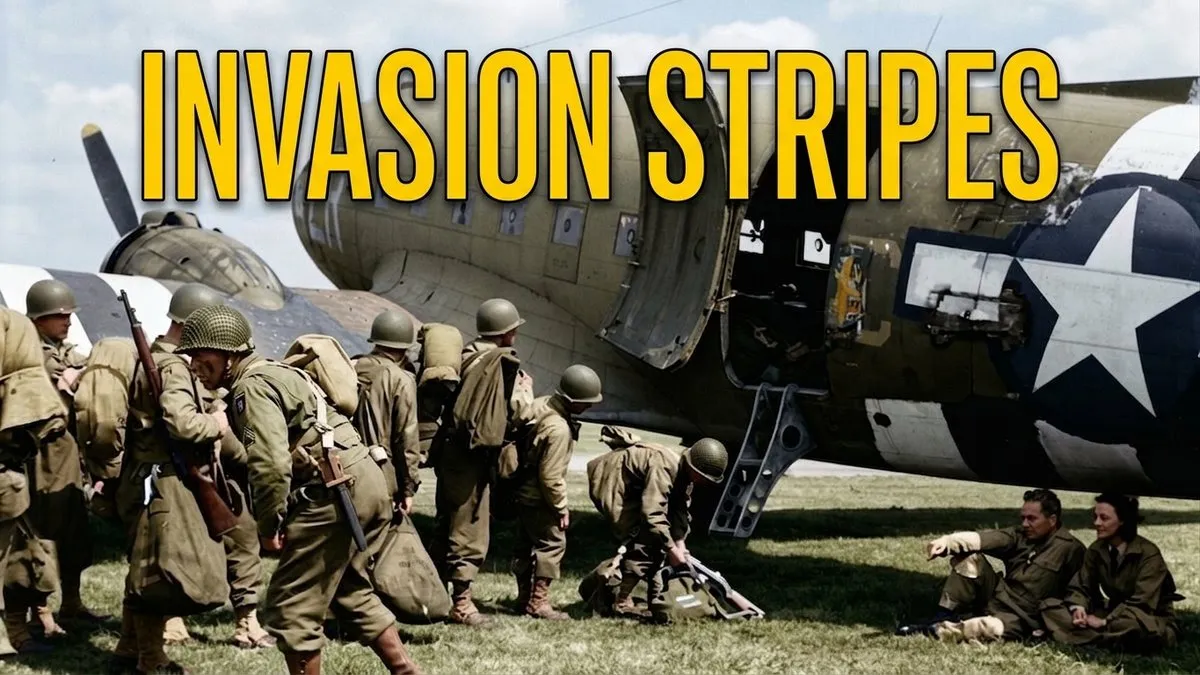
If you watch the C-47 Skytrains in Band of Brothers Episode 2, you can see them: rough black-and-white stripes painted around the fuselage and the wings. They look hand-painted because they were. They are called invasion stripes, and the order to apply them came down with less than 72 hours to spare before the largest airborne operation in history. HBO’s miniseries gets the look right. The reason behind the look is more interesting than the show had time to explain. Our research at CineMilitary cross-checked the Smithsonian National Air and Space Museum archive, the Wikipedia entry, and the published 9th Air Force operational history.
This article walks through the real D-Day invasion stripes story: the Allied Expeditionary Air Force directive, the three-day painting sprint, the dimensions every pilot was supposed to memorize, and the aircraft that did not get stripes at all. Along the way it corrects one persistent myth that has spread through YouTube shorts and fan forums. For the wider context of Easy Company’s Normandy jump, see the complete guide to Band of Brothers.
What were the black and white stripes on D-Day aircraft?
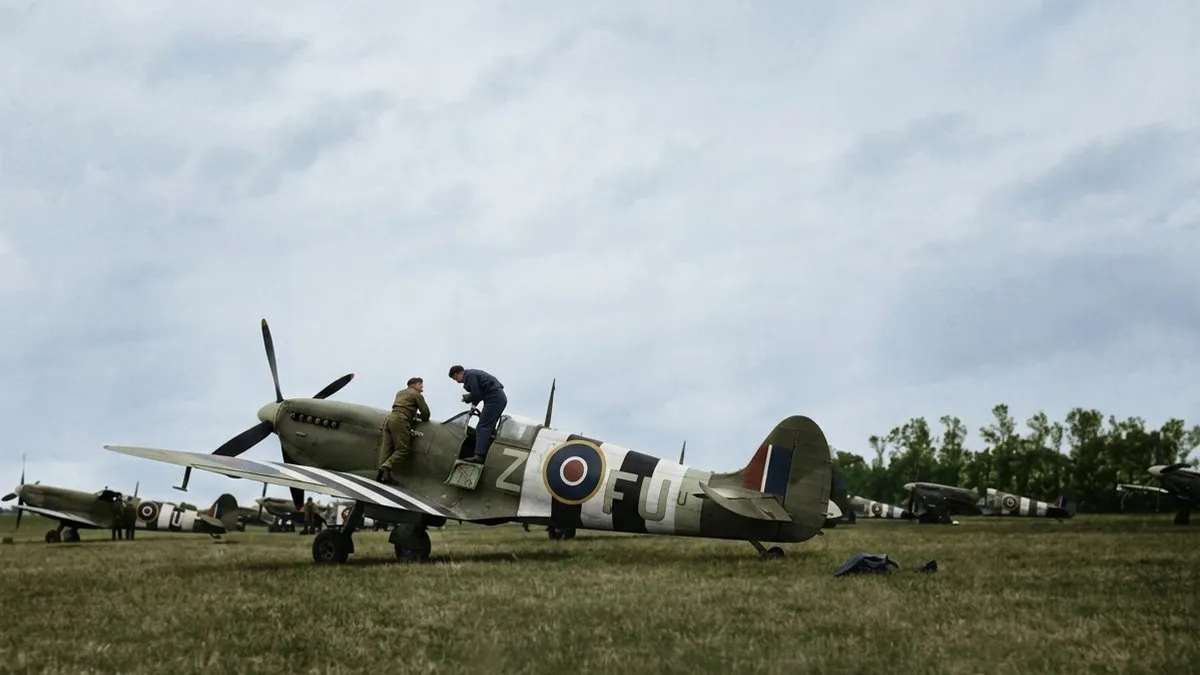
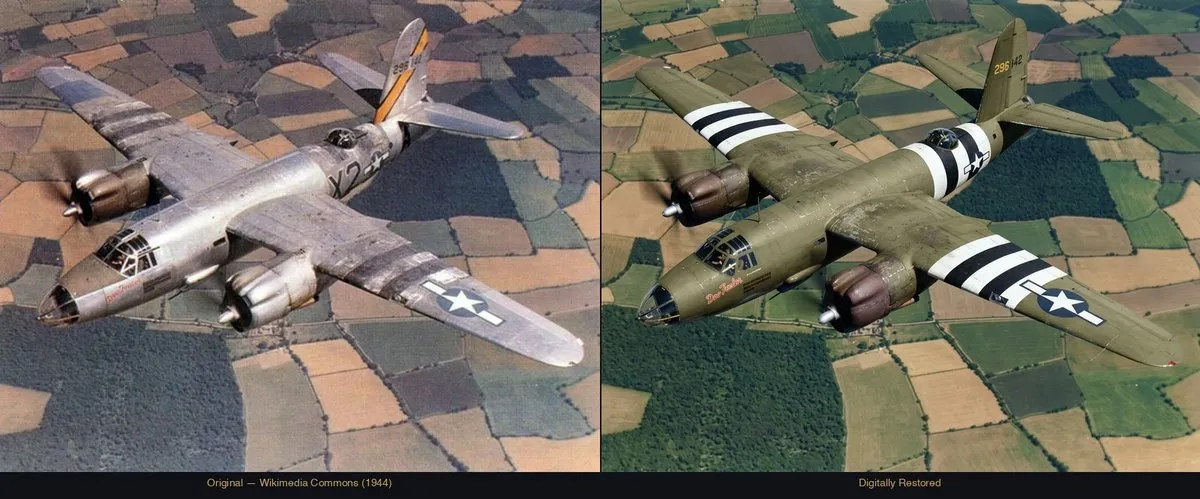
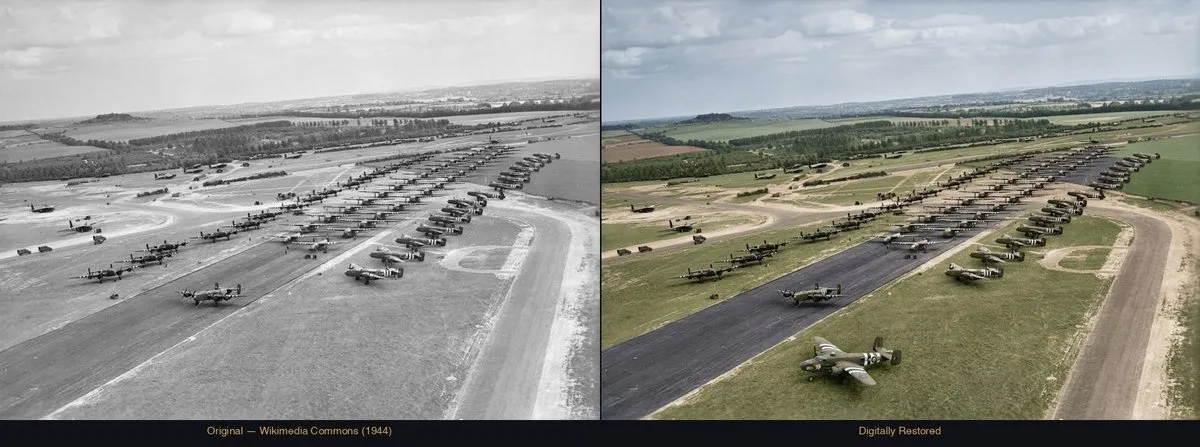
Invasion stripes were five alternating black-and-white bands painted around the rear fuselage and the wings of nearly every Allied tactical aircraft involved in the D-Day landings. The pattern was three white stripes and two black stripes. They were not camouflage. They were the opposite of camouflage. Their job was to make Allied planes instantly recognizable from below, from the side, from any angle a friendly gun crew might be looking up.
On single-engine aircraft, each stripe was 18 inches (46 cm) wide; on twin-engine aircraft, each was 24 inches (61 cm). On single-engine types the wing stripes sat 6 inches (15 cm) inboard of the roundels; on twin-engine types they were placed 24 inches outboard of the engine nacelles. Fuselage stripes sat 18 inches forward of the leading edge of the tailplane. Maintenance crews who had never painted a single stripe in their lives suddenly had a manual and a deadline. The stripes you see in Band of Brothers are deliberately uneven because that is exactly how they looked on the morning of June 6, 1944.
Why did the Allies decide to paint invasion stripes?
The Allied invasion of Normandy was set to put roughly 11,000 aircraft over the English Channel and the French coast in a single 24-hour window. The existing Identification Friend or Foe (IFF) system, which used radio interrogation to confirm a plane’s identity, was not built for that volume. A pre-invasion study concluded that the IFF would saturate and fail under the load. With thousands of Allied planes overhead and tens of thousands of Allied gunners on ships and ground positions, the risk of friendly fire was severe.
One myth that has spread on YouTube shorts and fan summaries claims the stripes were ordered because the Germans might use captured aircraft, allegedly from Dunkirk, to infiltrate Allied formations. The Smithsonian National Air and Space Museum, the Wikipedia entry, and the contemporary RAF operational records do not support this. The motivating fear was friendly fire from naval anti-aircraft guns and ground troops, not enemy infiltration. The stripes were a visual override of the IFF system, designed for human eyes on jumpy gun crews.
The order to Allied gunners and pilots was as blunt as the markings themselves. Per the contemporary briefings reproduced by HistoryOnTheNet and the National WWII Museum, the rule was: if it ain’t got stripes, shoot it down. There was no time on D-Day for radio confirmation, IFF interrogation, or visual silhouette comparison against a recognition card. Stripes meant friend. No stripes meant target.
What Sicily 1943 taught the Allies about friendly fire
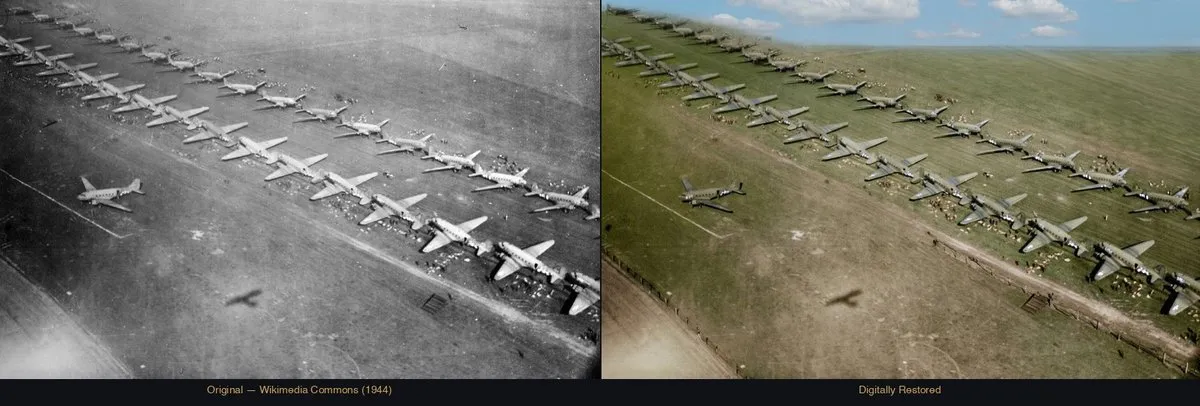
The invasion-stripe directive did not come out of a planning exercise. It came out of a tragedy. On the night of July 11, 1943, during Operation Husky, 144 C-47s and C-53s carrying paratroopers of the 504th Parachute Infantry Regiment approached the Sicilian coast near Gela. They flew in shortly after a German air raid that had frayed the nerves of every gunner on the Allied invasion fleet below. Twenty-three transports were shot down by friendly anti-aircraft fire and another 37 damaged. Pre-mission recognition briefings had warned that the C-47’s silhouette resembled the German Junkers Ju 88, the warning did not save the paratroopers once the firing started. More than 140 paratroopers and aircrew were killed by American and British shells in a single night, with many more wounded.
The Sicily incident, sometimes called the worst Allied friendly-fire event of the war, made the friendly-fire problem impossible to ignore. The pre-D-Day study that recommended the invasion stripes referenced Sicily directly. The fear was not theoretical. The Allies had already lost a regiment of paratroopers to their own guns once. Multiplying that risk across the 11,000 aircraft scheduled for Normandy required a visual override that could not be missed by a Bofors crew on a destroyer or a soldier with a .50 caliber machine gun on a beach. Hence the stripes.
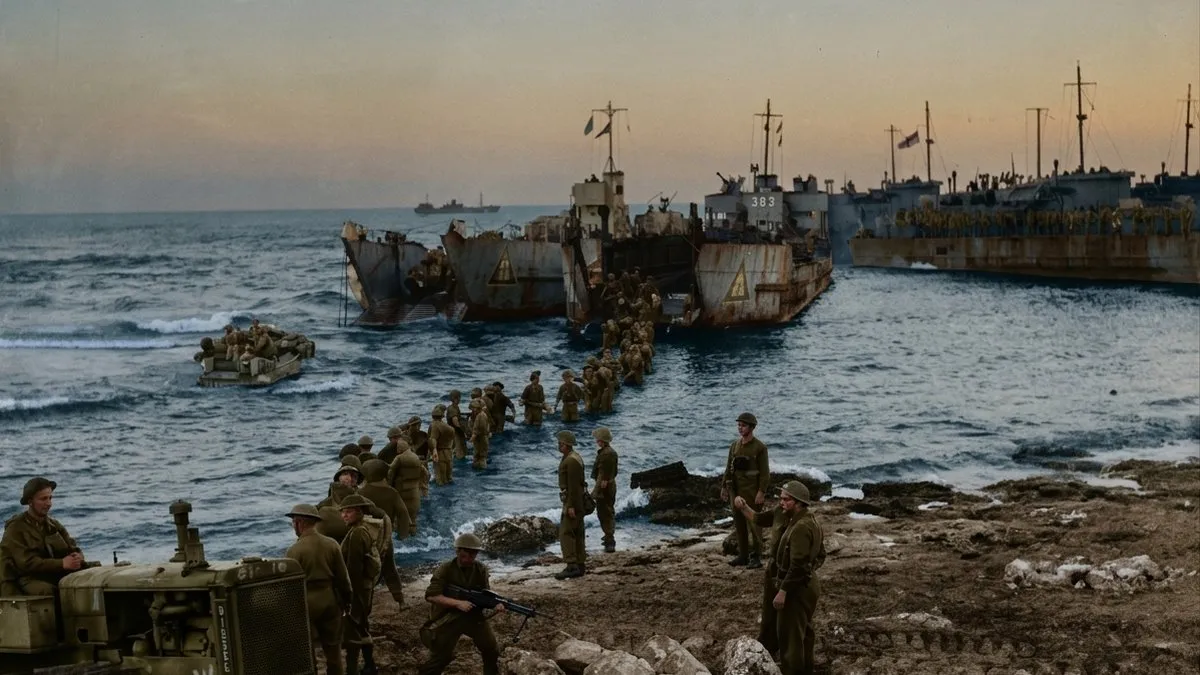
One footnote to the friendly-fire fear: the Luftwaffe never showed up in numbers on D-Day. According to the Smithsonian National Air and Space Museum, only three German aircraft made it over the Normandy beaches that morning, and a famous anecdote holds that Jagdgeschwader 26 commander Josef “Pips” Priller and his wingman Heinz Wodarczyk flew their pair of Focke-Wulfs over the invasion fleet partly because most of their squadron was elsewhere and partly because Priller had been heavily hungover from the previous night. The stripes that the Allies had painted in such desperate haste turned out to matter mostly for friendly-fire prevention, not enemy-aircraft confusion. The fear they answered was real. The threat they were drawn against barely materialized.
When was the order to paint stripes given?
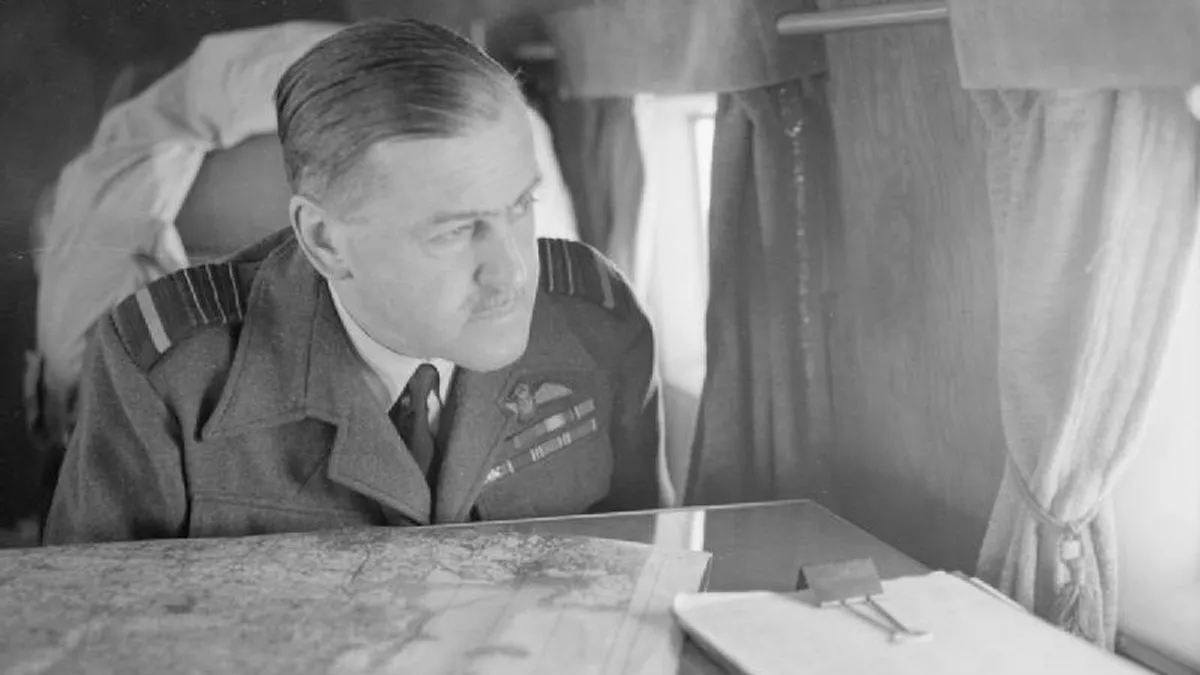
Air Chief Marshal Trafford Leigh-Mallory, commanding the Allied Expeditionary Air Force, approved the marking scheme on May 17, 1944. The directive sat in a drawer for almost three weeks. Orders to actually paint the planes were held back for security reasons. Allied command did not want the stripes to appear on aircraft early enough that German reconnaissance could photograph them and deduce that the invasion was imminent.
The orders went out in two waves. Troop carrier units, the C-47s that would drop the 101st and 82nd Airborne, received their orders on June 3, 1944. Fighter and bomber units received theirs on June 4. The invasion launched on the night of June 5 to 6. That gave most ground crews between 24 and 48 hours to paint thousands of aircraft. The Three-Day Sprint, from approval-on-paper to wet-paint-on-fuselage to wheels-up over the Channel, was deliberately compressed for operational security. The result was hand-painted, sometimes uneven, sometimes still tacky when the planes took off.
There was one deliberate exception to all the secrecy. On June 1, 1944, a small formation of aircraft already wearing the stripes was flown over the Allied invasion fleet so that the gun crews on the ships below could study the new markings for themselves before the assault. It was the one advance look anyone was allowed, and it was aimed squarely at the men most likely to fire on the wrong plane.
How did ground crews paint thousands of planes overnight?
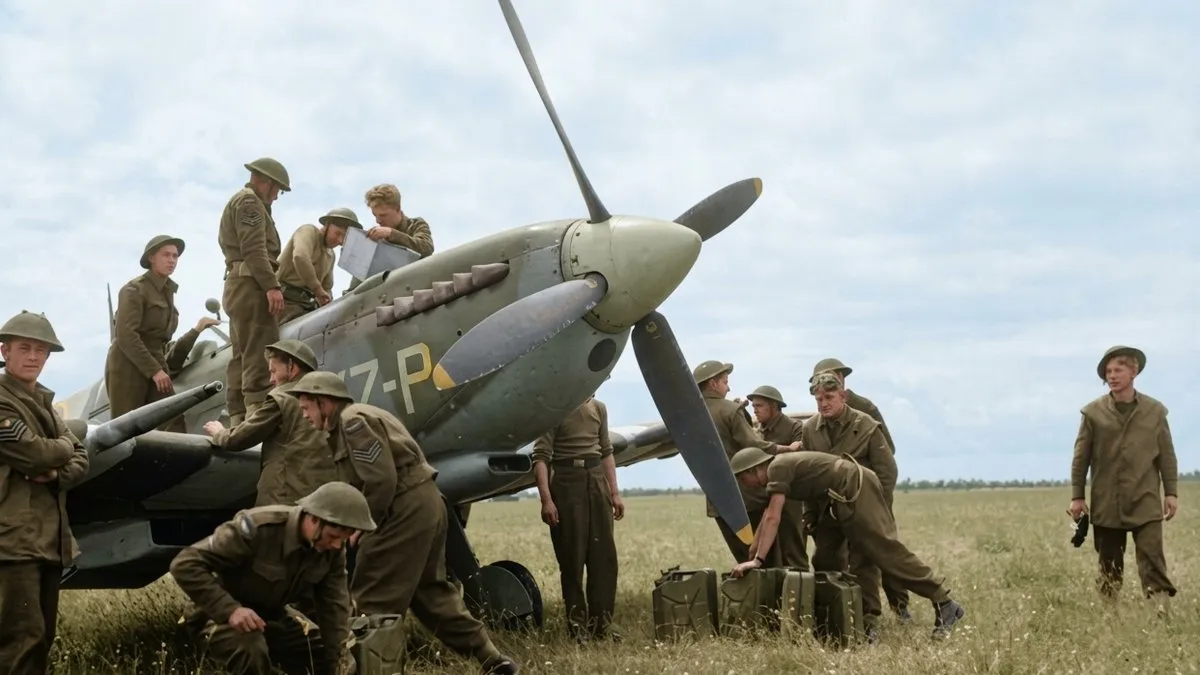
The painting effort across England in early June 1944 is one of the lesser-known logistical feats of the war. Maintenance crews worked through the nights of June 3 and June 4 with whatever brushes, paint, and manpower they could find. Some squadrons borrowed brushes from village shops near their airfields. Others used mops and pieces of cloth. The paint itself was standard distemper, the same flat finish used on hangar walls. The choice was deliberate. Distemper is water-soluble, easy to apply with whatever brush worked, and removable later with hot water or petrol once the stripes had served their purpose. After two weeks of drying, the bands could be washed off the airframes without damaging the underlying paint or doped surfaces. There was no time for masking tape or precision.
The 9th Troop Carrier Command alone had to mark over 800 C-47s in those two days. Across the entire Allied Expeditionary Air Force, more than 6,000 aircraft were painted in that final sprint. Pilots who walked out to their aircraft on the morning of June 5 sometimes found the stripes still glistening. The Wikipedia entry on invasion stripes notes that the unevenness of the painting was tolerated because the goal was visibility from below, not parade-ground neatness. A messy stripe still read as a stripe to a Bofors gun crew on a destroyer.
One claim that circulates alongside the real story is that the effort drained Britain of black and white paint. It did not. Ground crews had been ordered weeks in advance to stock up on both colors precisely so the overnight work would not run short. The painting was rushed against the clock, but the supply behind it was planned.
Which aircraft got stripes, and which did not?
Invasion stripes were applied to fighters, photo-reconnaissance aircraft, troop carriers, twin-engine medium and light bombers, and a handful of special-duty aircraft. P-47 Thunderbolts, P-51 Mustangs, P-38 Lightnings, Hawker Typhoons, Supermarine Spitfires, B-26 Marauders, A-20 Havocs, C-47 Skytrains, and gliders all carried the markings.
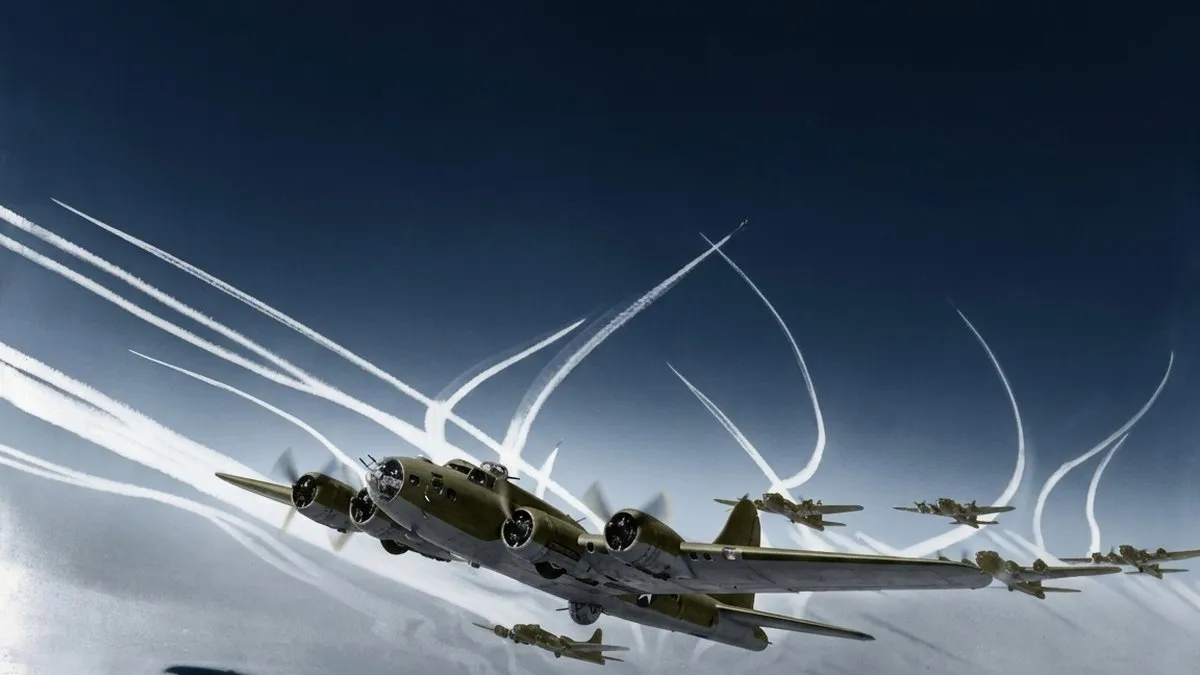
One category was excluded: the four-engine heavy bombers of the U.S. Eighth Air Force and the Royal Air Force Bomber Command. B-17 Flying Fortresses, B-24 Liberators, Avro Lancasters, and Handley Page Halifaxes did not receive stripes. The reasoning was practical. Heavy bombers operated at high altitude in tight formations far from naval gunfire, the IFF saturation threat applied mainly to the low-altitude tactical aircraft over the beaches and the drop zones. Painting hundreds of strategic bombers would have consumed paint and labor that the operation could not spare.
What does Band of Brothers show about the stripes?
Episode 2, “Day of Days,” depicts Easy Company boarding C-47s on the night of June 5, 1944. The aircraft on screen are real C-47s repainted for the production. The stripes are visible on the fuselage and wings throughout the boarding sequence and again during the in-flight scenes. HBO’s production team consulted historical photographs and matched the rough, hand-painted texture of the actual June 1944 markings. The stripes you see on the show are deliberately imperfect because the originals were imperfect.
What the miniseries does not explain is what the stripes were for. The marking is shown but never named. There is no scene of a maintenance crew painting them. There is no dialogue about IFF saturation or friendly fire. Like the parachute itself, the invasion stripe is a piece of kit that does its job in the background. The same episode glosses the T-5 parachute, an equipment story we have covered separately. Band of Brothers is a story about men, not equipment, and the engineering details get shown without being explained.
When were the invasion stripes removed?
The stripes were a wartime expedient with a deliberately short life. About one month after D-Day, in early July 1944, Allied air commanders ordered the stripes removed from the upper surfaces of aircraft. The reason was the inverse of the original problem. Allied tactical aircraft were now operating from forward airfields in liberated French territory. The bright stripes that helped friendly gunners identify them from below also helped Luftwaffe ground-attack aircraft and any remaining German reconnaissance flights spot them on the ground.
Lower surfaces kept the stripes for a few more months. By the end of 1944, with Allied air supremacy effectively complete over France, the markings were ordered removed entirely. A few photo-reconnaissance and special-duty aircraft kept partial stripes into early 1945, but the full pattern is a feature of June 1944 specifically. The aircraft that flew over Normandy on D-Day looked unique to that operation. Within six months they had quietly resumed the standard camouflage of the wartime Allied air forces.
Frequently asked questions
Why are the invasion stripes uneven on D-Day aircraft?
The unevenness is real. Maintenance crews painted thousands of aircraft in the 24 to 48 hours before the invasion using whatever brushes and paint they had. There was no time for masking tape or precision. The stripes were rated on visibility from a Bofors gun crew on a destroyer, not on neatness. The roughness you see in Band of Brothers is historically faithful.
How big were the invasion stripes?
Single-engine aircraft received stripes 18 inches (46 cm) wide; twin-engine aircraft received stripes 24 inches (61 cm) wide. The pattern was always three white bands and two black bands, applied around the fuselage just forward of the tailplane and across the upper and lower surfaces of the wings.
Why did the Germans not paint similar stripes?
The Luftwaffe was on the defensive in June 1944 and did not have the air mass over the Channel that would have required visual IFF assistance. The friendly-fire problem the Allies faced was specifically a side effect of putting roughly 11,000 aircraft over the same airspace as Allied ships and ground forces. The Germans never had that volume to manage on D-Day.
Did all Allied aircraft get invasion stripes?
No. Four-engine heavy bombers of the U.S. Eighth Air Force (B-17, B-24) and RAF Bomber Command (Avro Lancaster, Halifax) were excluded. They operated at high altitude away from the friendly-fire risk zone. Fighters, photo-recon, twin-engine medium bombers, troop carriers, and gliders all received the markings.
Sources: Wikipedia, “Invasion stripes”; Smithsonian National Air and Space Museum, “The Stripes of D-Day”; Classic Warbirds, “The History of Invasion Stripes”; The Aviationist, “On This Day in 1944”; National WWII Museum, “The Airborne Invasion of Normandy”; HistoryNet, “How a Friendly Fire Tragedy in Sicily Transformed Airborne Warfare”; War History Online, “D-Day Invasion Stripes in 35 Images”; Stephen E. Ambrose, Band of Brothers (1992).