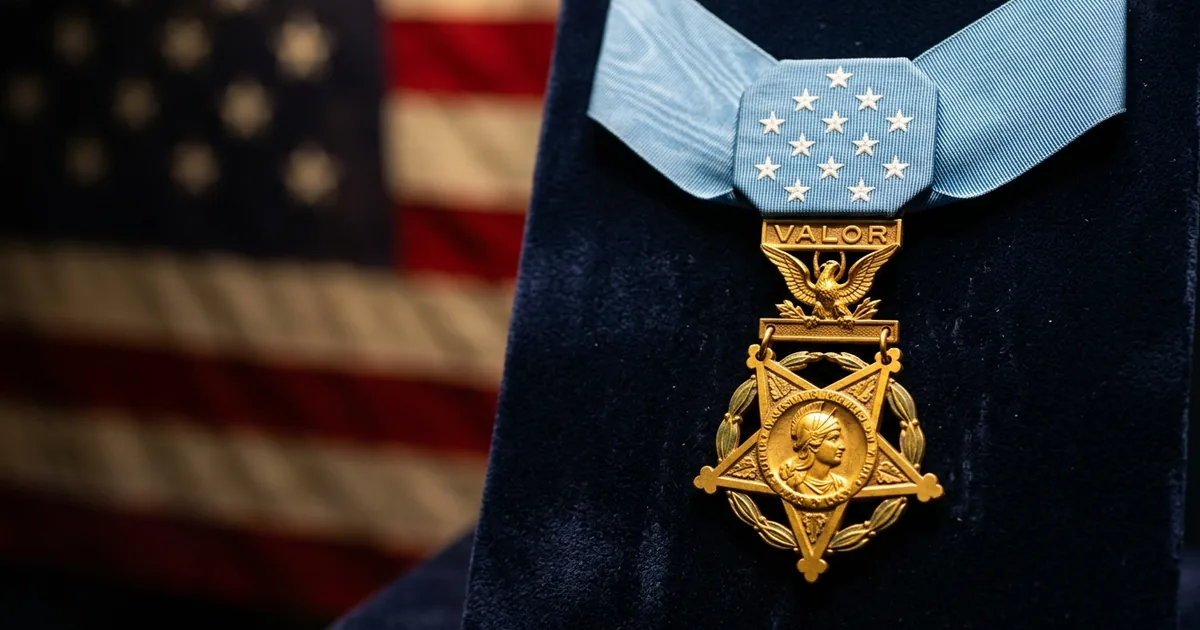
The Medal of Honor is the highest military decoration the United States can award. Since 1861, it has been awarded about 3,500 times, to a tiny fraction of the more than 40 million Americans who have worn the uniform. That rarity is by design. The Medal of Honor goes to those who risked their lives “above and beyond the call of duty” in actual combat against an enemy of the United States. Most recipients did not survive the act for which they were honored. Many of those who did spent the rest of their lives uncomfortable with the word “hero.”
This is the complete guide to America’s Medal of Honor recipients: the history of the award, how it is earned, who has received it, and the deep-dive stories behind individual recipients whose actions defined what valor looks like in combat. Every linked article on this page is a full investigation, sourced from official citations, unit records, the National Archives, and the recipients’ own words where they survived to tell the story.
What Is the Medal of Honor?
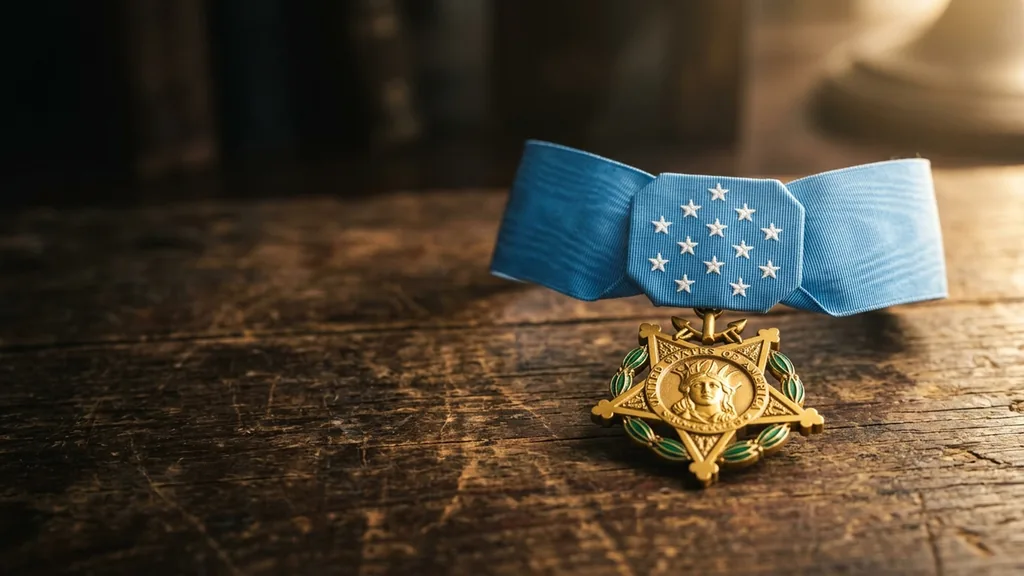
The Medal of Honor is a five-pointed star suspended from a light blue ribbon dotted with thirteen white stars. There are three versions: one for the Army, one for the Navy (worn by Marines and Coast Guard as well), and one for the Air Force, created in 1965 when the Air Force began awarding its own. The visual differences are small. The standard required to earn any of the three is identical, and unforgiving.
The criteria are codified in federal law: the recipient must have distinguished themselves “conspicuously by gallantry and intrepidity at the risk of their life above and beyond the call of duty” in action against an armed enemy. Two witnesses must testify under oath. The act must be one that, if the service member had not performed it, would not have earned criticism. The board reviews every case for years, sometimes decades. Fewer than one in five Medals of Honor have been awarded posthumously, though the share was far higher in World War II, Korea and Vietnam, where most recipients did not survive the action.
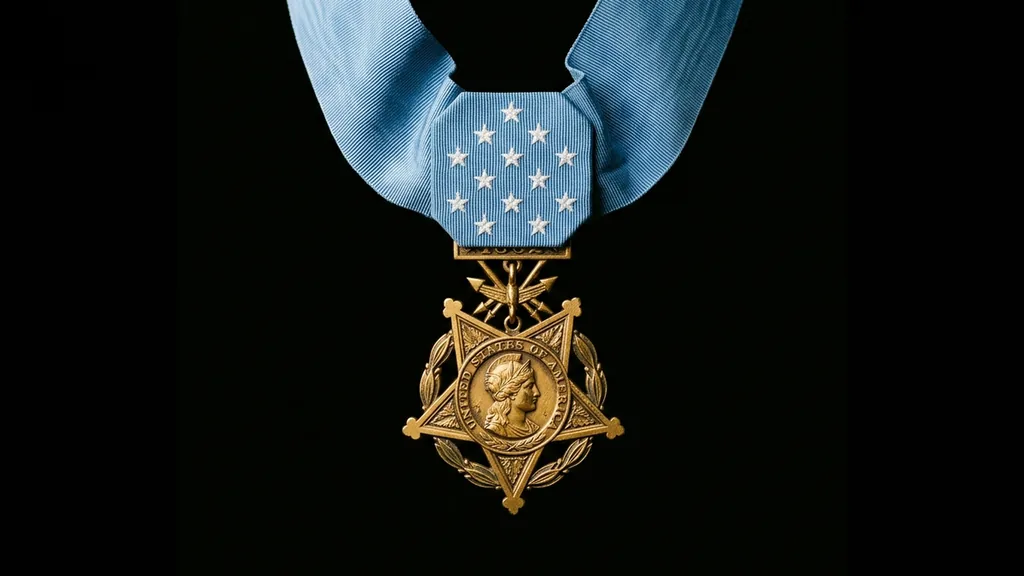
A Short History of the Award
President Abraham Lincoln signed the Navy Medal of Honor into law on December 21, 1861, and the Army version followed on July 12, 1862. It was the United States’ first permanent military combat decoration. During the Civil War, more than 1,500 Medals were awarded, generously by modern standards. After the war, a board reviewed every Civil War-era award and rescinded 911 of them in 1917 because they did not meet the “above and beyond” threshold. Among those rescinded was the medal awarded to Mary Edwards Walker, a Union Army surgeon. Her award was restored in 1977 and she remains the only woman to hold the Medal of Honor.
The First World War saw the Medal awarded to 126 Americans, including Sergeant Alvin York and pilot Eddie Rickenbacker. World War II expanded that number sharply: 472 Medals were awarded for actions between 1941 and 1945, more than half posthumously. Korea added 146 recipients. Vietnam, 263. The post-9/11 wars in Afghanistan and Iraq have produced 28 Medals through 2025, including Master Sergeant Earl Plumlee’s, awarded in 2021 for actions during a 2013 attack on Forward Operating Base Ghazni.
How Someone Earns the Medal of Honor
Every Medal of Honor citation tells a similar story, with different geography. A service member finds themselves in a moment where the choice is to protect comrades by absorbing risk that should kill them, or to retreat and let others die. They choose the first option. Sometimes they survive. Often they do not.
The recurring elements in Medal of Honor narratives:
- Fighting on after being wounded. Citations routinely describe recipients continuing to engage the enemy after sustaining wounds that would normally end combat capability.
- Drawing fire deliberately. Many citations describe the recipient making themselves a target so that pinned-down comrades could move.
- Closing distance to a fortified position. Bunkers, pillboxes, and machine-gun nests are recurring obstacles. Recipients often crossed open ground alone to silence them.
- Saving wounded comrades under fire. Repeatedly returning to extract injured soldiers is among the most common acts cited.
- Holding ground against impossible odds. Citations describe individuals continuing to fight after their unit has been overrun, withdrawn, or killed.
The award process is bottom-up. A witness submits the recommendation to the chain of command. The recommendation works its way up through the service branch, the Department of Defense, and finally the White House. The President personally awards the Medal. The recipient is afterward entitled to a small monthly pension, a special license plate, and a salute from any service member regardless of rank, though most recipients consider the salute the part that matters least.
Notable Medal of Honor Recipients We’ve Profiled
CineMilitary publishes long-form investigations of individual recipients: what they did, how the citation came together, what their lives looked like before and after. These are the recipients we have covered so far.
- Audie Murphy, the most decorated American combat soldier of World War II.
- Desmond Doss, the conscientious objector who saved 75 men at Hacksaw Ridge without carrying a weapon.
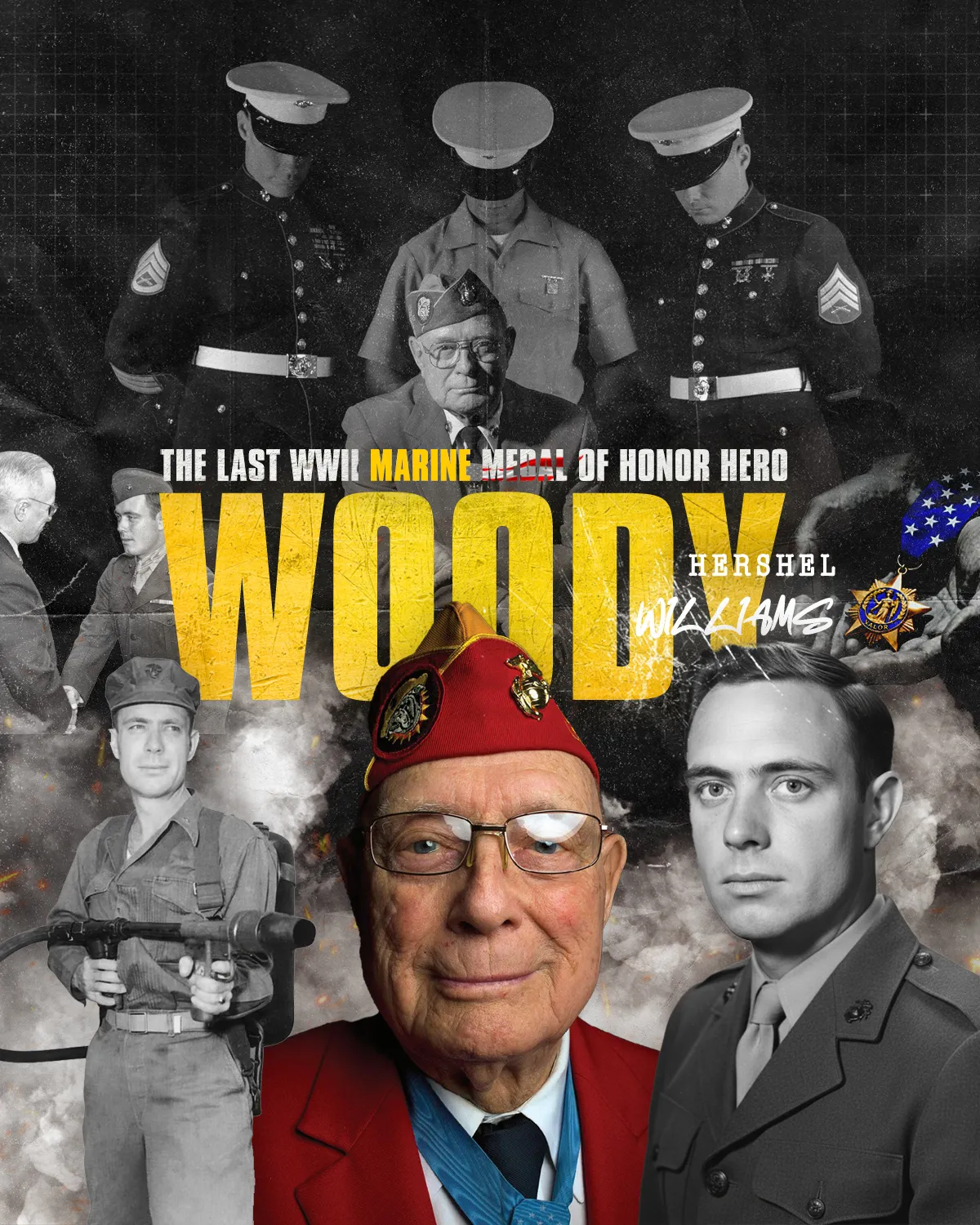
- Hershel "Woody" Williams, the last surviving World War II Medal of Honor recipient.
- Roy Benavidez, the Green Beret who survived 37 wounds during six hours of fighting in Vietnam.
- John Chapman, the Air Force combat controller who fought alone on Roberts Ridge.
Desmond Doss: The Conscientious Objector at Hacksaw Ridge
Corporal Desmond Doss was a Seventh-day Adventist who refused to carry a weapon. The Army drafted him anyway, then tried for two years to discharge him as mentally unfit. He stayed. On May 5, 1945, on a 400-foot escarpment on Okinawa called Hacksaw Ridge, his entire company was driven back by Japanese fire. Doss stayed on the ridge alone and lowered approximately 75 wounded American soldiers down a cliff face on a rope sling he tied himself. He prayed between each man, “Lord, help me get one more,” and he did. He is the only conscientious objector ever to receive the Medal of Honor in World War II.
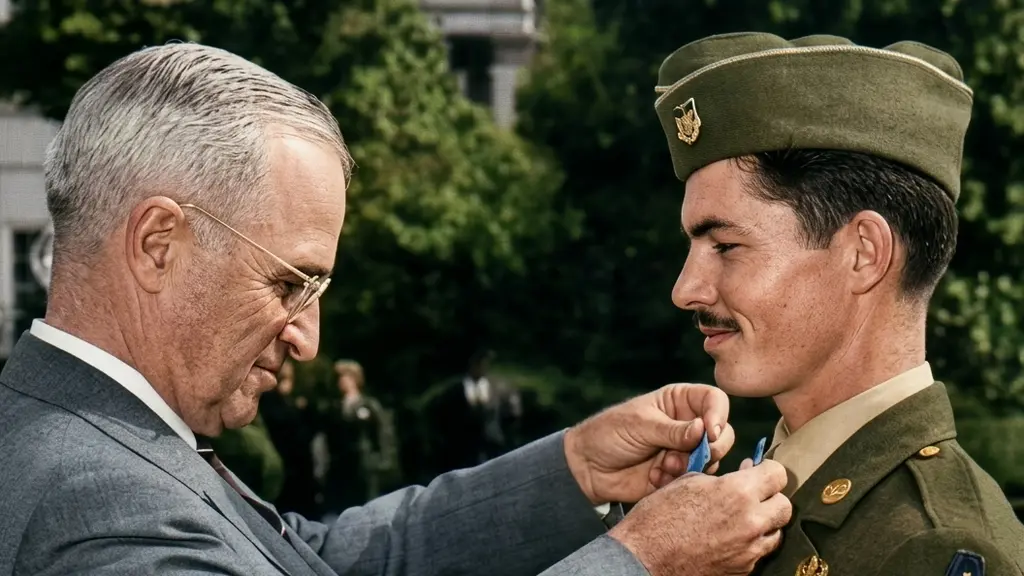
Read the full investigation: Desmond Doss at Hacksaw Ridge: The Real Moments Mel Gibson Cut. The 2016 film captured the rescue but compressed and dramatized the timeline. Doss’s actual citation describes events that took place over multiple weeks, not one frantic night. We compare the film against the official citation and his own postwar interviews.
Hershel “Woody” Williams: Iwo Jima’s Flamethrower
Corporal Hershel Williams was a Marine demolition specialist on Iwo Jima. On February 23, 1945, the same day the famous flag was raised on Mount Suribachi, Williams’s unit was pinned by a network of Japanese pillboxes blocking advance toward the island’s airfields. Covered by only four riflemen, Williams went forward with a 70-pound flamethrower on his back. Over four hours, he silenced seven pillboxes, returning to American lines six times to refuel and arm new flamethrowers. Riflemen covered him as best they could. Williams survived. He lived another 77 years and was the last surviving World War II Marine Medal of Honor recipient when he died in June 2022 at the age of 98.
Read the full investigation: Hershel “Woody” Williams: The Last WWII Medal of Honor Recipient: Full Story.
John Chapman: Roberts Ridge and the Drone-Footage Citation
Technical Sergeant John Chapman was an Air Force Combat Controller, a special-operations airman embedded with Navy SEALs during the opening months of the Afghanistan war. On March 4, 2002, his SEAL team was inserted onto a 10,000-foot peak called Takur Ghar, in eastern Afghanistan. The mountain was held by al-Qaeda fighters. The team’s helicopter took rocket-propelled grenade fire on insertion, throwing one SEAL, Petty Officer Neil Roberts, onto the snow. Chapman went back for him. The fight that followed was captured on Predator drone footage. When the Air Force re-examined the enhanced footage (its findings were reported in 2016), it showed that Chapman had survived an initial wound, fought alone for over an hour against multiple enemy positions, and continued engaging the enemy after his SEAL team had withdrawn. He was killed defending the helicopter rescue zone for an arriving Ranger quick-reaction force. The drone footage led directly to his Medal of Honor upgrade in 2018, sixteen years after the battle.
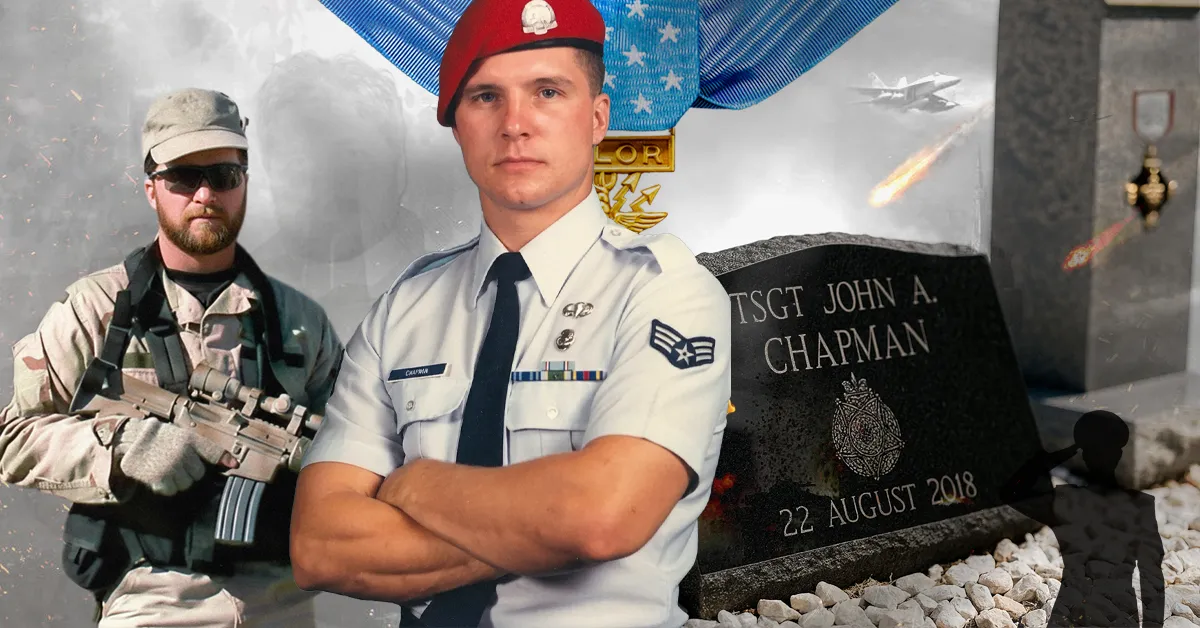
Read the full investigation: John Chapman: The Air Force Combat Controller Who Fought Alone on Roberts Ridge.
Medal of Honor by War
The Medal has been awarded in every major American conflict since the Civil War. The numbers and the stories shift with the nature of each war.
Civil War (1861–1865)
1,522 Medals awarded after the 1917 review purge. Most awards went to soldiers and sailors who captured enemy flags or held key positions during major battles like Gettysburg, Vicksburg, and Petersburg. Six men captured the Confederate locomotive The General in 1862 and received the first Medals ever issued, the Andrews Raiders.
World War I (1917–1918)
126 Medals. Sergeant Alvin York’s October 1918 single-handed capture of 132 German prisoners in the Argonne Forest is the most famous. Pilot Eddie Rickenbacker, America’s top WWI ace with 26 confirmed kills, received his Medal in 1930.
World War II (1941–1945)
472 Medals, more than half posthumous. The Pacific theater produced disproportionate numbers: Iwo Jima alone resulted in 27 Medals across both Marines and Navy. Audie Murphy became the most decorated American combat soldier of WWII and received the Medal at age 19 for actions at Holtzwihr, France in January 1945.
Korea (1950–1953)
146 Medals. Marine Captain William Barber held Fox Hill at the Chosin Reservoir for five days against repeated Chinese assaults, a stand that allowed the surrounded First Marine Division to break out. Pilot Major George Davis Jr. became the first jet ace to win the Medal of Honor before being shot down over the Yalu River.
Vietnam (1965–1973)
263 Medals, second only to World War II among the wars since the Civil War. Master Sergeant Roy Benavidez survived 37 wounds during a six-hour rescue in the jungle west of Loc Ninh, near the Cambodian border, in May 1968, including a bayonet wound to the abdomen during hand-to-hand combat. His citation runs to over 1,000 words.
Post-9/11 Wars (2001–present)
28 Medals through 2025. Modern citations frequently cite drone or helmet-camera footage as part of the documentation, a category of evidence that did not exist in earlier wars. The post-9/11 medals also reflect a shift toward special-operations recipients: SEALs, Combat Controllers, Rangers, and Green Berets account for a majority of post-9/11 awards.
Why These Stories Matter
Medal of Honor recipients tend to share a discomfort with the word “hero.” When pressed, most have said the same thing in different words: they did what they did because the men beside them needed it done. The Medal is, in their telling, a marker for everyone who fought alongside them and was not seen, not photographed, not the subject of a witness statement.
That is true and it is also incomplete. Conspicuous gallantry is not common. Most service members under fire do their job. A few, a very few, do what the rest cannot bring themselves to do, and they do it knowing the cost. Studying their actions in detail, reading the citations word by word against the unit histories, comparing what the official record says to what the survivors and witnesses described later, is one way of understanding what combat actually demands of the people who go through it. That work is what this site exists to do.
Frequently Asked Questions
How many Medals of Honor have been awarded?
As of 2025, 3,517 Medals of Honor have been awarded since the medal was created in 1861. Nineteen recipients have received the Medal twice. Fewer than one in five have been awarded posthumously.
Who was the youngest Medal of Honor recipient?
Drummer boy Willie Johnston received the Medal of Honor at age 11 for actions during the Peninsula Campaign in 1862. The youngest recipient of the modern era was Marine Private Jacklyn Lucas, who threw himself on two grenades on Iwo Jima at age 17 and survived.
Has a woman ever received the Medal of Honor?
Yes, one. Dr. Mary Edwards Walker, a Union Army contract surgeon during the Civil War, received the Medal in 1865. The 1917 review board rescinded her award along with hundreds of others. Her Medal was restored posthumously in 1977 by President Jimmy Carter.
What’s the difference between the Medal of Honor and the Congressional Medal of Honor?
There is no difference. The official name is “Medal of Honor.” It is sometimes called the “Congressional Medal of Honor” because Congress authorized it and the President awards it in the name of Congress. The recipients’ organization, founded in 1958, is officially the Congressional Medal of Honor Society.
Can the Medal of Honor be revoked?
Yes, but it is rare. The 1917 review board rescinded 911 Civil War-era awards. In 1989, the medals of Buffalo Bill Cody and four other civilian scouts, struck from the roll in 1917 because they were civilians, were restored. Conviction of certain felonies after receiving the award can also lead to revocation, though the recipients’ organization has historically opposed this.
Do Medal of Honor recipients receive special benefits?
Yes. As of 2025, recipients receive a monthly pension of $1,619.34 (adjusted annually for inflation), free space-available military air travel, special Medal of Honor license plates, an automatic invitation to all presidential inaugurations, and burial with full military honors at any national cemetery. They are also entitled to a salute from any service member regardless of rank.
Is the Medal of Honor still being awarded?
Yes. Captain Larry Taylor received it in September 2023 for a 1968 Vietnam rescue, a 55-year delay between the action and the award, and further awards followed in 2024, 2025 and 2026, including a March 2026 ceremony for Master Sgt. Roderick Edmonds (World War II), Command Sgt. Maj. Terry Richardson (Vietnam) and Staff Sgt. Michael Ollis (Afghanistan).
Continue Exploring
This pillar will grow as we publish more recipient deep-dives. The next planned investigation covers Smedley Butler, one of only nineteen two-time Medal of Honor recipients.
For broader military history, see our Band of Brothers Complete Guide, the full true story of Easy Company, 506th Parachute Infantry Regiment, with separate deep-dives for every major character and engagement.
Sources: Congressional Medal of Honor Society official records (cmohs.org); U.S. Army Center of Military History; Naval History and Heritage Command; Department of Defense Medal of Honor citations database. Recipient counts current through 2025.
Correction, October 25, 2026: An earlier version of this article overstated the share of posthumous awards, misdescribed Vietnam’s rank among wars, placed Roy Benavidez’s action in Cambodia rather than west of Loc Ninh as his citation states, omitted the four riflemen who covered Woody Williams, misdated the review of John Chapman’s drone footage, described a 1989 revocation that did not happen, and named an outdated most recent recipient. It has been corrected against the recipients’ citations, U.S. Army Center of Military History statistics and Army ceremony records.